
 AUS
AUS
 NZ
NZ
 UK
UK
 CA
CA
 USA
USA
 IND
IND








Summary
- The IHS Markit / CIPS PMI index rose to 55.6 in November, its highest since December 2017
- Manufacturers stockpiled raw materials and rushed to finish work before new customs rules come into effect on January 1, as the Brexit transition period ends
The UK Manufacturing Purchasing Managers’ Index (PMI) climbed to 55.6 in November, up from 53.7 in October, bringing cheer for the sector. However, the downturn in employment for the sector continued for the tenth consecutive month, revealed the latest IHS MARKIT / CIPS PMI data.
The manufacturing output seemed unaffected by the month-long lockdown in England, attaining the highest PMI value since December 2017.
A PMI index level above 50 indicates that the sector is expanding. This index has been in the expanding territory since the past 6 months as the sector is gradually rebounding from the pandemic led crisis.
The rise in manufacturing output for November came about as a result of a jump in input purchases, raw material stockpiling, and new export orders from the EU with the upcoming end of the Brexit transition period.
So far, the UK and the EU have failed to arrive at a favorable deal to allow tariff free trade from January 1 next year. Even if a deal is worked out, companies fear lengthy cross-border delays with new and elaborate custom requirements.

(Image Source: © Kalkine Group 2020)
However, the rate of expansion was lower that what was seen in the third quarter of this year. The 3 months to September saw higher production output as the manufacturing firms reopened after the Covid closures earlier in the year.
At the same time, November saw contrasting performance within the sub-sectors of manufacturing. On the one hand, the intermediate and investment goods saw good output growth.
On the other, consumer goods saw a downturn with a fall in production and new orders. Much of the consumer facing sectors were either closed or heavily restricted in November.
But the overall volume of new orders rose for the sector for the month.
Apart from Europe, the export order rose from Asia and the US as well. With the Brexit transition deadline approaching soon, the input purchase volumes rose to the greatest extent since March 2019.
Despite a high business optimism, the month saw job losses with continued cost reduction efforts and impact of the pandemic. More than 60 per cent of the manufacturers surveyed expected to raise output in the next year.
Input cost escalation was at a 2-year high value for the month. Firms raised their selling prices accordingly, highest in the year so far.
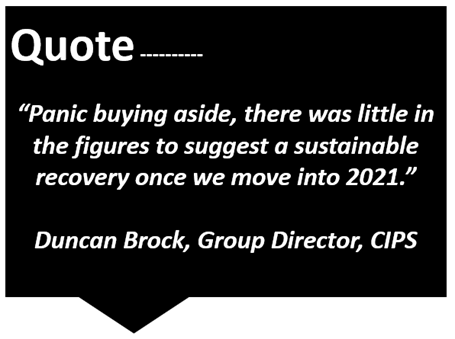
It is uncertain that this temporary upturn, which got boosted from the Brexit buys, can be carried over to the next year. While some industry experts felt that the latest IHS survey results indicated a subdued expansion of the sector as orders were slowly returning to normal. At the same time, analysts pointed out that such periods are sometimes followed by depressed activity as producers begin to service future orders with the recently created stockpiles only.
Finally, the fears of a double dip recession would continue to hover around the economy at least till clarity emerges around a Brexit deal. Further, normalcy can only resume if the hopes of a vaccine distribution chain are realised.
Also Read: UK Manufacturing Output Could Shrink By 11 Per Cent In 2020
