
 AUS
AUS
 NZ
NZ
 UK
UK
 CA
CA
 USA
USA
 IND
IND






Highlights
- Under the Metal and Diamond Mining Effluent Regulations, effluents need to comply with concentration-based limits for nickel, zinc, cyanide, lead, and various other chemicals
- A metal mine that has ended its commercial operations before June 6, 2002, and a diamond mine that has stopped its commercial operations before June 1, 2018, are not become subject to the regulations
- Schedule 2 of the regulations authorizes mine waste deposits consisting of any harmful substance into a tailings impoundment area (TIA)
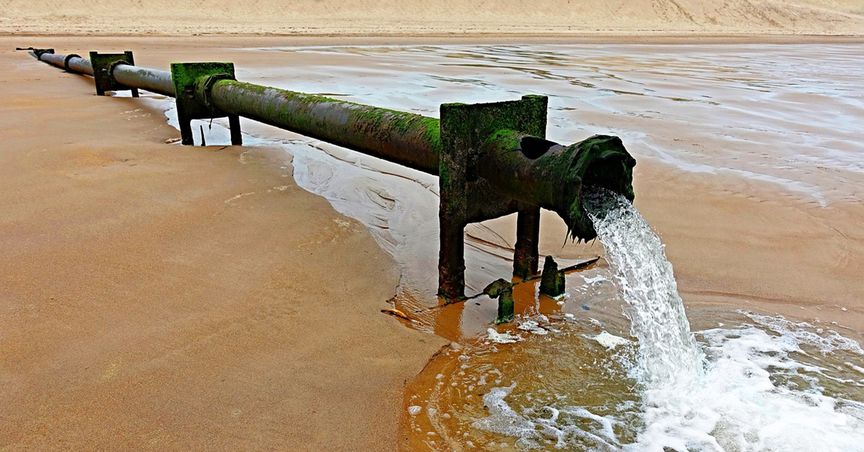
Untreated mining effluents can have adverse effects on fish and their habitat, so the government of Canada has introduced the Metal and Diamond Mining Effluent Regulations to protect the aquatic environment. It governs the release of mining effluents into the water which is frequented by fish.
In this article, we will learn about the Metal and Diamond Mining Effluent Regulations.
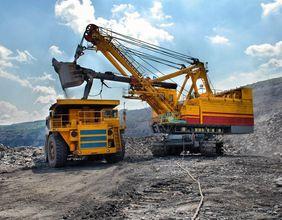
The Metal and Diamond Mining Effluent Regulations protect the aquatic environment by setting limitations on effluents that can be released by metal and diamond mines into the lakes and rivers of Canada. Under subsection 36(3) of the Fisheries Act, these regulations regulate metal and diamond mines’ effluent deposits into the water which is frequented by fish.
The regulations provide authorization to deposit mine waste including tailings, rock, and effluents into tailings impoundment areas.
Under the Metal and Diamond Mining Effluent Regulations, effluents need to maintain a pH between the minimum and maximum level and need to comply with concentration-based limits for the following chemicals
- Lead
- Nickel
- Zinc
- Un-ionized ammonia.
- Copper
- Arsenic
- Suspended solids
- Radium 226
- Cyanide
Also read: What is the modernized Fisheries Act in Canada?
Who comes under these regulations?
The regulations are applied to metal or diamond mines when their effluent flow rate increases to 50 cubic meters per day and if they accumulate harmful substances in any water bodies or places mentioned in subsection 36(3) of the Fisheries Act.
A metal mine that has ended its commercial operations before June 6, 2002, and a diamond mine that has stopped its commercial operations before June 1, 2018, are not subject to the regulations. The regulations also do not apply to the operations of placer mines that are taking minerals or metals from stream sediments.
Also read: What is the Canadian Environmental Protection Act, 1999?
Several conditions need to meet for the deposit of mine effluents
Section 4 of the regulations govern the deposit of effluents at a water body or place by referring to subsection 36(3) of the Fisheries Act.
According to some necessities of sections 6 to 27 of the regulations, the mine’s operator and owner needs to perform the following duties:
- They need to provide information to Environment and Climate Change Canada (ECCC) within 60 days when the mine comes under the Regulations (subsection 8(2) and section 9).
- They need to organize Environmental Effects Monitoring studies.
- They need to monitor and test all effluents.
- They need to provide information to ECCC if there are some changes in mine’s commercial operations.
Also read: What are the impacts of climate change on human health?
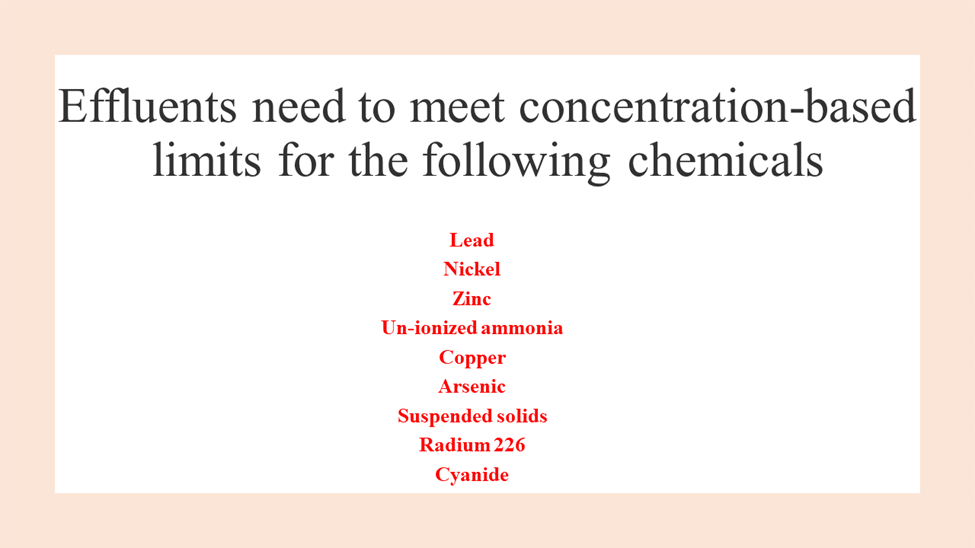
Image credit: © 2022 Kalkine Media®
Tailings Impoundment Areas
A tailing impoundment area (TIA) can be a water body or place under Schedule 2 of the regulations and can be a confined disposal area or can be a part of water which is frequented by fish.
Schedule 2 of the regulations designate water bodies as TIAs. With the help of a regulatory amendment, a water body is included in the schedule.
Metal or diamond mining projects operators and owners who want to use water which is frequented by fish as a TIA or want an amendment in Schedule 2 of the regulations need to fulfill various responsibilities such as preparation of an Assessment of Alternatives, take part in public and Indigenous consultations, and prepare a fish habitat compensation plan.
They will be responsible for identifying waterbodies that are affected by disposing of a mine’s waste. Based on the mine operator and owner’s information and by consulting with Fisheries and Oceans Canada, ECCC will determine whether a waterbody is recognized in the schedule.
Also read: What plans & actions is Canada taking to tackle climate change?
Bottom line
Environment and Climate Change Canada takes responsibility to prepare all the documentation and regulatory package in an amendment to Schedule 2. A fish habitat compensation plan should offset any impacts to fish habitat.
