
 AUS
AUS
 NZ
NZ
 UK
UK
 CA
CA
 USA
USA
 IND
IND







Summary
- Risk is one of the fundamental attributes of any investment.
- However, not all investors can figure out the risk associated with an investment.
- They must also understand the difference between a low-risk and a high-risk investment.
Risk is one of the fundamental attributes of any investment. Almost all kinds of investments have some risks involved, which may vary in magnitude. In addition, investors consider investments based on their risk appetite.
However, not all investors can figure out the risk associated with an investment. They must also understand the difference between a low-risk and a high-risk investment. While volatility may be used as a proxy for risk, it is not totally flawless as a measure of risk.
READ MORE: 5 exciting consumer staple stocks on the ASX
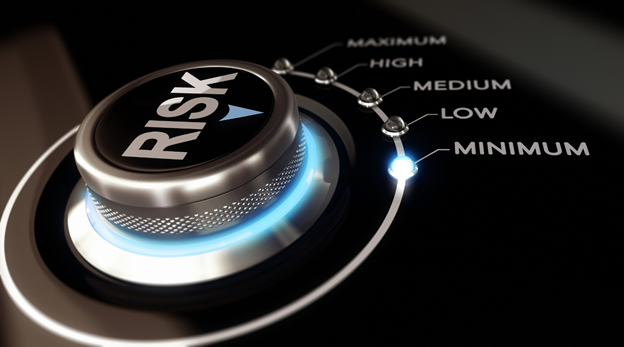
Well, risk can be measured in a much better way if we consider the probability of an asset seeing a below-expectation performance. Suppose an investor purchases an asset with an expectation of a 15% return, the possibility that the return will be below 15% is the risk involved in that investment.
Source: © Olivier26 | Megapixl.com
However, underperformance by an asset in comparison to an index can’t be categorised as risk. In case an investor buys an asset expecting it to deliver a return of 7% and it returns 9%, the fact that the index returned 10% is largely irrelevant. Thus, there is no perfect definition for risk.
What is a high-risk investment?
Those investments, which either have a high probability of underperformance or high chance of heavy losses, are referred to as high-risk investments. Investments made directly via equities or equity funds are termed as high-risk investments.
READ MORE: 10 ASX-listed cannabis stocks for August 2021
What is a low-risk investment?
Low-risk investments are generally the ones with less at stake – either in terms or significance of investments vis-à-vis the investment portfolio. However, with lesser risk, the potential returns also get narrower. Low-risk investing is not only about safeguarding against probability of any loss, but it also ensures that none of the potential losses will be devastating.
High-yield savings accounts, savings bonds, certificates of deposit, money market funds, treasury bills, notes, bonds, dividend-paying stocks, and preferred stocks are some of the low-risk investments.
The definition of low-risk and high-risk investments becomes very clear if investors accept the idea that an investment risk is a capital loss and/or under-performance relative to expectations.
Source: © Jojojojo | Megapixl.com
READ MORE: 10 ASX-listed metals & mining penny stocks under the spotlight for August
What should investors do?
According to experts, the risk should always be defined after taking into view different factors such as diversification, time horizon, expected returns, and short- and long-term goals.
Diversification is an important part of risk. It is good to have an investment portfolio with low-risk investment. However, having all with same risk can be dangerous.
Thus, it is not only important to have adequate knowledge of picking up assets that are most likely to achieve their expected returns but also having an idea of magnitude of losses in case things go south.
READ MORE: Flick through 4 ASX shares as crypto mining enthusiasts’ bat for nuclear energy
