
 AUS
AUS
 NZ
NZ
 UK
UK
 CA
CA
 USA
USA
 IND
IND






Highlights
- Energy midstream operations center on natural gas liquids handling and infrastructure assets
- Recent trading activity reflected modest upward movement during an active session
- Operational profile spans gathering, processing, transportation, and storage services
Overview of Tidewater Midstream operations, infrastructure assets, and market activity within the S&P TSX Index, emphasizing the company’s role in Canadian midstream energy logistics.
The Canadian energy midstream sector includes companies focused on gathering, processing, and transporting natural gas liquids and related products. Within this landscape, Tidewater Midstream and Infrastructure (TSX:TWM) operates as an infrastructure-focused participant connected to the S&P TSX Index, a benchmark associated with the broader s&p tsx composite market environment. Trading activity during a recent session showed a slight upward movement, reflecting day-to-day market dynamics rather than structural change. Operations center on integrated infrastructure that supports the flow, storage, and handling of hydrocarbons across multiple facilities and transportation links.
Operational Footprint and Asset Mix
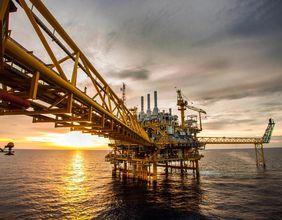
Tidewater Midstream and Infrastructure (TSX:TWM) maintains a network of midstream assets designed to support the movement and conditioning of natural gas liquids. Core activities include raw gas gathering systems, processing plants, pipelines, and storage infrastructure. These components function together to enable the transition of hydrocarbons from production areas to downstream distribution points.
Natural gas liquids such as propane and natural gasoline form a key part of the company’s operational scope. Facilities are structured to handle separation, stabilization, and logistical coordination, supporting both domestic distribution channels and export-oriented flows. Infrastructure design emphasizes connectivity between upstream supply and downstream markets, aligning with the broader s and p tsx index energy segment.
Processing facilities convert raw inputs into specification-ready products suitable for transportation and industrial use. Pipeline systems link production zones with storage hubs and delivery points, while terminal infrastructure supports product handling and staging. This integrated configuration positions the company within a value chain that prioritizes continuity of supply and operational reliability.
Market Activity and Trading Context
Recent market activity involving Tidewater Midstream and Infrastructure (TSX:TWM) included a modest upward shift during an active trading window. Session activity featured steady participation and volume consistent with routine exchange operations. Such movements are characteristic of publicly listed energy infrastructure companies responding to day-to-day market flows, sector sentiment, and liquidity conditions.
Trading patterns occurred against the backdrop of broader equity market participation linked to the s&p tsx environment. Energy-related listings frequently experience incremental fluctuations tied to commodity logistics, infrastructure utilization, and general market engagement. The observed session reflected these routine dynamics without signaling structural operational change.
Exchange activity also highlighted the interaction between midstream infrastructure businesses and broader capital markets. Participation levels, order flow, and session momentum collectively illustrated how infrastructure-focused issuers remain integrated with daily trading ecosystems. This context reinforces the company’s presence within Canada’s publicly traded energy infrastructure space.
Financial Structure and Operational Characteristics
Tidewater Midstream and Infrastructure (TSX:TWM) reports operational metrics associated with asset-intensive infrastructure businesses. Midstream enterprises typically manage capital-heavy facilities, including processing plants and pipeline networks, which shape balance sheet composition and operational reporting. Such structures are common across companies engaged in hydrocarbon logistics and storage.
Operational performance is influenced by throughput levels, facility utilization, and maintenance cycles. Processing assets require continuous oversight to maintain reliability, while transportation infrastructure depends on coordinated scheduling and system integrity. These elements form the backbone of day-to-day operations, supporting consistent service delivery across the asset base.
Revenue generation within midstream contexts is generally linked to service provision, transportation arrangements, and product handling. The company’s operational design reflects these characteristics, integrating gathering, processing, and logistics capabilities into a cohesive framework. This configuration aligns with established midstream models observed across the Canadian energy landscape.
Industry Position Within Canadian Energy Infrastructure
The Canadian midstream segment plays a critical role in linking upstream production with refining, distribution, and export pathways. Tidewater Midstream and Infrastructure (TSX:TWM) functions within this ecosystem by facilitating the conditioning and movement of natural gas liquids and related hydrocarbons. Infrastructure assets serve as intermediaries that enable efficient product flow across geographic regions.
Industry participants operate within regulatory, logistical, and engineering frameworks that emphasize safety, continuity, and asset integrity. Facilities are designed to accommodate varying throughput conditions while maintaining operational stability. The company’s asset portfolio reflects these industry standards, incorporating processing capability alongside transportation connectivity.
Integration with national energy infrastructure supports broader supply chain coordination. Storage and handling facilities provide buffering capacity that balances production timing with delivery requirements. This structural role underscores the importance of midstream operators in maintaining fluid market logistics across the Canadian energy network.
