
 AUS
AUS
 NZ
NZ
 UK
UK
 CA
CA
 USA
USA
 IND
IND







Highlights
• Mining companies remain a major component of Australia’s resource-focused economy.
• Global resource producers such as BHP Group Ltd (ASX:BHP) operate across diversified commodity portfolios.
• Commodity demand across infrastructure and manufacturing continues influencing the mining industry.
Australia’s mining sector remains central to global resource supply chains, with major companies operating across iron ore, copper, and coal markets within the ASX resource landscape.
The mining and resources sector forms a fundamental pillar of the Australian economy, supplying metals and minerals that support infrastructure development, manufacturing systems, and energy production worldwide. Many of the country’s largest resource producers operate extensive mining networks across iron ore, copper, and coal deposits. These companies represent a substantial share of the domestic equity market tracked by benchmark indices such as the ASX 20.
Major mining companies such as BHP Group Ltd (ASX:BHP) manage diversified resource portfolios involving extraction, processing, and export operations across several continents. These corporations maintain large-scale mining projects that supply materials used in construction, manufacturing, and heavy industry.
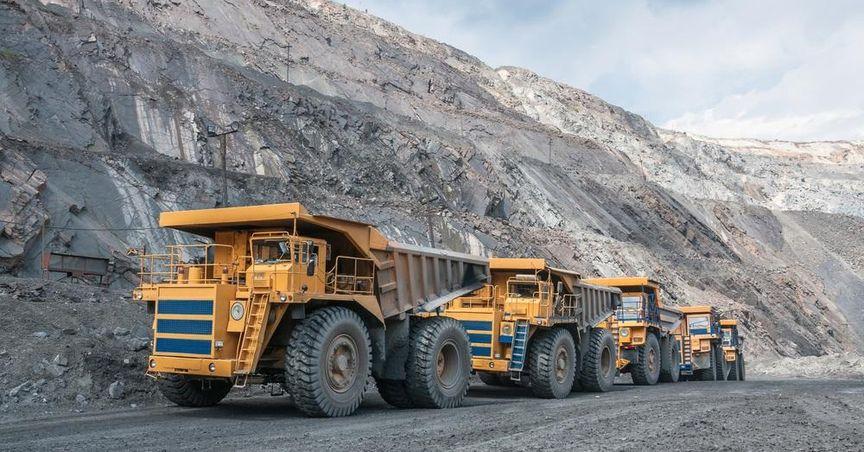
Australia’s mining industry involves extensive infrastructure including open-pit mines, underground operations, ore processing facilities, railway networks, and shipping terminals that support international commodity exports. These operations contribute to the movement of minerals from extraction regions to global industrial centres.
Mining companies within the broader Australian equities ecosystem operate alongside sectors including banking, healthcare, telecommunications, and industrial manufacturing represented within the asx all ords.
Global Commodity Demand and Resource Production
Mining companies operate in global commodity markets where metals and minerals serve as essential inputs for industrial production and infrastructure construction. Steel manufacturing, energy generation, transportation networks, and advanced technology systems require significant volumes of natural resources extracted from mining operations.
Iron ore represents one of Australia’s most significant mineral exports and remains a key component used in steel manufacturing. Steel forms the structural framework for bridges, buildings, transportation networks, and heavy machinery.
Copper also represents a critical industrial metal widely used in electrical wiring, power transmission infrastructure, renewable energy systems, and electronics manufacturing. Copper’s conductivity allows the material to serve as a core component within modern power grids.
Coal remains widely used in metallurgical processes associated with steelmaking, as well as energy generation systems across several industrial regions.
Mining companies extract these resources through extensive geological surveying, drilling programs, and resource development projects conducted across mineral-rich regions.
Within the wider Australian financial market structure represented by the ASX 50, mining firms operate alongside companies from finance, healthcare, consumer goods, and telecommunications sectors.
Mining Supply Chains and Resource Logistics
Large-scale mining operations involve complex supply chains designed to transport extracted minerals from remote regions to international trading markets. These supply chains combine mining equipment, transportation infrastructure, processing facilities, and export terminals.
Railway systems connect inland mining operations with coastal ports that handle bulk mineral shipments destined for global markets. Bulk carriers transport iron ore, coal, and other commodities across international trade routes linking Australia with industrial economies.
Logistics coordination ensures efficient movement of minerals from mine sites to port facilities. Mining companies maintain specialised transport infrastructure including rail lines, loading terminals, and mineral processing plants.
International commodity trading platforms enable producers to distribute raw materials across industrial sectors worldwide. Steel manufacturers, construction firms, and manufacturing companies purchase raw materials through these global markets.
Mining companies frequently invest in infrastructure development projects designed to improve efficiency across extraction and export operations.
Across Australia’s broader market environment, resource companies sometimes appear in discussions related to ASX dividend stocks, reflecting the presence of established mining corporations within the national equity market.
Industrial Demand for Metals and Minerals
Demand for metals and minerals is closely linked with industrial activity, urban development, and energy infrastructure expansion. Construction projects require structural materials derived from iron ore and steel production.
Transportation systems including railways, shipping infrastructure, and aviation manufacturing require metals such as aluminium, copper, and steel used in engineering and manufacturing processes.
Renewable energy technologies also depend on minerals extracted from mining operations. Solar panels, wind turbines, and battery systems require copper, rare earth elements, and other industrial metals.
Mining companies conduct exploration activities to identify additional mineral deposits that may support future resource development projects. Exploration programs include geological mapping, drilling campaigns, and mineral evaluation studies.
These activities help resource companies maintain production pipelines by identifying new extraction opportunities within mineral-rich regions.
Mining operations therefore serve as a foundation for industries ranging from construction and transportation to energy production and advanced manufacturing.
Mining Industry within Australia’s Economic Framework
The Australian economy benefits significantly from resource exports generated by mining companies operating across the country’s mineral-rich landscapes. These exports supply industrial economies worldwide with materials required for manufacturing and infrastructure development.
Mining companies employ engineers, geologists, equipment operators, logistics specialists, and environmental scientists responsible for maintaining large extraction facilities and infrastructure networks.
Technological advancements have introduced automation systems, digital monitoring technologies, and advanced geological modelling tools used to enhance operational efficiency within mining operations.
Environmental management practices also form part of modern mining activity. Companies implement land rehabilitation programs and environmental monitoring systems to manage ecological impacts associated with resource extraction.
Mining companies therefore operate within an interconnected ecosystem involving engineering firms, transport providers, manufacturing industries, and global commodity markets.
