
 AUS
AUS
 NZ
NZ
 UK
UK
 CA
CA
 USA
USA
 IND
IND


_10_04_2024_16_38_50_427275.jpg)




Highlights
- 3D printing technology is used in developing new surgical cuttings, patient-specific replicas of bones, organs and blood vessels
- The innovative technology has created long-lasting and better-fitting implants
- 3D printers that can replicate organs are excellent tools for medical education, training and research purposes
- Prosthetics, restorations, braces and dentures are the devices that can significantly benefit from 3D printing
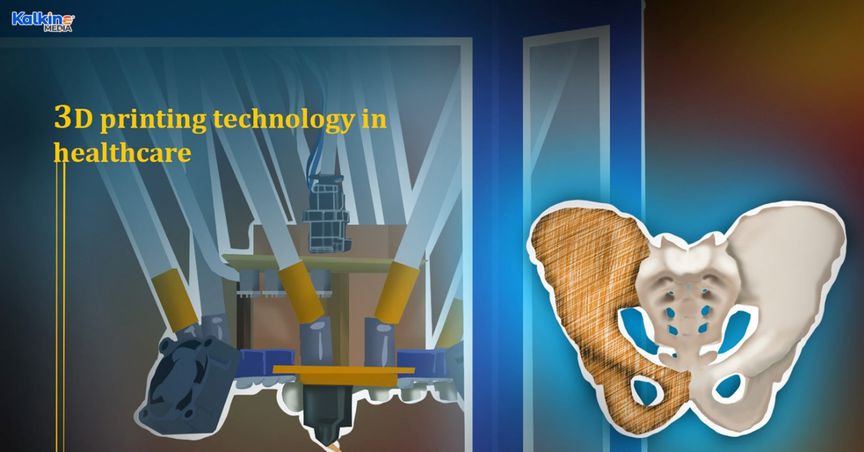
Medical technology is advancing considerably in the development of diagnostic methods and treatments. Among those technologies, 3D printing is the one which has provided a new form of treatment in several ways. The technology is used to develop new surgical cuttings and patient-specific replicas of bones, organs and blood vessels.
3D printing is most widely used in
- Orthopaedics – a medical field related to the skeletal system and associated structures
- Paediatrics – a branch of medicine dealing with infants and children
- Radiology – branch of medicine that deals with radiant energy in disease diagnosis and treatment
- Oncology – the study of cancer
Do read: How is EarlyBirds helping businesses tap opportunities in 3D printing space?
Applications of 3D printing in healthcare
3D printing is benefitting different sectors of the medical industry. It is devising new ways to provide personalised care and better-performing medical devices.
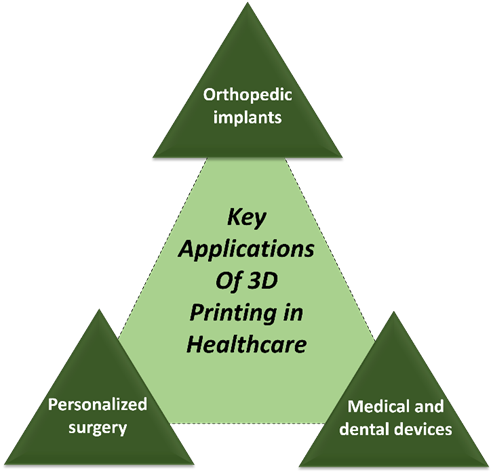
Image source: © 2022 Kalkine Media®
Orthopaedic implants
Orthopaedic implants are medical devices that replace a missing joint or bone through surgery. 3D technology has enabled the creation of long-lasting, better-fitting implants. Nowadays, a wide range of implants such as spinal, hip, knee and skull can be made using this technology.
The technology offers a flexible design that can enable faster assimilations between a living bone and an artificial implant.
Personalised surgery
3D printing has some great usages in the medical industry, providing anatomical models. Softwares and desktop 3D printers have enabled hospitals to produce high-accuracy 3D-printed models that assist pre-surgical planning.
Patient-specific anatomical models help surgeons in making better treatment decisions. It also reduces the time required for surgery and helps prevent complications.
3D printers that can replicate organs and are also excellent tools for medical education, training and research.
Do read: Precision medicine: All you need to know
Medical and dental devices
The global 3D printing medical device market has excellent growth opportunities in the future. Prosthetics, restorations, braces and dentures are the devices that can significantly benefit from 3D printing.
The lower cost associated with 3D printing makes it very useful to create prostheses for children as their growth is rapid, and they can quickly outgrow traditional prostheses.
Further, the technology can be utilised to create patient-specific prostheses, according to their anatomy, improving the fit of the prosthetic.
Breaking the “one-size-fit-all” approach
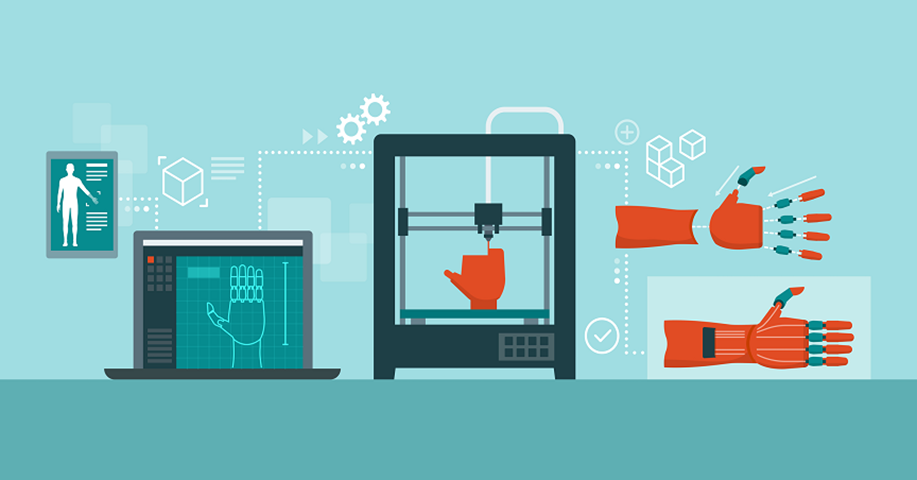
Image source: © Ipopba | Megapixl.com
3D printing has great potential to break the “one-size-fits-all” healthcare approach. Generally, surgeons use tools of the same size and shape for all patients, which is not adjustable for people with different anatomy. In this case, 3D printing comes as a great promise in two ways:
- Allows the pre-planning of surgery by creating an accurate anatomical map of the patient
- Can create tools very well fitted to a patient’s anatomy
Also read: The role of genomics in medicine: A look at pros and cons
