
 AUS
AUS
 NZ
NZ
 UK
UK
 CA
CA
 USA
USA
 IND
IND







Highlights
Dividend stocks stand firm amid market shifts
Energy weakness contrasts with resilient IT and financials
Key companies reveal steady income appeal
The ASX 200 has moved through a period of mixed sentiment in September 2025, shaped by global interest rate debates and uneven sector performance. Energy names have faced pressure, while information technology and healthcare have offered support. In this climate, dividend-paying companies are gaining renewed attention as anchors of stability.
Among the companies on the radar, Service Stream (ASX:SSM) has drawn interest for its infrastructure exposure, while Steadfast Group (ASX:SDF) represents an important name within insurance broking and financial services. These companies, along with Fiducian Group (ASX:FID) and EQT Holdings (ASX:EQT), provide insight into how income-focused strategies are being navigated in a shifting ASX stock market.
What Are the Leading Dividend Opportunities?
Dividend stocks are often sought after in times of market uncertainty. They provide a measure of consistency, supported by underlying business models that generate regular cash flows. Companies such as Steadfast Group (ASX:SDF) highlight the role of diversified financial services in shaping income trends, while Fiducian Group (ASX:FID) demonstrates how investment management firms are balancing growth ambitions with payouts.
EQT Holdings (ASX:EQT), as a trustee and wealth manager, represents another key player within the ASX dividend stocks landscape. These firms together underscore the breadth of industries supporting Australia’s dividend story, spanning infrastructure, finance, investment, and wealth management.
How Is Service Stream Positioned?
Service Stream (ASX:SSM) is an Australian company focused on infrastructure networks across telecommunications, utilities, and transport. With operations covering design, construction, and maintenance, it plays a crucial role in supporting national connectivity. Its revenue profile reflects strong diversification across essential services, making it a noteworthy inclusion in conversations about reliable income streams.
The company’s involvement in major projects provides long-term visibility, and its place in dividend discussions highlights how essential service providers can balance stability with shareholder returns.
Why Does Steadfast Group Stand Out?
Steadfast Group (ASX:SDF) operates as one of the largest insurance broker networks in the country. It brings together a wide network of intermediaries, underwriting agencies, and service providers, allowing it to operate at scale while still serving local businesses and individuals.
Its presence in the dividend space underscores how financial services companies with recurring revenue streams can deliver consistency. As interest in ASX 100 financial names continues, Steadfast demonstrates the enduring role of insurance-linked businesses in income-oriented strategies.
What Does Fiducian Group Contribute?
Fiducian Group (ASX:FID) is an investment and financial planning firm offering portfolio services, superannuation products, and advice platforms. Its income appeal stems from the combination of management fees and recurring service revenue, which provide visibility into earnings sustainability.
In a shifting economic backdrop where investors are balancing growth ambitions against income needs, Fiducian Group exemplifies how mid-sized financial firms can deliver reliable contributions to the ASX ordinaries stocks dividend stream.
How Does EQT Holdings Fit the Picture?
EQT Holdings (ASX:EQT) is a trustee and wealth manager that has built its reputation on fiduciary services, estate management, and philanthropic trusts. With a strong heritage and diversified service model, it plays an important role in shaping Australia’s dividend profile.
Its relevance in September 2025 lies in its ability to connect structural trends—such as intergenerational wealth transfer—with income-generating services. This positions EQT as a company that reflects both continuity and adaptability within the dividend landscape.
Which Companies Outside the ASX 200 Are Adding to Dividend Appeal?
While larger names often dominate discussions, companies outside the benchmark also contribute to Australia’s dividend landscape. These firms highlight the diversity of income opportunities across industries.
How Does CTI Logistics Support the Dividend Space?
CTI Logistics (ASX:CLX) is an Australian transport and logistics provider with operations spanning freight, warehousing, and property. Its role in dividend discussions stems from its broad-based revenue, combining essential transport services with supplementary logistics and storage. This diversification allows CTI to feature among dividend-oriented stocks, even though it is smaller in scale compared to larger peers.
The company underscores how logistics infrastructure can provide cash flows tied to trade activity and domestic distribution, making it a useful reference point in assessing reliable income streams.
Why Do Infrastructure and Utilities Matter for Dividends?
Infrastructure and utilities often deliver consistent returns due to the essential nature of their services. Service Stream (ASX:SSM), with its presence across telecommunications, utilities, and transport, is a prime example of this. The stability of demand for infrastructure maintenance and expansion supports predictable earnings that underpin dividend payouts.
Companies in this space demonstrate how core services translate into income opportunities, reinforcing the idea that infrastructure remains a cornerstone of dividend investing in the ASX stock market.
What Role Do Logistics and Transport Play?
Beyond CTI Logistics (ASX:CLX), the logistics and transport sector includes companies that benefit from structural demand for freight and distribution. These firms, though varied in scale, reflect the backbone of national trade. Their contribution to dividend narratives highlights how even capital-intensive businesses can generate income through steady service contracts and integrated operations.
How Are Mining and Resources Shaping Dividend Trends?
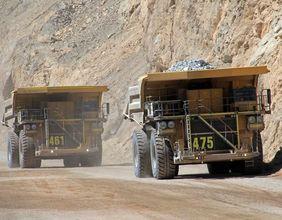
The resource sector has long been central to Australian dividends. Companies linked to ASX mining stocks generate significant cash flows from commodities, often returning capital to shareholders. New Hope (ASX:NHC), a coal producer, illustrates this pattern. Its resource-driven earnings have historically supported dividend distributions, highlighting how cyclical sectors can still anchor income strategies.
Mining companies often adjust payouts in response to commodity cycles, but their inclusion in dividend lists reinforces the weight of resources in shaping national income profiles.
How Do Financial and Investment Firms Contribute?
The financial sector remains a key driver of dividends. Steadfast Group (ASX:SDF), Fiducian Group (ASX:FID), and EQT Holdings (ASX:EQT) exemplify how diversified financial services, wealth management, and insurance-related businesses can sustain recurring revenue streams.
These firms represent the balance between growth ambitions and the delivery of stable dividends. They also underline the broader trend in which financial institutions use recurring fees, service contracts, and trust management to provide reliable income for shareholders.
Why Are Dividend Stocks Viewed as a Buffer Against Market Volatility?
The broader appeal of ASX dividend stocks lies in their ability to provide income even when capital markets fluctuate. In September 2025, with the ASX 200 retreating intraday and global uncertainties driving caution, dividends offer a measure of stability.
This defensive quality makes them particularly relevant in environments where growth is uneven across sectors. While energy names have lagged, the steady nature of dividends from companies across infrastructure, logistics, mining, and finance highlights the resilience of income-focused strategies.
How Are Mid-Sized Firms Like Smartgroup and MFF Capital Positioned?
Smartgroup (ASX:SIQ), focused on salary packaging and fleet management, contributes to the dividend landscape through its recurring service revenues. These revenues allow the company to balance operational costs while still generating distributions for shareholders.
MFF Capital Investments (ASX:MFF), an investment firm, adds another perspective by allocating capital across global opportunities while providing consistent income at home. These mid-sized firms show how businesses outside the very largest names still maintain relevance within the dividend narrative.
Why Are Smaller Financials and Regional Players Part of the Story?
Beyond the higher-profile names, regional players such as Lindsay Australia (ASX:LAU) and Kina Securities (ASX:KSL) reinforce the breadth of dividend opportunities. Their operations, tied respectively to agricultural logistics and Pacific-region financial services, provide diverse income channels.
Including these smaller contributors shows that the dividend sector spans far more than just the largest companies, reflecting the wide spectrum of industries represented on the ASX ordinaries stocks.
How Do Dividends Reflect Broader Market Dynamics?
The resurgence of interest in dividends also mirrors macroeconomic expectations. With speculation about interest rate adjustments in the United States and cautious optimism at home, investors are turning toward companies that can deliver consistent returns. Dividends serve as both an income stream and a signal of financial stability, especially in sectors tied to essential services.
The presence of both large-cap and smaller firms in dividend discussions highlights how income resilience is embedded across the Australian corporate landscape, offering multiple pathways for stability within an otherwise fluctuating market.
How Do Interest Rate Expectations Influence Dividend Stocks?
Shifts in interest rates play a powerful role in shaping dividend strategies. When global markets anticipate cuts in rates, as has been the case in recent weeks, dividend-paying companies become even more relevant. Their predictable payouts can offset lower yields in fixed-income markets, making them attractive alternatives for those seeking consistent income.
In September 2025, with speculation around monetary policy decisions both in Australia and abroad, dividend-focused companies such as Steadfast Group (ASX:SDF), Fiducian Group (ASX:FID), and EQT Holdings (ASX:EQT) remain central to discussions about reliable returns in the ASX stock market. These firms highlight how income generation intersects with macroeconomic shifts, creating a stabilizing force for portfolios during uncertain times.
How Do Dividends Complement Technology and Growth Sectors?
The dominance of technology and healthcare in recent ASX 200 movements reflects the appeal of growth-driven sectors. Yet dividends provide a complementary balance. While companies like Life360 and other growth-focused firms attract attention for innovation, dividend payers sustain appeal through resilience.
This interplay shows that dividend strategies are not just defensive—they also diversify exposure across industries. Investors benefit from the growth of technology and the stability of dividends, allowing participation in both innovation-driven trends and income-driven security.
What Is the Role of Energy and Resources in Dividend Narratives?
Although the energy sector has faced headwinds in recent months, it remains a crucial contributor to the national dividend profile. Resource companies such as New Hope (ASX:NHC) exemplify the capacity of mining and energy firms to generate significant cash flows in favorable commodity cycles.
The cyclical nature of ASX mining stocks means dividends from these sectors can fluctuate, but their importance cannot be overlooked. In periods of strength, these companies often deliver some of the largest payouts on the market, reinforcing their role within dividend portfolios.
Which Sectors Are Driving Resilience?
The resilience of dividend-paying companies comes from the wide array of industries they represent:
-
Infrastructure: Service Stream (ASX:SSM) demonstrates how essential services across telecommunications and utilities provide reliable earnings.
-
Financial Services: Fiducian Group (ASX:FID) and EQT Holdings (ASX:EQT) highlight the recurring revenue power of investment and wealth management.
-
Insurance: Steadfast Group (ASX:SDF) anchors the space with a networked model that spreads risk across intermediaries.
-
Logistics: CTI Logistics (ASX:CLX) shows how smaller, operationally diverse firms can still contribute to steady dividend flows.
-
Resources: New Hope (ASX:NHC) reflects the weight of mining in shaping Australia’s income-generating companies.
Together, these companies show how dividends are spread across multiple economic drivers, not tied to one sector alone.
Why Do Dividends Matter in September 2025?
With global uncertainty continuing to affect sentiment, dividends matter because they provide a tangible return independent of share price fluctuations. The past weeks have shown the ASX ordinaries stocks moving unevenly, but dividend-paying companies help reduce the impact of volatility.
This importance is underscored in September 2025 as markets balance optimism around technology and healthcare with caution in energy and financials. Dividends act as a stabilizer, making them a focal point for those navigating mixed signals.
How Do Dividends Interact With Broader Market Categories?
Dividend stocks intersect with every layer of the market:
-
Within the ASX 100, larger companies often deliver consistent income streams backed by scale.
-
Across the ASX ordinaries stocks, mid-sized firms like Fiducian Group (ASX:FID) show how investment and advisory services contribute.
-
Smaller names, such as CTI Logistics (ASX:CLX), illustrate how niche players add depth to the dividend space.
By cutting across indices, dividends represent one of the most inclusive strategies available, ensuring investors have access to income opportunities regardless of company size or sector.
What Does the Outlook Suggest for Dividend Stocks?
Looking forward, the outlook for dividend-paying companies depends on how sectors adapt to evolving conditions:
-
Financial firms will remain central as wealth management and advisory services expand.
-
Infrastructure operators should continue to benefit from ongoing national projects and essential service demand.
-
Resource companies will stay linked to commodity cycles, offering higher payouts in boom periods.
-
Logistics and transport providers will play a role as supply chains modernize and expand.
Together, these categories reinforce why dividends are seen not only as income streams but also as markers of business resilience.
Closing Perspective
Dividend-paying companies are shaping September 2025 as reliable contributors to the Australian market story. Service Stream (ASX:SSM), Steadfast Group (ASX:SDF), Fiducian Group (ASX:FID), EQT Holdings (ASX:EQT), CTI Logistics (ASX:CLX), and New Hope (ASX:NHC) are among the many names reflecting the breadth of the dividend landscape.
The appeal of ASX dividend stocks lies in their ability to provide consistency at a time when the ASX stock market is navigating global uncertainty. As sectors rise and fall with macroeconomic shifts, dividends remain the constant that anchors portfolios, ensuring that income-driven strategies continue to resonate in the months ahead.
