
 AUS
AUS
 NZ
NZ
 UK
UK
 CA
CA
 USA
USA
 IND
IND







Highlights
• Dividend-focused ASX companies remain prominent within income-oriented strategies.
• Financial, infrastructure, and resource sectors contribute to distribution-based models.
• Market positioning reflects stability themes across major Australian indices.
Dividend-focused ASX companies across financial, infrastructure, and resource sectors remain central to Australia’s equity market, reflecting stability and sectoral diversity.
Dividend-oriented stocks form an important segment of Australia’s financial landscape, particularly within sectors that generate consistent revenue streams. These companies operate across industries such as banking, infrastructure, telecommunications, and energy, where stable operations support earnings distribution frameworks. Within the broader equity environment, such companies are often represented across benchmark indices including the ASX 200 and the All Ordinaries, highlighting their role in market composition.
Income-oriented equities are typically associated with mature business models that prioritise operational efficiency and steady cash flows. These companies maintain established market positions supported by extensive customer bases and long-standing infrastructure. Their operations often span multiple regions, contributing to diversified revenue streams that support distribution frameworks.
Several ASX-listed companies are frequently discussed within this segment due to their role in income distribution structures. Among them are organisations operating within financial services, infrastructure networks, and resource industries. Companies such as Telstra Group Ltd (ASX:TLS), Transurban Group (ASX:TCL), and Fortescue Ltd (ASX:FMG) are often referenced within discussions surrounding dividend-oriented equities due to their operational scale and sectoral presence.
The inclusion of these companies within broader indices reflects their importance within the Australian market structure. Their activities contribute to overall economic activity while supporting the functioning of essential services and infrastructure systems.
Financial and Infrastructure Sector Contribution
The financial sector plays a central role in Australia’s dividend landscape, with major institutions operating across banking, asset management, and financial services. These organisations manage capital flows, provide lending services, and support economic activity through financial intermediation.
Banks and financial institutions often maintain extensive operational networks that enable them to serve both individual and corporate clients. Their revenue streams are influenced by lending activities, deposit structures, and broader economic conditions. These factors contribute to their ability to distribute earnings within structured frameworks.
Infrastructure companies also contribute significantly to the dividend-oriented segment. These organisations manage assets such as toll roads, utilities, and transportation networks that generate consistent revenue through long-term operational models. Infrastructure assets are often supported by contractual arrangements or regulated frameworks, which provide visibility into revenue streams.
These sectors form a substantial portion of the asx all ords, reflecting their importance within Australia’s financial ecosystem. Their operations are closely tied to essential services, making them integral to economic stability and market structure.
Resource Sector Participation in Dividend Frameworks
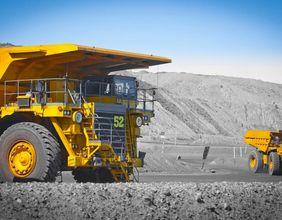
The resource sector represents another key contributor to dividend-focused equities, particularly within mining and energy industries. Companies operating in this segment engage in the extraction and processing of commodities such as iron ore, coal, and natural gas.
Resource companies are influenced by global commodity markets, where supply and demand dynamics shape operational outcomes. Their revenue streams are linked to production volumes and commodity market conditions, which can influence distribution frameworks over time.
Mining companies often operate large-scale projects that require significant capital investment, including infrastructure development and operational facilities. These projects support production activities that contribute to both domestic and international markets.
The presence of resource companies within dividend discussions reflects their scale and contribution to Australia’s export-driven economy. Their inclusion within broader market indices underscores their role in shaping the country’s financial landscape.
Within market narratives, these companies are often examined alongside broader categories such as ASX dividend stocks, which encompass organisations across multiple sectors that participate in distribution-based frameworks.
Telecommunications and Essential Services
Telecommunications companies represent another segment within the dividend-focused landscape, providing essential communication services across the country. These organisations manage networks that support mobile, broadband, and digital connectivity for both individuals and businesses.
Telecommunication infrastructure forms a critical component of modern economic activity, enabling communication, data transfer, and digital services. Companies operating in this space maintain extensive network systems that require ongoing maintenance and technological upgrades.
Revenue streams in the telecommunications sector are often derived from subscription-based services, providing a level of consistency within operational models. This structure supports the ability of companies to maintain distribution frameworks aligned with their financial performance.
The role of telecommunications companies within the broader market reflects their importance in supporting connectivity and digital transformation. Their inclusion within indices such as the ASX 200 highlights their significance within Australia’s corporate environment.
Market Structure and Sectoral Balance
Australia’s equity market is characterised by a diverse range of industries that collectively contribute to overall market performance. Dividend-oriented companies represent one aspect of this structure, operating alongside growth-focused businesses and emerging sectors.
The balance between different sectors supports the stability of the financial ecosystem, ensuring that market activity reflects a range of economic drivers. Companies within financial services, infrastructure, resources, and telecommunications each contribute unique characteristics to the market.
Market indices serve as representations of this diversity, grouping companies across sectors to provide a comprehensive view of market composition. The inclusion of dividend-oriented companies within these indices highlights their role within the broader financial system.
Corporate activity across sectors continues to shape the market landscape, with developments in one segment influencing others. This interconnected structure reflects the dynamic nature of Australia’s equity market, where multiple industries operate within a unified financial framework.
