
 AUS
AUS
 NZ
NZ
 UK
UK
 CA
CA
 USA
USA
 IND
IND






Highlights
Middle East tension sparks sharp oil surge and market volatility
Energy and coal producers show resilience amid broader market weakness
Mining, technology and property stocks face heavy pressure
Geopolitical tension around a critical oil shipping route triggered a sharp rise in crude prices, sending shockwaves through Australian equities while energy producers and coal miners resisted the wider downturn.
Global markets moved through a phase of heightened volatility as geopolitical tensions in the Middle East disrupted expectations around energy supply and influenced sharp swings across commodities and equities. Discussions across financial circles increasingly highlighted how the ASX recorded its weakest session in nearly eleven months as crude oil surged, reflecting market sensitivity to developments near one of the world’s most crucial oil shipping routes.
Concerns about restricted oil flows rapidly influenced investor sentiment across the Australian market. While several sectors faced strong downward pressure, energy producers and coal miners experienced renewed attention as higher crude prices strengthened the outlook for fossil fuel supply companies.
The shift highlighted how global events can rapidly reshape the balance between defensive and cyclical sectors within Australia’s equities landscape.
Geopolitical Tension Sparks Market Uncertainty
The Strait of Hormuz remains one of the most important shipping routes for global energy trade. Any disruption in this region often triggers immediate reactions across commodities markets and energy-related equities.
Recent developments surrounding escalating tensions in the Middle East raised concerns about the stability of supply routes. When shipping activity faces uncertainty, crude prices tend to move sharply as markets reassess supply availability.
For the Australian sharemarket, the impact was immediate. Energy companies linked to oil production and export operations moved higher as investors reassessed the outlook for global energy pricing. Meanwhile, sectors dependent on economic growth or international trade flows faced stronger selling pressure.
The broader reaction illustrated how geopolitical risks can influence investor sentiment far beyond the region where the event occurs.
Energy Producers Stand Out During Market Turbulence
Amid widespread declines across many industries, the energy sector emerged as a rare area of strength. Companies involved in oil production and exploration attracted renewed interest as rising crude prices improved revenue expectations.
Among those gaining attention was Karoon Energy (ASX:KAR), a company involved in offshore oil development projects. Higher global oil prices often improve the economics of such operations, making exploration and production activity more attractive.
Another key player in the sector, Santos (ASX:STO), also drew market interest. The company operates across several energy projects spanning gas and oil production, placing it in a strong position when commodity prices strengthen.
Energy exploration and production group Beach Energy (ASX:BPT) similarly benefited from the renewed focus on fossil fuel supply security. With global markets closely watching oil flows from the Middle East, companies already producing hydrocarbons gained visibility.
One of Australia’s largest energy producers, Woodside Energy (ASX:WDS), also featured prominently in market discussions. Its portfolio of global projects makes it closely tied to movements in international oil and gas pricing.
Together, these companies highlighted how commodity price shifts can quickly change the relative performance of entire sectors.
Coal Miners Also Draw Market Attention
The surge in oil prices did not only influence oil producers. Coal mining companies also gained traction as global energy markets reacted to supply concerns.
Coal remains an important component of energy generation in several regions, and shifts in oil markets sometimes encourage broader energy diversification strategies.
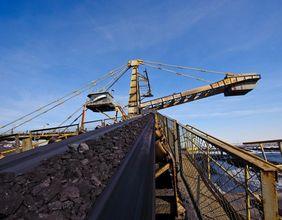
Mining group Yancoal Australia (ASX:YAL) saw renewed interest as global energy discussions intensified. With extensive coal operations, the company sits within a sector that often benefits when fossil fuel demand strengthens.
Similarly, New Hope Corporation (ASX:NHC) drew attention as investors evaluated the implications of rising energy costs. The company operates multiple coal assets supplying international markets.
Coal producer Whitehaven Coal (ASX:WHC) also featured in the sector’s relative strength. As global markets reassessed supply security, coal producers remained part of the broader conversation around energy availability.
These developments demonstrated how geopolitical tensions can influence multiple segments within the energy complex.
Materials Sector Faces Strong Pressure
While energy companies displayed resilience, the materials sector experienced a very different reaction. Mining stocks that dominate the Australian market faced significant downward pressure as global economic concerns resurfaced.
Large diversified mining companies often react quickly to shifts in global growth expectations. When geopolitical tensions intensify, investors sometimes become cautious toward sectors tied to construction, manufacturing and infrastructure demand.
Among the companies under pressure was global mining giant BHP Group (ASX:BHP). The company’s extensive portfolio of iron ore, copper and other resources links its performance closely to global industrial activity.
Another major player, Rio Tinto (ASX:RIO), also faced market weakness as broader commodity sentiment turned cautious.
Iron ore producer Fortescue (ASX:FMG) likewise experienced declines amid the broader pullback in materials stocks.
These movements reflected the sensitivity of mining companies to global economic outlook changes, particularly during periods of geopolitical tension.
Gold Miners Slide Despite Market Anxiety
Interestingly, gold mining companies also experienced declines despite heightened global uncertainty.
Gold often acts as a defensive asset during turbulent market conditions. However, when broader equity markets experience sharp moves, gold miners sometimes follow the general market trend rather than the commodity’s safe-haven narrative.
Among those affected were Evolution Mining (ASX:EVN) and Northern Star Resources (ASX:NST), both major gold producers operating several mining projects across Australia.
International gold producer Newmont Corporation (ASX:NEM) also appeared in the group of mining companies facing downward pressure during the market sell-off.
The reaction suggested that the immediate focus of investors remained on energy supply disruptions rather than traditional safe-haven assets.
Technology and Property Stocks Join the Decline
Outside the commodities sector, technology and property companies also experienced notable weakness.
Technology stocks often respond quickly to changes in global risk appetite. When geopolitical events raise uncertainty, investors sometimes reduce exposure to growth-focused sectors.
Industrial companies and property-related businesses also tend to react to broader economic expectations. Rising energy costs can influence production expenses, logistics and infrastructure development, which in turn affects market sentiment toward these industries.
This broader decline highlighted how interconnected the global economy has become, with events in one region influencing a wide range of sectors across international markets.
The Broader Market Context
The Australian sharemarket is closely linked to global commodity flows and international trade. As a result, external developments frequently influence local equities.
Major benchmark indices such as the ASX 200 often reflect shifts in commodity demand, currency movements and geopolitical developments.
Investors also monitor broader index groups including the ASX 100 and ASX 300 to understand how large-cap and mid-cap companies respond to changing economic conditions.
Periods of volatility can highlight the diversity within these indices. Energy companies, miners, technology firms and property developers often react differently depending on the underlying driver of market movement.
Energy Prices and Market Psychology
Oil prices play a powerful role in shaping global market psychology. When crude prices rise sharply, several economic questions emerge simultaneously.
Higher oil prices can influence transportation costs, manufacturing expenses and consumer spending patterns. These effects ripple across industries, affecting corporate profitability expectations.
For markets such as Australia’s, which host many resource companies, energy price shifts can create a complex landscape. Oil producers may benefit from stronger prices, while industries dependent on energy inputs may experience cost pressure.
This balance often results in divergent sector performance during commodity shocks.
Long-Term View for Australian Equities
Despite sharp short-term movements, the Australian sharemarket has historically navigated periods of global uncertainty by adapting to shifting economic conditions.
Energy transitions, commodity cycles and geopolitical developments all contribute to the evolving structure of the market.
Investors also keep an eye on sectors offering income stability, particularly companies often discussed within the category of ASX dividend stocks. These businesses sometimes attract attention during uncertain periods due to their established cash-flow profiles.
However, market cycles remain dynamic, and sector leadership frequently changes depending on global trends.
What the Market Reaction Reveals
The recent volatility across Australian equities revealed several key insights about how markets respond to geopolitical shocks.
First, energy supply disruptions can quickly elevate the importance of oil and coal producers. When global supply routes face uncertainty, companies already involved in production often gain prominence.
Second, mining companies tied to industrial demand can experience downward pressure when geopolitical tensions raise concerns about global growth.
Third, broader sectors such as technology, property and industrial companies can follow the wider risk-off sentiment even when the underlying event is primarily energy-related.
These dynamics highlight the interconnected nature of modern financial markets.
Outlook for Energy and Resources
Energy markets remain highly sensitive to geopolitical developments, particularly when supply routes become part of international tensions.
If uncertainty continues around key shipping corridors, oil markets may remain volatile. Such conditions can influence energy producers, mining companies and global equity markets in different ways.
Australia’s market structure means that commodity cycles often play a central role in shaping investor sentiment. As global events unfold, sectors linked to energy production, resource extraction and international trade are likely to remain closely watched.
The sharp reaction across Australian equities illustrates how global geopolitical developments can reshape market sentiment within a short period. Rising oil prices placed energy producers and coal miners in the spotlight while mining, technology and property stocks faced widespread pressure.
Although market volatility can appear sudden, it often reflects deeper economic relationships between energy supply, global trade and investor expectations.
As events continue to evolve, the Australian sharemarket remains a key reflection of how global commodity dynamics intersect with regional economic activity.
