
 AUS
AUS
 NZ
NZ
 UK
UK
 CA
CA
 USA
USA
 IND
IND






Highlights
• ASX 200 eases amid broad-based weakness in select sectors.
• Energy stocks post gains despite overall index decline.
• BHP contributes to sector divergence within the ASX 20.
The ASX 200 slipped amid weakness in financials and technology, while energy stocks and BHP provided relative support within the ASX 20.
Australia’s share market encompasses mining majors, financial institutions, healthcare innovators, consumer companies, and energy producers, all represented within key benchmarks such as the ASX 200 and the ASX 20. These indices serve as barometers of domestic economic activity and global sentiment, reflecting daily shifts in sector participation.
The ASX 200 recorded a decline during the latest session, even as segments of the energy sector advanced. BHP Group Limited (ASX:BHP) featured among the prominent names influencing movement within the ASX 20, underscoring how heavyweight constituents can offset broader weakness in other sectors.
The broader ASX All Ordinaries mirrored the mixed tone, with resource-linked stocks showing resilience while financials and technology names faced pressure.
Energy Sector Resilience Amid Market Pullback
Energy stocks demonstrated relative strength during the session, contrasting with softness across other parts of the market. Movements in oil and gas benchmarks frequently influence valuations of Australian-listed energy producers. When commodity benchmarks firm, energy equities often reflect renewed investor interest.
Companies exposed to upstream production and liquefied natural gas operations can respond to shifts in global supply dynamics and geopolitical developments. Strength in this segment provided partial support within the ASX 200, even as other sectors experienced selling pressure.
The ASX 20, composed of Australia’s largest listed entities, includes several resource and energy majors. Gains within these names can moderate broader index declines, though not always sufficiently to reverse overall direction.
Energy sector advances highlight the differentiated performance patterns that can emerge within the ASX All Ordinaries during periods of macroeconomic uncertainty.
Mining Heavyweights and Materials Influence
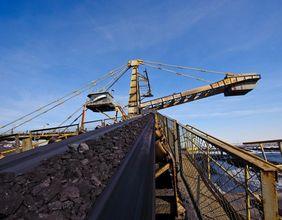
Mining companies play a substantial role in index composition due to their significant market capitalisation. BHP Group Limited (ASX:BHP), as a diversified resources company, influences both the ASX 20 and the ASX 200 through its exposure to iron ore, copper, and other key commodities.
Commodity fluctuations tied to global industrial demand can create volatility within the materials segment. When resource majors move higher in tandem with energy producers, their influence may partially cushion broader market weakness.
However, declines in other sectors such as financial services, consumer discretionary, and technology can outweigh gains in mining stocks, resulting in a net index fall. The ASX All Ordinaries captures these cross-sector interactions, illustrating how index-level outcomes often reflect a balance of offsetting forces.
Resource stocks can at times diverge from broader equity trends, particularly when commodity-specific developments drive valuation adjustments.
Financials and Technology Weigh on Sentiment
Financial institutions represent a substantial component of the ASX 200. Movements in banking stocks frequently reflect shifts in interest rate expectations, funding costs, and domestic economic data. When financial shares retrace, their combined weight can exert downward pressure on the index.
Technology stocks, though smaller in aggregate weighting compared to materials and financials, can exhibit heightened volatility tied to global trends. Developments in overseas technology markets often filter into Australian-listed counterparts.
During sessions characterised by caution, capital rotation away from higher-volatility sectors toward more defensive areas may occur. Companies identified among established ASX dividend stocks sometimes attract attention in such environments, although broad index weakness can still influence valuations. The interplay between cyclical sectors and defensives shapes the daily trajectory of the ASX All Ordinaries and its major sub-indices.
Broader Market Dynamics and Investor Positioning
Index-level movements often extend beyond individual company announcements. Portfolio rebalancing, global macroeconomic developments, and capital flow adjustments contribute to short-term volatility. Institutional allocation changes tied to exchange-traded funds can amplify movements within the ASX 200.
Energy and mining gains amid overall market weakness illustrate how sector-specific catalysts can diverge from broader sentiment. At the same time, widespread selling in financials or consumer stocks may reflect macro concerns such as economic momentum or inflation expectations.
The ASX 20 frequently acts as a focal point during such sessions due to its concentration of large-cap names. When heavyweight stocks move in opposing directions, index volatility may increase. The ASX All Ordinaries provides a wider lens on these shifts, capturing both large-cap divergence and mid-cap fluctuations within Australia’s diversified equity ecosystem.
