
 AUS
AUS
 NZ
NZ
 UK
UK
 CA
CA
 USA
USA
 IND
IND






Highlights
Market sentiment shifts amid rising volatility
Defensive sectors draw renewed attention
Resource and banking stocks face pressure
The Australian equities landscape is entering a decisive phase as the ASX 200 experiences a notable pullback, reshaping sentiment across the ASX stock market. This shift is prompting closer scrutiny of sector performance, particularly among large-cap stocks that traditionally anchor stability. As volatility returns, market participants are reassessing positioning across industries, from resources to financials, while looking for signals of resilience and future direction.
What is driving the current market mood?
The recent downturn reflects a combination of global uncertainty and domestic pressures. Shifts in economic expectations, combined with cautious sentiment across international markets, have influenced the direction of Australian equities.
Heavyweight sectors such as financials and resources have played a key role in shaping index movement. When these segments lose momentum, the broader market often follows. This has led to a more measured outlook across the ASX 100 and All Ordinaries, where performance trends are becoming increasingly selective.
Which sectors are under pressure?
Mining and resources
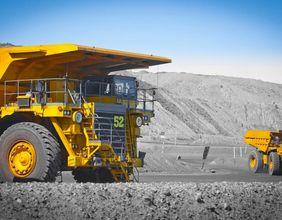
The resources sector is showing signs of moderation after a period of strength. BHP Group Limited (ASX:BHP), a global leader in diversified mining operations, is navigating softer momentum linked to commodity demand trends.
Similarly, Rio Tinto Limited (ASX:RIO), known for its large-scale iron ore and mineral production, reflects the broader cautious tone. These movements highlight changing dynamics within ASX mining stocks.
Financial sector
Australia’s banking sector is also experiencing recalibration. Commonwealth Bank of Australia (ASX:CBA), a major provider of banking and financial services, has mirrored the broader shift in sentiment.
Financial stocks tend to respond quickly to economic expectations, making them a focal point during periods of uncertainty.
Technology and growth
Growth-oriented companies are also adjusting to changing conditions. Xero Limited (ASX:XRO), a global software provider, highlights how technology stocks can react to evolving market expectations and risk appetite.
Are defensive sectors gaining traction?
Periods of volatility often redirect attention toward more stable industries. Consumer staples and essential services are increasingly coming into focus.
Woolworths Group Limited (ASX:WOW), a leading supermarket and retail operator, represents a category of businesses that typically attract attention during uncertain times due to consistent demand patterns.
In addition, companies within ASX dividend stocks are seeing renewed interest, as steady income streams become more appealing when broader market movements are less predictable.
How is market structure evolving?
The current environment points to a shift from broad-based gains to more selective performance. Instead of uniform growth, different sectors are moving at varying speeds, reflecting underlying fundamentals.
This evolving structure underscores the importance of diversification and careful sector allocation. It also highlights the role of business strength and earnings consistency in shaping performance during uncertain conditions.
What trends are visible across indices?
Beyond the headline index, patterns across the ASX 100 and All Ordinaries reveal a similar story of cautious sentiment.
Some companies continue to demonstrate resilience, while others face pressure. This divergence reflects a market that is becoming more selective, where individual performance matters more than broad trends.
Is this a temporary phase?
Market pullbacks are a natural part of the investment cycle, but the current shift raises questions about its duration. External influences such as global economic developments and commodity demand will likely shape the next phase.
Australia’s market has historically shown resilience, supported by strong institutions and a diversified economy. While volatility may persist, long-term fundamentals remain an important anchor.
What should be watched next?
Global developments
Economic signals from major economies will continue to influence Australian market sentiment.
Commodity cycles
As a resource-driven market, changes in commodity demand will remain a key factor.
Sector rotation
Movement between growth and defensive sectors is likely to continue as conditions evolve.
How are companies responding?
ASX-listed companies are adapting through operational adjustments and strategic positioning. This includes improving efficiency, strengthening balance sheets, and focusing on long-term opportunities.
Technology firms continue to innovate despite volatility, while resource companies are aligning production with market conditions. Financial institutions are maintaining a strong focus on stability and capital management.
A shift in market direction?
The recent pullback may indicate a broader transition toward a more balanced market environment. Performance is increasingly driven by fundamentals rather than widespread momentum.
This shift could redefine how market participants approach opportunities, placing greater emphasis on resilience and sustainable growth.
The Australian market is navigating a period of adjustment marked by shifting sentiment and sector rotation. While challenges remain, the evolving landscape highlights the importance of adaptability and strategic positioning.
As conditions continue to unfold, the focus will remain on identifying sectors and companies capable of maintaining strength in a changing environment.
