
 AUS
AUS
 NZ
NZ
 UK
UK
 CA
CA
 USA
USA
 IND
IND


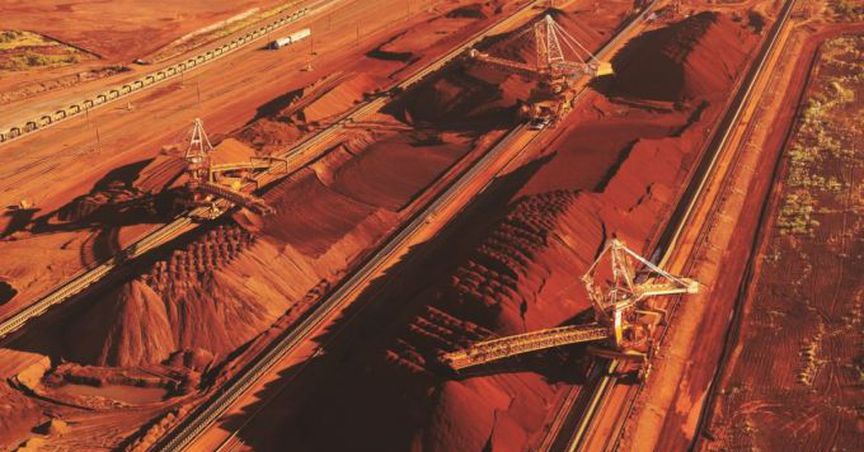




Iron ore prices are relatively flat and moving in the narrow range with Benchmark Iron Ore Fines 62% Fe (CME) trading in a narrow range from $85.01 to $86.23. The fundamentals in the raw material are ambivalence, with China either marking mills activity suspension or experiencing a drop in domestic steel output.
However, in the recent scenario, the steel raw-material marked a decline in prices amid concern of a slowdown in the global economy, which is expected to exert pressure on steel demand and in turn iron ore demand. The Dalian Commodity Exchange (DCE) 62% Fines Fe dropped to mark a close of RMB 611.00 (As on 25th March 2019, 13:30 hours GMT).
The Iron ore inventory across 35 ports in China rose slightly and marked a level of 136.83 million tonnes (For the week ended 22nd March), up by 0.34% as compared to the previously reported inventory, which in turn supported the iron ore prices as it marked an increased import of Iron ore across the 35 Chinese port.
The only factor which prevented any steep fall in iron ore prices in Chinaâs domestic market and international market was the rising steel prices, which prompted mills to buy iron ore for further production of steel to realize the high steel prices.
The prices of Steel Rebar settled at RMB 3950 (for the week ended 22nd March), up by 0.82% as compared to its previous close. The Steel HRC closed at RMB 3880 (as on 22nd March), up by 1.84% as compared to its previous close. The high steel prices prompted mills to ramp up the production to take advantage of high steel prices and prevented any steel fall by offsetting the pressure arising from the slowdown in the global economy.
The increased stance of China to curb the environmental pollution exerted the pressure on low-grade iron ore prices, but the increase in steel prices supported the prices of high-grade iron ore prices and prevented any sharp fall. The 58% Fe Fines (FOT Qingdao) marked a closing of RMB597 (as on 25th March), down by 0.17% as compared to its previous close.
The high prices of steel soon led the steel inventory to build up, and Chinaâs domestic steel inventory stood at 18.69 million tonnes (as on 22nd March), up by 5.50% as compared to the previously reported inventory.
Many Iron ore miners on Australian Stock Exchange plunged over the concern of steel future and iron ore demand. The Worldâs second largest iron ore miner Rio Tinto (ASX:RIO) ended the day session on a negative note and descended to mark the dayâs low of A$92.260, before settling at A$93.130, down by 1.10% as compared to its previous close.
To further gauge the direction of iron ore prices, the market participants are eyeing on the events that are exerting pressure on the global economy and in turn, reckoning the demand of steel in the global as well as Chinaâs domestic economy.
Disclaimer
This website is a service of Kalkine Media Pty. Ltd. A.C.N. 629 651 672. The website has been prepared for informational purposes only and is not intended to be used as a complete source of information on any particular company. Kalkine Media does not in any way endorse or recommend individuals, products or services that may be discussed on this site. Our publications are NOT a solicitation or recommendation to buy, sell or hold. We are neither licensed nor qualified to provide investment advice.
