
 AUS
AUS
 NZ
NZ
 UK
UK
 CA
CA
 USA
USA
 IND
IND






Highlights
• Updated definitive feasibility study outlines revised project economics for Epanko.
• Graphite development aligned with battery anode supply chain demand.
• EcoGraf continues advancing integrated mining and downstream strategy.
EcoGraf updates its Epanko graphite feasibility study, strengthening its presence in the All Ords materials sector and advancing battery mineral development plans.
The materials and mining sector remains a central pillar of Australia’s listed equity market, with companies spanning precious metals, bulk commodities and critical minerals represented within the All Ords benchmark. This index captures a broad cross-section of industrial, financial, healthcare and resource-focused enterprises. Within this framework, graphite developers contribute to the expanding battery materials ecosystem.
EcoGraf Limited (ASX:EGR) operates in the graphite development and battery anode materials segment, with its Epanko Graphite Project in Tanzania forming a core asset within its portfolio. The company has released an updated definitive feasibility study for Epanko, outlining revised project assumptions and financial parameters under updated development frameworks.
Graphite is an essential component in lithium-ion battery manufacturing, particularly for the production of anode materials used in electric vehicles and energy storage systems. As electrification trends continue to shape commodity demand patterns, graphite developers have gained prominence within the materials sector.
Definitive feasibility studies typically evaluate mine planning, processing design, capital expenditure requirements and projected operational outputs. The updated Epanko study incorporates adjustments to operational assumptions, refining project design and implementation pathways.
Participation within the all ords positions EcoGraf alongside a diverse group of listed entities while maintaining its focus on critical mineral development linked to battery supply chains. Graphite projects differ from traditional bulk commodity operations due to their integration into downstream processing and value-added refining stages.
Epanko Graphite Project Development Scope
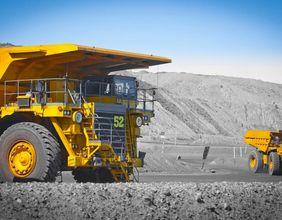
The Epanko Graphite Project is located in Tanzania and has been structured as a staged mining and processing development. The project encompasses open-pit mining operations, graphite concentration facilities and associated infrastructure.
The updated study outlines revised mine scheduling, throughput planning and operational frameworks designed to support consistent graphite concentrate production. Feasibility studies generally assess mineral reserves, processing recoveries and infrastructure requirements under defined technical parameters.
Graphite extraction involves mining ore followed by flotation processing to produce concentrate. This concentrate can subsequently be refined into higher-purity material for battery applications.
Project planning includes infrastructure components such as road access, water management systems and energy supply integration to support sustained operations. Within the All Ords, materials companies engaged in battery minerals form part of a growing thematic allocation reflecting electrification and storage technologies.
Definitive feasibility studies serve as milestones in the mining lifecycle, offering structured economic modelling to support project financing discussions and development planning. Epanko’s development framework also contemplates modular expansion pathways aligned with downstream processing integration.
Financial Parameters and Capital Structure Considerations
The updated Epanko study presents revised financial metrics based on adjusted capital expenditure, operating cost assumptions and projected revenue streams. Net present value calculations are commonly used in such studies to assess projected cash flows across the life of mine under specified discount rates.
Capital intensity in graphite projects is influenced by mine development, processing plant construction and transport logistics. Operating costs generally encompass mining, beneficiation, administration and export arrangements.
Project financing strategies for mining developments often combine equity capital, debt facilities and potential strategic partnerships aligned with battery supply chains.
Graphite developers typically prioritise reinvestment of capital toward construction and operational scale-up rather than distributing earnings, distinguishing them from entities commonly recognised among ASX dividend stocks.
The financial modelling embedded within the feasibility study provides a structured framework for assessing operational sustainability under defined economic assumptions. Balance sheet management and staged development planning form part of capital allocation considerations for critical mineral projects. EcoGraf’s broader corporate structure includes downstream purification technology aimed at producing battery-grade spherical graphite.
Battery Materials Market Context
Graphite remains a foundational material in lithium-ion battery production, particularly in anode fabrication. Battery anodes require high-purity carbon materials with consistent flake characteristics and structural integrity.
EcoGraf’s strategy integrates upstream mining at Epanko with downstream processing capabilities designed to refine natural graphite into anode-ready material. This vertical integration model seeks to capture additional value within the supply chain.
The battery minerals segment represented within the all ords includes companies focused on lithium, nickel, cobalt and graphite development. These commodities are central to electric vehicle manufacturing and stationary storage applications.
Global supply chain diversification efforts have increased attention on alternative sources of battery minerals beyond dominant production regions. Downstream processing capacity plays a critical role in converting raw concentrate into battery-grade material suitable for cell manufacturing. Environmental compliance and regulatory oversight form integral components of both mining and processing development stages. Graphite projects are commonly evaluated on parameters such as flake size distribution, concentrate purity and scalability of processing operations.
Position Within the All Ords Materials Landscape
The All Ords index encompasses a broad spectrum of materials companies engaged in gold, base metals, bulk commodities and critical minerals. Graphite developers represent a specialised allocation within this broader sector composition.
EcoGraf’s updated Epanko study reinforces its positioning within the battery minerals classification of the materials segment. The integration of upstream mining and downstream purification distinguishes its operational model from standalone mining ventures.
Mining projects typically progress through exploration, feasibility, financing and construction phases, with each stage marking incremental advancement in project maturity. Participation within the all ords enhances corporate visibility among diversified portfolios tracking Australian equities.
The materials sector continues to evolve in response to electrification trends and battery demand growth across global markets. EcoGraf’s project advancement aligns with the broader thematic focus on securing critical mineral supply chains for emerging technologies.
