
 AUS
AUS
 NZ
NZ
 UK
UK
 CA
CA
 USA
USA
 IND
IND





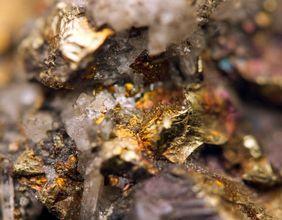


Western Mines Group Ltd (WMG) has revealed geochemical assay outcomes from six reverse circulation drill holes at its Mulga Tank Project within the Minigwal Greenstone Belt, located in Western Australia's Eastern Goldfields. The drilling program identified extensive nickel sulphide mineralisation zones featuring high-grade intervals, including assays reaching 2.26% nickel and 0.35% copper, positioning WMG to potentially expand its existing mineral resource estimate.
Key Highlights
- Western Mines Group Ltd (ASX:WMG) obtained assay results from drill holes MTRC070, MTRC072 to MTRC075, and MTRC078 at the Mulga Tank Project in Western Australia.
- All six drill holes intersected broad nickel sulphide mineralisation zones with elevated nickel, cobalt, copper, and platinum-palladium concentrations.
- Hole MTRC073 reported 3 metres at 1.18% Ni including 1 metre at 2.25% Ni, 708ppm Co, 0.21% Cu, and 0.17g/t Pt+Pd from 190 metres; MTRC078 recorded 1 metre at 2.26% Ni, 0.10% Co, 0.35% Cu from 295 metres.
- Phase 5 drilling is nearing completion with two shallow diamond drill holes remaining; a co-funded seismic survey by the EIS is planned for August to delineate the three-dimensional structure of the Mulga Tank Complex.
Extensive Mineralised Intervals Across Six Reverse Circulation Holes
Western Mines Group received assay data for the final Phase 4 and initial Phase 5 reverse circulation drill holes at the Mulga Tank Project, situated on the Minigwal Greenstone Belt in Western Australia's Eastern Goldfields. The six holes—MTRC070, MTRC072, MTRC073, MTRC074, MTRC075, and MTRC078—all exhibited visually logged disseminated nickel sulphide mineralisation. Assays confirmed elevated nickel and sulphur levels coinciding with anomalous copper and platinum-group elements.
Combined results from these holes showed consistent nickel grades ranging between 0.26% and 0.31% over significant intervals. Specifically, MTRC070 yielded 120 metres at 0.28% Ni, 135ppm Co, 85ppm Cu, and 21ppb Pt+Pd, while MTRC072 returned 198 metres at 0.26% Ni, 123ppm Co, 38ppm Cu, and 11ppb Pt+Pd. These broad mineralised zones support WMG’s strategy to extend and upgrade the current resource estimate at Mulga Tank.
High-Grade Nickel Intersection in MTRC073 Highlights Grade Enhancement Potential
Hole MTRC073 delivered the highest-grade results, reporting 173 metres at 0.31% Ni, 139ppm Co, 94ppm Cu, and 21ppb Pt+Pd. Within this, a 22-metre zone from 182 metres depth averaged 0.44% Ni, 155ppm Co, 178ppm Cu, and 10ppb Pt+Pd, including a 3-metre high-grade section at 1.18% Ni, 389ppm Co, 0.11% Cu, and 70ppb Pt+Pd. The richest single metre intersected 2.25% Ni, 708ppm Co, 0.21% Cu, and 0.17g/t Pt+Pd at 190 metres.
These elevated grades indicate thicker, richer sulphide zones within the broader mineralised package. The concurrent presence of platinum-palladium alongside nickel, cobalt, and copper enhances the deposit’s polymetallic appeal. Managing Director Dr Caedmon Marriott stated that holes MTRC073 and MTRC078 delivered "robust results and a higher grade intersection associated with a richer sulphide zone," suggesting distinct structural or compositional zones that merit further study and resource modelling.
MTRC078 Validates High-Grade Mineralisation in Phase 5 Drilling
Hole MTRC078, an early Phase 5 drill hole, returned 182 metres at 0.30% Ni, 131ppm Co, 147ppm Cu, and 16ppb Pt+Pd. It included a 4-metre interval from 293 metres at 0.85% Ni, 374ppm Co, 0.21% Cu, and 21ppb Pt+Pd, featuring a standout 1-metre section at 2.26% Ni, 0.10% Co, 0.35% Cu, and 68ppb Pt+Pd from 295 metres. This represents one of the highest-grade single-metre intersections reported.
MTRC078 was drilled as a follow-up around hole MTRC046 and forms part of the Phase 5 exploration program. The high-grade zone confirms the presence of richer sulphide mineralisation at depth, supporting WMG’s infill drilling strategy. The combination of broad consistent nickel grades and localized high-grade intervals suggests both bulk tonnage potential and discrete high-grade zones, favorable for resource definition and economic evaluation.
Infill Drilling Targets Resource Expansion to the South
Drill holes MTRC072 through MTRC075 formed an infill fence south of the current resource estimate, aimed at extending mineralisation toward the southern step-out fence of MTRC064-MTRC067. This methodical infill aligns with WMG’s exploration approach to delineate the lateral and vertical extent of the nickel sulphide system. Results show continuous mineralisation across these holes, with nickel grades between 0.26% and 0.28% over intersections ranging from 198 to 218 metres.
MTRC074 returned 218 metres at 0.26% Ni, 119ppm Co, 41ppm Cu, and 18ppb Pt+Pd, while MTRC075 recorded 215 metres at 0.28% Ni, 139ppm Co, 118ppm Cu, and 20ppb Pt+Pd. Dr Marriott commented, "all holes showed broad mineralised intersections and these results will likely extend the current resource estimate when processed as part of the next resource upgrade." This reflects management’s confidence that the infill drilling will support an expanded resource calculation, although no updated resource figure has been released yet.
Company Profile and Market Standing
Western Mines Group is an exploration company focused on nickel, cobalt, copper, and platinum-group element mineralisation in Western Australia’s Eastern Goldfields. The Mulga Tank Project on the Minigwal Greenstone Belt is its flagship asset. At the announcement date, WMG had 113.80 million shares outstanding at $0.165 per share, giving a market capitalization of approximately $18.78 million. The company held $2.43 million in cash as of 31 March 2026, supporting ongoing exploration.
WMG’s operational strategy integrates systematic reverse circulation and diamond drilling with geochemical assays and a planned 3D seismic survey to map the subsurface architecture of the Mulga Tank Complex. This approach signals a transition from early-stage prospecting toward detailed resource characterisation, consistent with the discovery of broad polymetallic mineralised zones.
Phase 5 Drilling Nears Completion; Seismic Survey Scheduled
Phase 5 drilling is almost complete, with two shallow diamond holes near MTRC046 remaining. Following drilling, a three-dimensional seismic survey co-funded by the Enterprise Investment Scheme (EIS) is slated for August. This survey aims to map the 3D structure of the Mulga Tank Complex, providing critical structural and stratigraphic context to support future drill targeting.
The seismic survey represents a significant technical advancement. Understanding the 3D geometry is essential for resource estimation, mine planning, and identifying extensions or new targets. External co-funding highlights third-party confidence in the project’s prospectivity and shares exploration costs, positively impacting WMG’s financial position.
Polymetallic Geochemistry Supports Nickel Sulphide Deposit Model
The Mulga Tank Project consistently shows nickel associated with cobalt, copper, and platinum-palladium across all mineralised zones. While nickel is dominant, cobalt levels range from 105 to 196ppm in broader intervals and up to 708ppm in high-grade zones. Copper varies between 7ppm and 561ppm, and platinum-palladium ranges from single-digit ppb in lower-grade areas to 70–91ppb in richer zones, reaching 0.17g/t Pt+Pd in the highest-grade metre of MTRC073.
This polymetallic signature is typical of magmatic nickel sulphide systems hosted in mafic to ultramafic rocks. The elevated multi-element content offers flexibility in beneficiation and processing strategies, potentially enabling recovery of several valuable metals. WMG’s comprehensive multi-element assay protocols ensure full characterisation of secondary and tertiary metals for future economic assessments.
Sulphur-to-Nickel Ratios Indicate Sulphide-Rich Mineralisation
WMG reported sulphur-to-nickel (S:Ni) ratios for each hole, an important technical metric reflecting mineralisation style and metallurgical characteristics. Ratios ranged from 0.8 to 1.7, mostly between 0.9 and 1.2, consistent with magmatic nickel sulphide deposits and indicating significant primary sulphide mineralisation. Higher ratios in holes like MTRC075 (1.7) and MTRC073 (1.2) suggest zones with greater sulphur relative to nickel, implying richer sulphide abundance.
S:Ni ratios are relevant for metallurgical recovery and mine design, as sulphide-rich ores typically yield better flotation and leaching performance. Additionally, sulphur content affects geotechnical properties influencing pit stability. Documenting these ratios supports WMG’s development of a detailed geotechnical and metallurgical database alongside exploration, underpinning future feasibility studies.
Results Released Ahead of Planned Resource Estimate Update
The update was published on 21 July 2026, about six months after the previous drilling phase. Dr Marriott indicated that results from holes MTRC070, MTRC072, MTRC073, MTRC074, and MTRC075 "will likely extend the current resource estimate when processed as part of the next resource upgrade." This suggests WMG is compiling data from multiple drilling phases for an updated mineral resource estimate, although no specific timing has been provided.
Staggered disclosure of drilling results is typical for early-stage explorers, maintaining investor interest while awaiting a material resource update. With Phase 5 drilling nearing completion, a consolidated resource upgrade incorporating all Phase 4 and Phase 5 results is anticipated within a reasonable timeframe. Investors should watch for future announcements detailing the updated resource estimate, which will clarify the project’s mineral potential and economic scale.
Strategic Outlook for Western Mines Group’s Exploration Assets
The consistent, quality results at Mulga Tank highlight WMG’s strategic focus on advancing its primary asset toward resource definition and development evaluation. The progression from discovery through systematic infill drilling, phased exploration, and upcoming 3D seismic surveying reflects a disciplined, staged approach to de-risking exploration assets. Securing external co-funding for seismic work demonstrates third-party confidence and reduces WMG’s exploration expenditure burden.
With $2.43 million in cash and a market capitalization of $18.78 million, WMG remains a micro-cap explorer reliant on prudent capital management and potential future funding to progress toward development. Delivering both broad mineralised zones and high-grade intersections supports a narrative of increasing project value and improved funding prospects. Key upcoming catalysts include the updated resource estimate publication and, pending positive seismic results, prioritisation of advanced metallurgical testing or pre-feasibility studies.
