
 AUS
AUS
 NZ
NZ
 UK
UK
 CA
CA
 USA
USA
 IND
IND





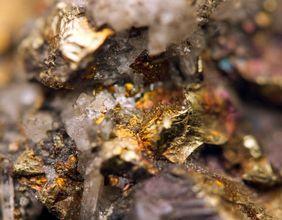


Pure Resources Limited (ASX:PR1) has reached a crucial early milestone through its research partnership with Oak Ridge National Laboratory (ORNL), confirming successful extraction of rare earth elements—including valuable heavy rare earths—from garnet obtained at the company's Garnet Hills Project. This laboratory testwork validates the recovery technology under development in the strategic collaboration, with Pure Resources now progressing to the next stage of quantification and optimisation efforts.
Key Highlights
- Pure Resources Limited (ASX:PR1) is an Australian rare earth exploration and technology firm headquartered in Subiaco, Western Australia.
- ORNL's laboratory testing confirmed recovery of rare earth elements, including heavy rare earth elements (HREE)—the most valuable and supply-limited rare earths—from Garnet Hills garnet.
- Current results are qualitative proof-of-concept; no rare earth grades or quantified recovery data have been released as upcoming tests focus on measurement and optimisation.
- The recovery process is protected as confidential intellectual property with plans for patent filing; processing specifics remain undisclosed to safeguard commercial interests.
- ORNL will conduct expanded laboratory testing to quantify recovery rates, while Pure Resources advances its intellectual property strategy and commercialisation pathway concurrently.
Oak Ridge Collaboration Yields Rare Earth Recovery Success from Garnet Hills Garnet
Pure Resources announced that Oak Ridge National Laboratory (ORNL), a premier U.S. Department of Energy national laboratory, has successfully completed initial laboratory testwork demonstrating rare earth element recovery from garnet sourced at the Garnet Hills Project. Conducted under Strategic Partnership Project No. NFE-25-10985, this collaboration between the Australian explorer and ORNL aims to develop extraction technology for rare earth elements from garnet deposits.
The findings confirm that recovered rare earth elements include heavy rare earth elements (HREE)—critical and supply-constrained components essential for permanent magnets, defence systems, and clean-energy technologies. The successful laboratory recovery validates the fundamental premise of the Pure Resources-ORNL partnership and lays the groundwork for subsequent research and development phases.
Proof-of-Concept Results and Analytical Approach
Pure Resources emphasized that the current results are preliminary, qualitative, and at a proof-of-concept stage. No rare earth grades or quantified recovery percentages have been disclosed. Representative garnet samples from the Garnet Hills Project were processed by ORNL using a proprietary method developed through the partnership, with analytical scans confirming a spectrum of rare earth elements—including both light and heavy rare earths—were dissolved into solution.
The reported analytical results are based on semi-quantitative scans, providing indicative elemental profiles rather than precise measurements. Quantification and optimisation of recovery rates are the focus of upcoming testwork. When available, recovery figures will represent the proportion of contained rare earths dissolved under laboratory conditions, alongside disclosed analytical methods and accuracy. This phased approach reflects the early proof-of-concept status and Pure Resources’ commitment to transparent future reporting.
Confidential Technology and Intellectual Property Protection
The recovery technology developed with ORNL is safeguarded as confidential intellectual property pending prospective patent filings and licensing. Processing details, operating parameters, and analytical data remain undisclosed to protect commercial value. Pure Resources is collaborating closely with ORNL to secure and commercialise this technology as it advances.
This confidentiality strategy aims to establish a robust intellectual property position before broader disclosure. The company intends to continue testwork with ORNL while simultaneously advancing patent protection and commercialisation pathways, maximizing the long-term value of the recovery technology as it progresses beyond proof-of-concept.
Sampling and Representative Garnet Material from Garnet Hills Project
The garnet material tested by ORNL originated from a master composite of approximately 2,800 kilograms of garnetiferous rock collected by Pure Resources geologists from outcropping garnet skarn within Mining Lease M80/416. Sampling involved hand-selecting roughly 15 kilograms from each of 197 sites arranged on a 20-metre by 20-metre grid across the garnet zone to capture representative material.
The composite was prepared at Nagrom Laboratories under the company's metallurgical program, producing andradite-rich garnet concentrates via dense media separation (DMS) pre-concentration and Reflux Classification. Sub-samples of this concentrate were provided to ORNL for recovery testing. Pure Resources notes this composite represents outcropping garnet skarn and does not reflect average grades at depth. Detailed sampling methods and data are disclosed in the JORC Code (2012) Table 1 appended to the announcement.
Strategic Fit with Global Rare Earth Supply Chain Priorities
Pure Resources positions the Garnet Hills collaboration as aligned with global initiatives to secure rare earth supply chains critical for permanent magnets, defence, and clean energy. The heavy rare earths confirmed in ORNL’s tests are subject to significant supply constraints due to their vital role in high-performance magnets, defence systems, and renewable energy technologies such as wind turbines.
Successful laboratory recovery of heavy rare earths from Garnet Hills garnet offers a potential new source for these scarce materials. Demonstrating recoverability supports efforts to diversify and strengthen global rare earth supply chains, addressing priorities of governments and industries focused on clean energy transition and defence capabilities.
Next Steps: Expanded Testwork and Quantification
Pure Resources outlined plans for an expanded ORNL laboratory test program to build on initial findings by quantifying and optimising rare earth recovery rates. This next phase aims to establish measurable recovery data and identify optimal processing conditions, transitioning from qualitative confirmation to reproducible recovery metrics. Detailed results will be disclosed when available and approved, reflecting the collaborative nature of the work and continuous disclosure obligations.
Concurrently, Pure Resources is advancing its intellectual property position, including patent filing preparations, and progressing commercialisation and licensing strategies. This multi-stage approach integrates ongoing research, IP protection, and commercial pathway development. The company commits to keeping shareholders informed of material developments as the collaboration advances.
Technical Validation through Partnership with Leading Research Institution
The collaboration with Oak Ridge National Laboratory provides significant technical validation for Pure Resources’ Garnet Hills Project. ORNL’s world-class research capabilities lend credibility to the rare earth recovery efforts. CEO Rocco Tassone highlighted that confirming recovery of rare earths—especially heavy rare earths—from Garnet Hills garnet validates the partnership with a leading global research institution and reinforces confidence in the technical foundation of the collaboration.
This partnership grants Pure Resources access to advanced research infrastructure and expertise without the need for independent laboratory development. Such collaboration is particularly valuable in early technology stages where proof-of-concept and optimisation benefit from specialised facilities. ORNL’s involvement also enhances the project’s profile within global rare earth supply security initiatives.
Market Context and Rare Earth Supply Challenges
The announcement comes amid heightened global focus on rare earth supply security driven by rising demand for permanent magnets in clean energy, defence, and electronics. Heavy rare earth elements—confirmed in Garnet Hills testing—face supply limitations due to concentrated production in few regions. Demonstrating recovery from Australian garnet deposits supports supply-chain resilience objectives for nations and organisations seeking diversified critical material sources.
Pure Resources’ technology development at Garnet Hills aims to contribute to this supply-security landscape, contingent on future validation of economically viable recovery rates and processing costs. The company’s emphasis on technical viability and intellectual property protection reflects a strategic plan to become a future participant in global rare earth supply chains, subject to successful advancement through remaining development and commercialisation phases.
Risks, Limitations, and Development Roadmap
Pure Resources clearly discloses that current results are qualitative and proof-of-concept only, with no mineral resource or ore reserve estimates implied. No rare earth grades or quantified recovery figures have been reported. Analytical results derive from semi-quantitative scans rather than fully quantitative methods. Recovery data, when reported, will reflect unoptimised proof-of-concept figures.
The transition from proof-of-concept to quantified recovery and potential commercialisation involves multiple stages with no guaranteed success. Laboratory results may not translate into commercially viable or scalable processes. The confidential nature of the recovery method limits independent technical review at this stage. Future expanded testwork may confirm or adjust preliminary findings, with ultimate viability dependent on recovery rates, costs, and licensing agreements.
