
 AUS
AUS
 NZ
NZ
 UK
UK
 CA
CA
 USA
USA
 IND
IND






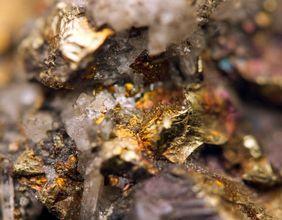

Kali Metals Limited (ASX:KM1) has revealed the identification of several new high-grade gold prospects at its Marble Bar Gold Project in Western Australia's Pilbara region, with rock-chip samples returning grades as high as 53.1 grams per tonne of gold. The company’s latest update highlights four newly discovered gold prospects—Stug, Vickers, Pershing, and Chiha—alongside extensions to existing targets, supported by soil sampling that has delineated coherent gold-in-soil anomalies across recently acquired tenements. Final results from diamond and reverse circulation drilling are expected within 3 to 4 weeks, potentially confirming the exploration potential indicated by these surface findings.
Key Points
- Kali Metals Limited (ASX:KM1) focuses on exploration at the Marble Bar Gold Project in the eastern Pilbara region of Western Australia, covering 118 square kilometres of prospective terrain.
- Four new gold prospects identified at Marble Bar, with the Stug prospect delivering the highest results, including a peak rock-chip assay of 53.1 g/t Au and four additional samples exceeding 5.0 g/t Au.
- Soil sampling of 1,215 samples across newly acquired tenements (E45/6389, E45/6429, and E45/6430) has defined gold-in-soil anomalies up to 0.434 g/t Au, featuring a 6.5-kilometre-long coherent anomaly in E45/6430 with no prior drilling.
- Final drilling results from the Tiger, Churchill, and Sherman prospects are anticipated in late July or early August 2026, providing a near-term catalyst for the company’s exploration progress.
Systematic Mapping and Rock-Chip Sampling Uncover Four New Gold Prospects
Between May and June 2026, Kali Metals undertook detailed mapping and rock-chip sampling across tenements E45/4700 and E45/6389, collecting 48 samples aimed at discovering new gold prospects and extending mineralisation at known targets such as Tiger, Churchill, and Sherman. This methodical exploration has led to the identification of four new prospects, underscoring the prospective nature of the company’s landholdings. The campaign leveraged existing geological knowledge while systematically testing new areas within the tenure.
The Stug Gold Prospect, situated in the southern section of tenement E45/4700, stands out as the most significant discovery from this phase. It features a strongly altered quartz vein system with potassic alteration characterized by brick-red coloration, extending approximately 200 metres northwest-southeast and dipping gently northeast. Six rock-chip samples from Stug yielded exceptional results, with five samples exceeding 3.0 g/t Au and four surpassing 5.0 g/t Au. The highest assay of 53.1 g/t Au represents the peak grade reported. Other samples returned 6.0 g/t Au, 5.5 g/t Au, 5.0 g/t Au, and 3.9 g/t Au, demonstrating consistent high-grade mineralisation across the sampled zone.
Geological Insights into Shear-Controlled Alteration Zones at Marble Bar
Mineralisation at the new prospects is interpreted as shear-controlled alteration zones dipping gently north or northeast. These zones, typically 5 to 15 metres wide, exhibit strong to massive potassic alteration with the distinctive brick-red hue. Quartz veins within these zones vary from under 1 metre to 5 metres thick, containing large terminated quartz crystals, potassic cleavages, and minor pyrite crystals sized between 1 and 10 millimetres. This mineralisation style aligns with orogenic gold systems known in the Pilbara region.
The other new prospects—Vickers, Pershing, and Chiha—also returned encouraging gold assays supporting the geological model. Vickers yielded rock-chip assays of 5.8 g/t Au, 2.0 g/t Au, and 0.9 g/t Au; Pershing returned four samples with 1.7 g/t Au, 1.3 g/t Au, 1.1 g/t Au, and 1.0 g/t Au; and Chiha produced an assay of 1.8 g/t Au. Additional sampling enhanced existing prospects, with Sherman southeast extension returning 8.8 g/t Au, Churchill’s new east zone yielding 4.7 g/t Au, and Tiger 2’s altered rocks to the north assaying 1.7 g/t Au and 1.2 g/t Au. These results indicate a strong exploration pipeline featuring multiple drill-ready targets.
Extensive Soil Sampling Campaign Highlights Major Gold-in-Soil Anomalies
Kali Metals completed a comprehensive soil sampling program across newly acquired tenements E45/6389, E45/6429, and E45/6430, collecting 1,215 samples including quality assurance and control duplicates, standards, and blanks representing 5% of the total. This geochemical survey aimed to delineate gold-in-soil anomalies in areas with limited historical exploration. Despite the poorly developed soil horizons over granitic geology, soil sampling has proven effective at Marble Bar.
The campaign identified coherent anomalous zones suitable for follow-up exploration. Gold-in-soil values reached up to 0.434 g/t Au, with the two largest anomalies being a 6.5-kilometre-long east-west trending anomaly in E45/6430 and a 1.1-kilometre northwest extension of the Tiger Gold Prospect into E45/6389. A third notable anomaly, 1.1 kilometres long and oriented north-south in eastern E45/4700, was previously defined. This anomaly’s geochemical signature includes elevated lead, indicative of a typical orogenic shear-hosted gold system rather than potassic alteration, adding geological diversity to Kali’s exploration portfolio.
Strategic Importance of the 6.5-Kilometre Gold-in-Soil Anomaly in E45/6430
The 6.5-kilometre east-west gold-in-soil anomaly within tenement E45/6430 is strategically significant for Kali Metals. The western 1-kilometre segment is hosted in greenstone geology belonging to the Warrawoona Package, which also hosts gold mineralisation at the Klondyke Gold Project located 6 kilometres southeast of Marble Bar. The geological continuity between Marble Bar and Klondyke, combined with this extensive soil anomaly, suggests potential for significant gold mineralisation systems across the eastern Pilbara.
The company notes limited historical data on these anomalous areas in E45/6430, with no prior drilling conducted, presenting a genuine greenfield exploration opportunity. The soil geochemical signature provides a clear vector for systematic exploration. The presence of prospective greenstone geology, a multi-kilometre soil anomaly, and absence of historic drilling create an attractive exploration scenario. Planned reconnaissance mapping and rock-chip sampling over these anomalies will be the next exploration phase, aiming to identify drill-ready targets within this under-explored tenement.
Advanced Drone Imagery and Upcoming Hyperspectral Survey to Enhance Targeting
Kali Metals has acquired an additional 12 square kilometres of high-resolution drone imagery at 2-centimetre pixel resolution over the Marble Bar Project. This advanced remote sensing dataset offers detailed orthographic and digital elevation model data, aiding geological mapping, structural interpretation, and visual identification of altered rock outcrops. The drone imagery complements ground mapping and sampling by revealing subtle geological and topographic features indicative of alteration or mineralisation zones.
The company plans to conduct a high-resolution hyperspectral survey at 2-metre resolution across its entire Pilbara tenement package in July 2026. Hyperspectral imaging detects diagnostic absorption features of minerals across a broad wavelength range, allowing classification of altered minerals such as potassic alteration, argillic assemblages, and iron oxides. This geochemical imaging will provide comprehensive spatial data to prioritize mapping and sampling, potentially identifying additional alteration systems similar to those at Stug, Tiger, Sherman, and Churchill. Integrating drone imagery with hyperspectral data represents a modern technical approach to target generation and prioritization.
Upcoming Catalyst: Diamond and Reverse Circulation Drilling Results Expected in 3 to 4 Weeks
Kali Metals expects final diamond drilling (DD) and reverse circulation (RC) results within 3 to 4 weeks from the company update dated 21 July 2026, targeting late July or early August 2026 for release. These results pertain to the Tiger, Churchill, and Sherman prospects, recently drilled by the company. Managing Director Paul Adams noted that surface rock-chip results from new Marble Bar prospects are similar in tenor to those at Tiger, Sherman, and Churchill, which have been drill tested. The forthcoming drilling results will be critical in validating the company’s geological model and exploration strategy.
The timing aligns with the completion of recent mapping, rock-chip sampling, and soil sampling across newly acquired tenements, creating a positive narrative for Kali Metals. Near-term drilling results will validate surface exploration findings while new geochemical and geological data define a pipeline of prospective targets for future drilling. Investors will closely watch these results to assess whether high-grade surface gold mineralisation translates into economically significant mineralised intersections at depth. The outcomes will guide the company’s evaluation of exploration potential and prioritization of future expenditure across new prospects and soil anomalies.
Kali Metals’ Strategic Positioning in the Eastern Pilbara Gold Province
The Marble Bar Gold Project covers 118 square kilometres in Western Australia’s eastern Pilbara region, approximately 10 kilometres east (20 kilometres by road) of Marble Bar town and 10 kilometres north of the Klondyke Gold Project. The geology is dominated by the Mount Edgar Granitic Complex within the Archaean Pilbara Craton. This location situates the project within the broader Pilbara gold province, an area with a rich history of gold production and active exploration. Proximity to Klondyke and presence of Warrawoona Package greenstone geology within Kali’s tenements establish geological links to known regional gold mineralisation systems.
Recent acquisitions of tenements E45/6389, E45/6429, and E45/6430 have expanded Kali’s landholding, providing access to areas with limited historical exploration. These include the large 6.5-kilometre gold-in-soil anomaly in E45/6430 and the northwest extension of the Tiger prospect into E45/6389. This expansion reflects a strategic effort to consolidate prospective ground in the Pilbara, aiming to build a robust pipeline of gold exploration opportunities. The company’s emphasis on high-grade surface gold and systematic exploration indicates a disciplined approach to target generation and drill-ready target definition within this prolific gold province.
Exploration Focus and Planned Work Program for the Next Six Months
Kali Metals’ exploration strategy over the coming six months prioritizes advancing multiple gold prospects at Marble Bar toward drill testing, while acquiring regional-scale geochemical and remote sensing data to support future target generation. The program includes receipt of pending drilling results from Tiger, Churchill, and Sherman in late July or early August, followed by expanded mapping at the four new prospects (Stug, Vickers, Pershing, and Chiha). Initial reconnaissance mapping and rock-chip sampling over newly defined gold-in-soil anomalies, particularly on tenement E45/6430, will precede future drilling campaigns.
The work program also extends beyond Marble Bar, with heritage surveys planned over Spargoville and Widgiemooltha lithium targets at Higginsville, followed by drilling. This diversification indicates Kali Metals’ pursuit of opportunities across multiple commodities and projects. The planned high-resolution hyperspectral survey across the Pilbara tenements in July 2026 underscores the company’s commitment to systematic, regional-scale exploration. These multiple programs demonstrate active exploration management and dedication to advancing the company’s asset base.
Managing Director Paul Adams Highlights Exploration Confidence and Project Potential
Paul Adams, Managing Director of Kali Metals, stated that recent rock-chip assays up to 53 grams per tonne of gold confirm the widespread surface gold mineralisation at Marble Bar. He emphasized the identification of multiple additional high-grade prospects spanning several kilometres of favorable outcrop, significantly enhancing the project’s exploration pipeline and drill-testing potential. Adams noted that these surface results are comparable to those at Tiger, Sherman, and Churchill, which have undergone recent drilling, with final results expected soon.
Adams expressed confidence that the latest findings, combined with previously identified surface mineralisation, reinforce the project’s prospectivity and provide a strong foundation for the next exploration phase. With further mapping and rock-chip sampling planned, the company aims to advance these new targets toward drill testing and update shareholders on the enhanced gold potential. This forward-looking commentary reflects a positive outlook on the exploration progress and the company’s systematic approach to advancing the Marble Bar project.
