
 AUS
AUS
 NZ
NZ
 UK
UK
 CA
CA
 USA
USA
 IND
IND






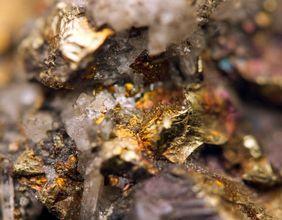

Enova Mining Ltd (ASX:ENV) has revealed promising assay outcomes from drilling at the Cattle Creek Prospect within its Charley Creek Rare Earth Project, situated 110km north-northwest of Alice Springs in the Northern Territory. The company completed seven drill holes totaling 422 metres of air-core drilling and 27.1 metres of diamond coring, confirming multiple high-grade rare earth oxide (TREO) and neodymium-praseodymium (NdPr) intercepts within saprolite horizons. These results validate earlier exploration efforts and indicate that saprolite, rather than the underlying fresh rock, is the main host of rare earth mineralisation at the prospect.
Key Highlights
- Enova Mining Ltd (ASX:ENV) manages the Charley Creek Rare Earth Project, a critical metals exploration asset in the Northern Territory focusing on rare earth element discovery and development.
- Drilling at the Cattle Creek Prospect yielded seven assay results confirming multiple high-grade TREO and NdPr intercepts within saprolite, including peak grades of 8,218ppm TREO at 21% NdPr.
- Significant intercepts include 12m at 1,400ppm TREO and 22% NdPr from 32m depth, 18m at 1,072ppm TREO and 19.9% NdPr from 42m depth, and 25.6m at 1,583ppm TREO and 17.5% NdPr from 39m depth.
- Fresh gneissic rock beneath the saprolite was found not to contain REE mineralisation in the current drilling area, focusing future exploration on the saprolite-hosted resource.
- The company intends to conduct mineral characterisation and metallurgical test work to evaluate if mineralisation is suitable for gravity separation or flotation processing.
Rare Earth Intercepts Confirm Saprolite as Main Mineralisation Host
Enova Mining carried out a drilling campaign at the Cattle Creek Prospect within its Charley Creek Rare Earth Project during the reported period. The program included seven drill holes with a total of 422 metres of air-core drilling and 27.1 metres of diamond core drilling. Assay results from all holes, including four diamond tail holes, revealed multiple rare earth element mineralisation zones concentrated within the saprolite profile rather than the underlying fresh bedrock.
The assays showed broad TREO (total rare earth oxide) intercepts with consistently strong NdPr (neodymium-praseodymium) ratios across several holes. The drilling penetrated alluvial sands, saprolite, and clay horizons overlying gneissic granite bedrock, with diamond coring in selected holes to assess fresh rock mineralisation potential. Core recovery in fresh rock was lower than expected, leading to an earlier conclusion of the program. This geological insight shifts exploration focus to the saprolite weathering profile, which exhibits superior rare earth grade continuity.
Peak Grades Surpass 8,000ppm TREO in Holes CCC0004 and CCC0011
The standout results from the Cattle Creek drilling were from holes CCC0004 and CCC0011, both delivering peak grades well above the broader intercepts. Hole CCC0004 recorded a peak assay of 8,218ppm TREO at 21% NdPr from 45–46 metres depth, with additional strong results of 5,562ppm TREO at 18% NdPr from 46–47 metres and 5,468ppm TREO at 21% NdPr from 44–45 metres. Hole CCC0011 achieved a peak of 3,195ppm TREO at 16% NdPr from 46–47 metres, alongside a broader 12-metre intercept grading 1,519ppm TREO and 25.2% NdPr from 36 metres.
Within the CCC0011 intercept, narrower high-grade zones included 5 metres at 2,436ppm TREO and 17.5% NdPr from 43 metres and 3 metres at 3,013ppm TREO and 17.5% NdPr from 44 metres. CEO Eric Vesel described these results as "particularly encouraging," highlighting the continuity of rare earth mineralisation within saprolite. Hole CCC0004 also returned a composite 25.6-metre intercept at 1,583ppm TREO and 17.5% NdPr from 39 metres, including a 6-metre zone grading 4,684ppm TREO and 19.8% NdPr from 43 metres. These peak grades significantly exceed broader averages, indicating localized zones of elevated rare earth concentration within the saprolite.
Consistent Saprolite Intercepts Across Seven Drill Holes Confirm Previous Exploration
Beyond the peak grades in CCC0004 and CCC0011, the other five drill holes showed broad intercepts of elevated rare earth grades within saprolite. Hole CCC0007 returned 12 metres at 1,400ppm TREO and 22% NdPr from 32 metres depth. Hole CCC0008 delivered 18 metres at 1,072ppm TREO and 19.9% NdPr from 42 metres. Hole CCC0001 recorded 14 metres at 750ppm TREO and 19.4% NdPr from 49 metres, while hole CCC0002 returned 25 metres at 661ppm TREO and 21.3% NdPr from 39 metres. These intercepts demonstrate lateral continuity of rare earth mineralisation within the saprolite weathering profile.
Historical drilling from 2008, 2009, 2011, and 2018 identified bedrock at depths of 40 to 100 metres, but fresh rock beneath saprolite had not been tested until this program. The current drilling confirmed high-grade REE mineralisation previously intersected, notably historical intercepts of 11 metres at 7,199ppm TREO and 22.3% NdPr from 34 metres (hole CCA0121), including 5 metres at 11,350ppm TREO and 18.8% NdPr from 37 metres. This confirmation strengthens confidence in the saprolite mineralisation model and the reliability of REE grades at Cattle Creek.
Fresh Bedrock Testing Excludes Hard Rock Mineralisation from Future Focus
A key finding was that fresh gneissic rock beneath saprolite does not host rare earth mineralisation in the current drilling area. Diamond coring tested hard rock mineralisation potential, marking the first systematic evaluation of fresh bedrock at Cattle Creek. Lower-than-expected core recovery contributed to the program ending early. This excludes fresh bedrock as a target for future exploration, focusing development on saprolite-hosted resources.
CEO Eric Vesel stated, "the underlying basement rock does not warrant further drilling," confirming future exploration will target saprolite zones within the Cattle Creek paleochannel. He added that "as mineralisation occurs within free-dig material beneath the alluvial project, it could complement future mining extraction," suggesting saprolite may allow surface or near-surface mining methods, potentially lowering complexity and capital costs compared to hard rock mining.
Mineral Characterisation and Metallurgical Testing to Inform Next Exploration Stage
Following drilling and assay completion, Enova Mining plans mineral characterisation before commencing metallurgical testing on Charley Creek samples. Mineralogical analysis will assess whether rare earth mineralisation is suitable for gravity separation or flotation processing. This phase is crucial for determining the technical and economic feasibility of recovering rare earth oxides from saprolite-hosted material. Processing method selection depends on mineralogical properties of rare earth minerals in the ore.
CEO Eric Vesel noted the company is "reviewing results alongside previous drilling to identify continuous higher-grade zones and guide the next exploration phase at Charley Creek." This indicates integration of current and historical data will shape future exploration design. Mineral characterisation and metallurgical testing will provide vital input for resource estimation, preliminary economic assessments, and strategic project development decisions, supporting sustainable critical metals supply.
Charley Creek Project Location and Strategic Role in Rare Earth Supply
The Charley Creek Rare Earth Project lies 110 kilometres north-northwest of Alice Springs, Northern Territory, Australia, within a region with established mining infrastructure and regulatory frameworks. The project targets rare earth element exploration and development to meet rising global demand for critical minerals essential to renewable energy, electric vehicles, and advanced defense systems. Rare earth elements, especially neodymium and praseodymium (NdPr), are vital for permanent magnets used in wind turbines, electric motors, and high-tech applications. Enova Mining's focus on a domestic rare earth resource aligns with global efforts to diversify supply chains and reduce reliance on single-source suppliers.
Enova Mining's role as a critical metals explorer reflects market trends toward securing sustainable materials for energy transition and technological progress. The Charley Creek Project is a greenfield rare earth discovery in Australia, a jurisdiction known for stable governance and mining operations. Its Northern Territory location offers proximity to transport infrastructure, including rail and road networks connecting to major ports. The company's emphasis on saprolite-hosted rare earth mineralisation, occurring in weathered material accessible by open pit or alluvial-style mining, may provide technical and economic advantages over hard rock rare earth mining elsewhere.
Drilling Methodology and Sample Analysis
The Cattle Creek drilling program used a multipurpose rig to penetrate alluvial and saprolite horizons, with air-core drilling recovering chip samples through the weathered profile. Diamond core from tail holes was quartered for assay, with remaining core reserved for geological and metallurgical studies. To reduce assay costs, air-core samples with similar lithology were composited into 3-metre samples before analysis. Saprolite material recovered showed thick intervals of soft, clay-rich, reddish-brown material typical of weathered profiles hosting rare earth mineralisation. This aligns with laterite and saprolite weathering profiles that concentrate immobile elements like rare earth oxides during prolonged weathering.
The geological team logged lithology of samples to assess mineralisation potential and characterize weathering. Air-core chips were collected through the cyclone and recorded in chip trays for detailed logging and interpretation. This approach preserves spatial and lithological context for future resource estimation. Retaining diamond core supports detailed mineralogical and processing studies on representative high-grade zones identified in drilling.
Geological Model Supports Lateral Continuity of Rare Earth Enrichment
Enova Mining’s schematic cross-section illustrates a laterally extensive weathering profile over fresh bedrock at Cattle Creek. The interpretation highlights a thick rare earth element-enriched saprolite horizon consistent with the mineralisation model. This shows the 3D geometry of mineralised saprolite and aids understanding of rare earth grade distribution across the prospect. The model supports that rare earth enrichment concentrates within saprolite weathering rather than fresh rock or overlying sediments.
This geological model informs exploration design and resource estimation. If mineralisation is laterally extensive within a discrete weathering profile, then saprolite geometry controls mineral endowment. Exploration can target areas with thick saprolite over rare earth-bearing source rocks. The cross-section helps estimate mineralised volume, essential for economic assessments and development planning. Future drilling can infill the grid and test lateral extent of high-grade zones.
NdPr Ratios Indicate Premium-Grade Rare Earth Mineralisation
A notable feature of Cattle Creek drilling is consistently strong neodymium-praseodymium (NdPr) ratios across intercepts. Nd and Pr are light rare earth elements with high commercial value due to use in permanent magnets for wind energy and electric vehicles. Enova’s intercepts show NdPr percentages from 16 to 25%, representing premium-quality rare earth ore. Hole CCC0007 had 22% NdPr, CCC0008 19.9%, and CCC0002 21.3%. These ratios indicate saprolite-hosted mineralisation is enriched in the most valuable rare earth elements.
The combination of high TREO grades with strong NdPr ratios is economically important. Rare earth processing involves costly separation to isolate elements. Ore enriched in NdPr reduces downstream processing complexity and cost by concentrating highest-value elements. This enhances project economics and supports Enova’s focus on Charley Creek development. Consistent NdPr ratios across holes and depths suggest premium-grade mineralisation is a robust feature of saprolite, not a localized anomaly.
