
 AUS
AUS
 NZ
NZ
 UK
UK
 CA
CA
 USA
USA
 IND
IND


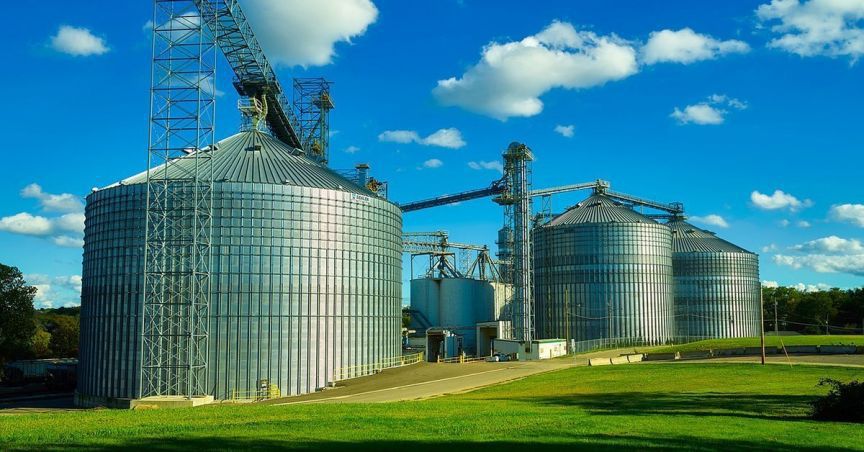





On 20 February 2019, GrainCorp Limited (ASX:GNC), a company from the Consumer Staples sector engaged into the Global Agribusiness, released the annual general meeting updates for FY2018 ending on 30 September 2018.
The AGM presentation was given by CEO Mark Palmquist, where he highlighted that there was an increase in the Recordable Injury Frequency Rate (RIFR) and Lost Time Injury Frequency Rate (LTIFR), which was an unsatisfactory result for the company. For this, the company is taking initiatives to improve safety performance as a part of the Group Safety, Health and Environment Strategy Towards 2020 framework.
There are numerous initiatives in progress which includes the minimization of the energy consumption, reduction of carbon intensity as well as improvement in waste management. The company has also commissioned expert environmental research which was responsible for accessing the potential long-term impact of predicted climate change on grain production in the critical cropping districts in Eastern Australia.
Malt segment
During the period, the Groupâs earnings were impacted by drought. However, there was robust demand for malt in the period. The demand for malt was in craft beer and distilling. In Pocatello, Idaho, the significant earnings in the second half of the FY2018 was through Malt.
Malt Outlook in FY2019
The company is looking forward to high capacity utilization for continued strong demand for its specialty products. The company will also leverage the efficient distribution network in the remaining part of FY2019. The company expects a full year contribution from Pocatello, Idaho plant with 220,000mt capacity.
Oil segment:
Under the oil segment, the performance from Bulk Liquid Terminals and Feeds was good. As a result of drought in eastern Australia, the quality and the supply of oilseed got hampered which also impacted the margins.
Oil Outlook in FY2019
The company is looking forward to high capacity utilization of bulk liquid terminals. There will be continued pressure on oilseed crush margins due to low canola supply and also derive ongoing benefits from foods restructure and continuous improvement program.
Grain Segment:
The grain segment also got impacted by drought in eastern Australia. There was a decline in the grain export as a result of a fall in the production of grain across the region.
Grains Outlook in FY2019:
The company expects Year-to-date (YTD) total ECA grain receivals of 2.2mmt. It assumes a modest summer crop receivals with increased grain flow from farm to domestic customer. The company will continue to import grains from WA and SA to ECA ports (YTD 0.9mmt approx.). However, the volume of import will also depend on domestic demand and summer crop. The YTD grain export is expected to be around 0.1mmt.
As a result of this drought in ECA, the Underlying EBITDA reported during the period was $269 million, down by approximately 31%. The Underlying NPAT during the period was $71 million, down by 50%. Statutory net profit after tax decreased by approximately 43.2%. The company declared a dividend of 16 cents per share fully franked.
Under the grains segment, as already highlighted that the region was impacted by drought, the ECA (east coast Australian) winter crop production was approximately 6.5mmt, however, the target in FY2018 was 15.1mmt from the entire market.
The presentation also covered the re-election of directors Mr Donald Mcgauchie Ao and Mr Peter Richards.
In the last six months, the stock has generated a positive return of 25.97%. By the end of the trading session on 20 February 2019, the closing price of the stock was A$9.54 which was up by 0.846% as compared to previous trading dayâs closing price. The stock has a market capitalization of A$2.16 billion and approximately 228.86 million outstanding shares and PE ratio 30.710x.
Disclaimer
This website is a service of Kalkine Media Pty. Ltd. A.C.N. 629 651 672. The website has been prepared for informational purposes only and is not intended to be used as a complete source of information on any particular company. Kalkine Media does not in any way endorse or recommend individuals, products or services that may be discussed on this site. Our publications are NOT a solicitation or recommendation to buy, sell or hold. We are neither licensed nor qualified to provide investment advice.
