
 AUS
AUS
 NZ
NZ
 UK
UK
 CA
CA
 USA
USA
 IND
IND



Highlights
- BHP Group moved alongside major mining peers after China eased restrictions affecting iron ore flows.
- Fresh supply from West Africa is reshaping the global iron ore market and increasing competitive pressure.
- Scale, diversification and disciplined operations remain key strengths for Australia's largest miners.
Australia's ASX 200 remains closely tied to the fortunes of its largest resource companies, making developments in the global iron ore market especially significant. BHP Group (ASX:BHP), one of the world's largest diversified mining companies, attracted attention after China relaxed restrictions influencing iron ore trade, prompting renewed focus on the nation's demand outlook and the evolving supply landscape. As one of Australia's leading ASX Metal & Mining Stocks, BHP continues to play a central role in how the market interprets shifts across the resources sector.
China's Policy Shift Reignites Iron Ore Attention
China remains the world's largest consumer of seaborne iron ore stocks, making every policy adjustment closely watched by global mining companies. Changes affecting imports, inventories or steel production can rapidly influence market sentiment because Chinese steel mills consume vast quantities of the raw material used in construction, manufacturing and infrastructure.
The latest easing of restrictions has encouraged renewed discussion across the mining sector as traders and producers reassess how iron ore flows could evolve in the months ahead. While policy adjustments may not immediately transform underlying demand, they often alter purchasing behaviour and inventory management, influencing sentiment throughout the supply chain.
For Australian miners, understanding Beijing's policy direction has become an essential part of navigating market cycles, with every major announcement carrying implications for exports and long-term planning.
West Africa Emerges as a Powerful New Supply Force
Alongside developments in China, another structural change is reshaping the iron ore market.
Large-scale production from the Simandou region in West Africa is beginning to enter international supply chains, introducing significant new volumes into a market historically dominated by Australian and Brazilian exporters.
For decades, Australia's Pilbara operations and Brazil's established producers supplied most of the world's premium iron ore. The arrival of another major producing region introduces fresh competition and changes how participants view future supply.
As additional shipments reach global customers, attention increasingly shifts towards operational efficiency, freight competitiveness and production costs rather than simply expanding output.
Scale Still Gives Australia's Mining Giants an Edge
One reason Australia's largest miners continue to command attention is their ability to operate some of the world's lowest-cost iron ore assets.
Years of investment in automation, infrastructure, rail networks and export facilities have created highly efficient operations capable of maintaining profitability even during periods of softer commodity prices.
These structural advantages become increasingly valuable whenever additional global supply places downward pressure on market conditions.
Established producers are generally better positioned to navigate changing market dynamics because their operations have been refined through multiple commodity cycles.
Diversified Businesses Offer Greater Stability
Iron ore remains a major earnings contributor for Australia's largest miners, but it rarely represents their only source of revenue.
Diversification across commodities including copper, coal and other minerals provides an important layer of resilience whenever one commodity experiences weaker market conditions.
This broader exposure helps smooth earnings across commodity cycles while reducing dependence on any single demand driver.
Diversified mining groups are therefore often viewed differently from companies focused solely on one commodity, particularly during periods of heightened market uncertainty.
Mineral Resources Reflects a Different Mining Model
Not every Australian mining company follows the same operating strategy.
Mineral Resources (ASX:MIN) combines iron ore operations with mining services and exposure to several other resource sectors, creating a business model that differs from the country's largest diversified producers.
This variation explains why mining shares do not always respond identically when iron ore prices fluctuate. Company-specific operations, asset mix and business diversification all influence market performance alongside broader commodity trends.
Cost Discipline Becomes Increasingly Important
As additional global supply gradually enters the market, efficient production remains one of the industry's strongest competitive advantages.
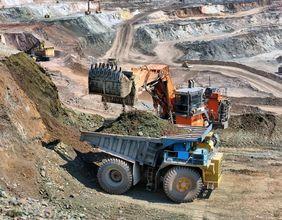
Mining companies continue investing in larger equipment fleets, automated operations, improved logistics and streamlined processing to maintain cost competitiveness across changing market conditions.
Operational discipline has become one of the defining characteristics separating larger producers from higher-cost competitors.
Rather than relying solely on stronger commodity prices, many established miners focus on improving productivity and extracting greater value from existing assets.
This disciplined approach allows businesses to remain resilient throughout different stages of the commodity cycle.
China's Steel Industry Still Sets the Market Direction
Despite growing supply from new producing regions, Chinese steel production continues to shape the global iron ore outlook.
Construction activity, manufacturing demand and infrastructure spending all influence steel consumption, which in turn affects demand for iron ore.
Government measures supporting economic activity can strengthen steel production, while slower building activity may reduce raw material consumption.
Because China remains the dominant buyer of seaborne iron ore, even relatively modest policy changes often receive significant attention across global commodity markets.
Monitoring developments within China's steel industry therefore remains essential for understanding broader trends affecting Australia's mining sector.
Inventory Cycles Can Amplify Market Moves
Demand is influenced not only by steel production but also by inventory decisions made by Chinese mills and traders.
Stockpiles are regularly adjusted according to seasonal demand, price expectations and policy developments.
Periods of inventory rebuilding can increase purchasing activity even when steel production remains relatively stable.
Conversely, high stock levels may temporarily reduce import demand despite otherwise supportive market conditions.
These inventory cycles often contribute to short-term price movements that appear disconnected from underlying consumption trends.
Simandou Marks a Structural Market Shift
The emergence of Simandou represents one of the most significant long-term developments in the seaborne iron ore trade.
Rather than creating temporary market volatility, this new source of supply introduces lasting structural change.
Greater supply diversity reduces reliance on traditional exporting regions while increasing competition across international markets.
For established producers, maintaining operational excellence becomes increasingly important as buyers gain access to a broader range of suppliers.
The evolving supply landscape reinforces the importance of efficiency, infrastructure quality and disciplined capital management.
Why Australia's Largest Miners Continue to Lead
Australia's leading mining companies have successfully navigated multiple commodity cycles through a combination of scale, operational excellence and diversified asset portfolios.
Strong balance sheets support ongoing investment across mining operations while diversified commodity exposure helps reduce earnings volatility.
These characteristics allow major producers to adapt to changing market conditions without relying solely on stronger commodity prices.
Rather than pursuing rapid expansion regardless of market conditions, many established miners prioritise disciplined capital allocation, productivity improvements and sustainable operations.
This approach has become increasingly valuable as the global iron ore industry enters another period of structural change driven by evolving demand patterns and additional international supply.
Reading the Next Chapter for Iron Ore
The global iron ore market is entering a new phase shaped by two powerful forces: China's evolving policy settings and expanding supply from West Africa.
For Australia's major mining companies, success increasingly depends on maintaining operational efficiency while adapting to a more competitive global environment.
BHP remains closely watched because its scale, diversified operations and leadership across the resources sector make it an important indicator of broader market sentiment. As China continues refining its economic policies and new supply gradually enters international markets, Australia's largest miners are likely to remain central to discussions surrounding the country's resource sector and global iron ore trade.
