
 AUS
AUS
 NZ
NZ
 UK
UK
 CA
CA
 USA
USA
 IND
IND








In the decade gone by, cryptocurrencies have beaten all the asset classes by a mile, or rather light years. Bitcoin has appreciated by a whooping 900,000%.
However, the journey has not been linear, cryptocurrency prices have been volatile in the recent past. Some prominent cryptocurrencies that, emerged over the last decade and have become popular investments are Bitcoin, Ethereum, Litecoin and Ripple.
Lately, what has been making news in the international cryptocurrency space is China’s Crypto Yuan, world’s first digital sovereign currency, which is planned to debut in 2020.
Around October 2019, China passed a new law on cryptography (expected to take effect on 1 January 2020) as the country was expected to launch its own digital currency. According to Reuters, China’s proposed new digital currency shall be allowed for use through key payment platforms including WeChat and Alipay and is anticipated to resemble with Facebook Inc’s cryptocurrency, Libra coin.
China plans to employ the digital currency in wholesale financial markets in order to provide efficiency and security in making interbank settlements and other transactions.
The cryptography law comes into force with the statement to inspire and facilitate the research as well as the application of science and technology in cryptography while maintaining secrecy. Moreover, the law was passed with an aim to enable the advancement of the cryptography business while maintaining the cyberspace and information security.
No matter how serious convenience and efficiency these cryptocurrencies delivered, there might be room for concerns like money laundering subject to the cross-border reach of the dealing entity.
Reserve Bank of Australia (RBA) highlights several public policy implications of cryptocurrencies associated. But first, let us get to know about the mechanism behind the functioning of cryptocurrencies.
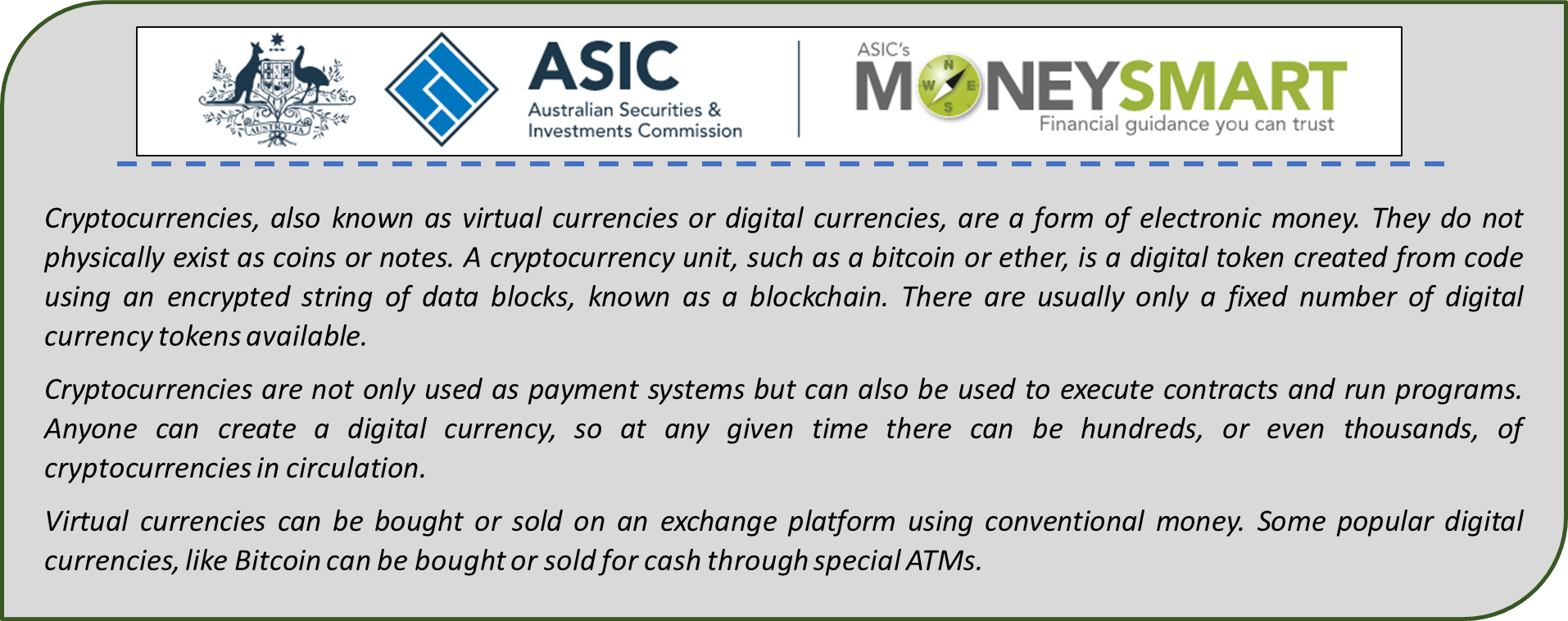
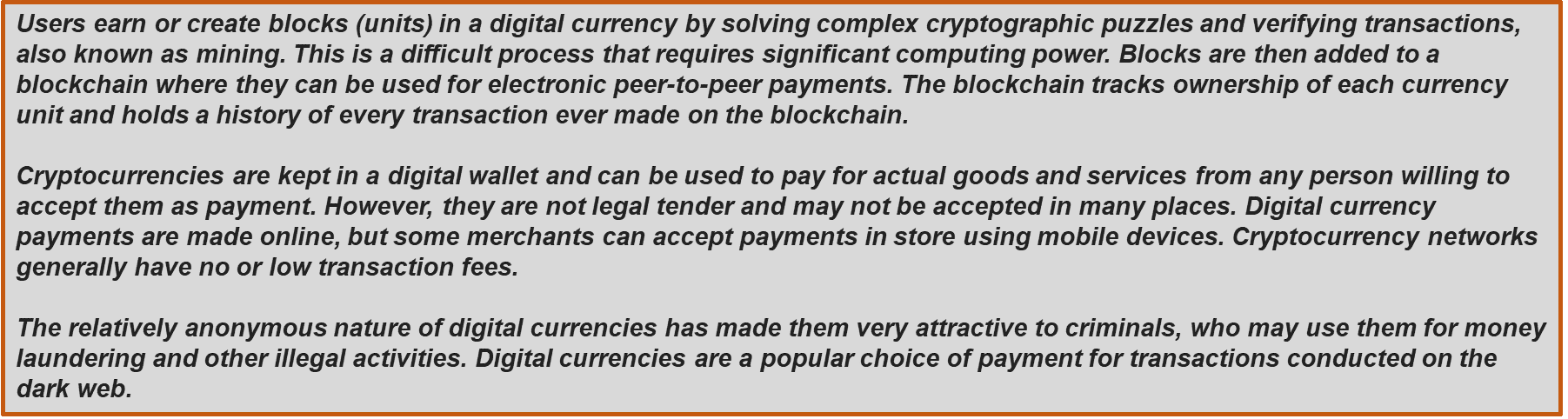
According to MoneySmart, the foundation for the functioning of digital currencies is based on the technology of blockchain wherein all users share a decentralised database having no central server, and nobody owns the data, but everyone in the blockchain has access to the data.
The public policy implications of cryptocurrencies are as follows:
Although the technology mechanism behind cryptocurrencies is likely to have useful propositions, it is equally likely to present concerns for policymakers across the globe.
Taking advantage of the secrecy offered by the Bitcoin system (cryptocurrency), and its global reach, there are doubts about the ways to restrict the usage of digital currencies for unfavourable or criminal activities.
Furthermore, the speculative angle to the cryptocurrencies could be attributed to the attraction associated with cryptocurrencies due to their rapid rise in the past few years, which intron has contributed to the raising concerns about the protection of consumers.
The broader implementation of the cryptocurrencies could possibly put forward challenges for the banking sector’s role and bring up additional financial stability concerns in the current times of crisis.
However, the People's Bank of China (working in coordination with few key state-owned banks and few telecom giants) was expected to execute pilot tests of its digital currency in Suzhou and Shenzhen cities.
Bottomline
In the current scenario, many of the experts and onlookers in the industry are pretty uncertain about the replacement of traditional payment methods or national currencies by the cryptocurrencies. A lot depends on:
- the extent to which they can fulfil the needs of users in contrast with existing electronic payments, as well as
- the costs, incentives and convenience for users since convenience and accessibility for both consumers and businesses are a pre-requisite for any payment system to succeed.
Disclaimer
This website is a service of Kalkine Media Pty. Ltd. A.C.N. 629 651 672. The website has been prepared for informational purposes only and is not intended to be used as a complete source of information on any particular company. Kalkine Media does not in any way endorse or recommend individuals, products or services that may be discussed on this site. Our publications are NOT a solicitation or recommendation to buy, sell or hold. We are neither licensed nor qualified to provide investment advice.
