
 AUS
AUS
 NZ
NZ
 UK
UK
 CA
CA
 USA
USA
 IND
IND






Highlights
- Defense budgets remain a major sector driver.
- Space systems are expanding the opportunity.
- Global tension keeps demand elevated.
Aerospace and defense companies are gaining attention as rising security needs, government budgets, commercial aviation, and space systems create stronger demand across the sector.
The aerospace and defense sector is moving through one of its most watched phases, shaped by rising government budgets, global security concerns, and the growing importance of space systems. Boeing (NYSE:BA), a major aerospace and defense manufacturer, remains closely tied to aircraft, military platforms, and space-related programs, while the broader market backdrop keeps attention on the NYSE Composite as large industrial names respond to shifting demand trends.
Rising Budgets Support Defense Demand
The strongest force behind the aerospace and defense sector is government spending. Defense programs often run across long planning cycles, giving companies a clearer demand path than many industries linked mainly to consumer cycles.
Governments are reassessing security priorities as geopolitical tensions remain elevated. This has increased attention on aircraft, missiles, defense electronics, surveillance systems, and other mission-critical technologies. For companies supplying these products, budget expansion can create a more durable demand environment.
Defense spending is not only about replacing older equipment. It also reflects the need for modernization. Nations are upgrading fleets, strengthening air defense, expanding intelligence systems, and improving space-based capabilities. This creates a broad backdrop for companies operating across aerospace and defense manufacturing.
Global Tension Keeps Orders Relevant
Geopolitical tension has become a central theme for the sector. When security risks rise, governments often move faster to strengthen military readiness. That urgency can support demand for aircraft, weapons systems, communications networks, and related technology.
Unlike many commercial industries, defense demand is heavily influenced by national security decisions. These decisions may continue even when broader economic conditions weaken, because defense readiness remains a government priority.
The current environment has placed aerospace and defense companies in a stronger strategic position. Their products are tied to security needs, border protection, military preparedness, and allied defense cooperation.
Space Becomes A Larger Frontier
The aerospace and defense story is increasingly extending beyond traditional air and land systems. Space has become a critical part of national security, communication, surveillance, and navigation.
Satellites now support military coordination, secure communication, weather monitoring, intelligence gathering, and missile detection. As space becomes more important to defense strategy, companies with space systems capabilities gain broader relevance.
Boeing has exposure to defense and space programs, including satellites and secure systems. This space angle gives the sector an additional growth lane beyond traditional aircraft and weapons platforms.
Space is no longer viewed only as exploration. It is now part of defense infrastructure. That shift is changing how governments approach aerospace spending and how companies plan future programs.
Aerospace Adds Commercial Breadth
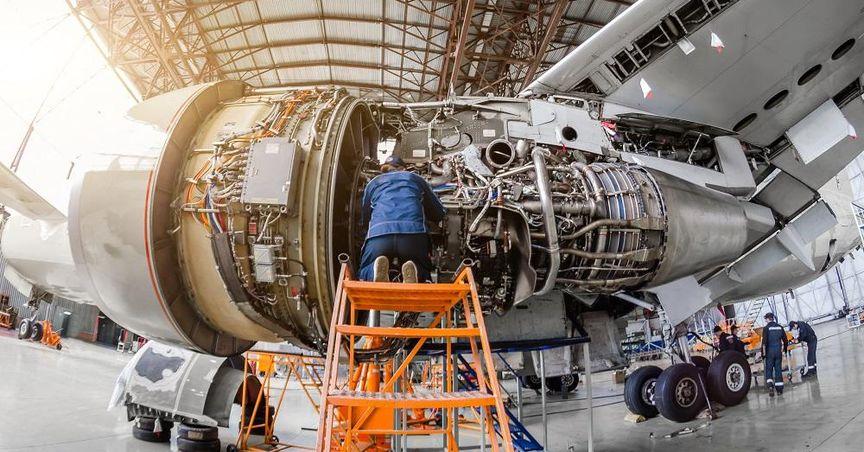
The aerospace side of the sector adds another layer to the story. Commercial aircraft, jet engines, maintenance systems, and aviation technology remain important areas of demand.
GE Aerospace (NYSE:GE), a major aircraft engine and aerospace systems company, plays a key role in commercial and military aviation. Its business connects the sector to airline activity, aircraft maintenance, and engine technology.
This mix gives the sector several demand drivers. Defense programs bring government-backed demand, while commercial aerospace connects companies to air travel and fleet renewal. Space adds another frontier that can broaden the long-term opportunity.
Technology Deepens Sector Importance
Modern defense is increasingly technology-driven. Aircraft, satellites, radar systems, communications networks, and missile defense platforms all rely on advanced engineering and software-supported systems.
This gives aerospace and defense a closer connection with the broader Industrial stock theme, especially where secure systems, automation, sensors, and data networks are involved.
The defense industry is no longer only about hardware. Software, cybersecurity, artificial intelligence, and satellite-based communication are becoming more important across military and space systems.
Companies that can combine engineering strength with advanced technology may remain central to future defense programs.
Multi-Year Programs Shape Visibility
Aerospace and defense programs often take years to develop, approve, manufacture, and deliver. This gives the sector a different rhythm from industries driven by quick consumer demand changes.
Aircraft programs, defense systems, and satellite projects usually require long contracts and complex production schedules. That structure can create better visibility for companies, though it also increases execution demands.
Large programs involve strict standards, technical testing, supply chain coordination, and government oversight. While this can support long-term demand, it also means delays and cost pressures can affect performance.
Execution Risks Remain Important
Despite the favorable demand backdrop, the sector still faces important risks. Defense budgets depend on political priorities, fiscal conditions, and government approvals.
If budget priorities shift, certain programs may face delays or revisions. Aerospace companies also face supply chain challenges, manufacturing complexity, and strict safety standards.
Commercial aerospace demand can be affected by airline spending, travel demand, and aircraft delivery schedules. Space programs can also carry technical risk because of their complexity.
The sector’s outlook remains closely tied to both policy and execution. Strong demand does not remove the need for operational discipline.
Defense Upcycle Gains Broader Shape
The current upcycle is not limited to one product category. It spans aircraft, defense systems, engines, satellites, surveillance platforms, and secure communication networks.
That breadth matters because governments are not only increasing traditional military readiness. They are also preparing for modern conflict environments where air power, space systems, digital networks, and advanced sensors all play critical roles.
This broader defense environment gives aerospace and defense companies multiple paths for demand. It also explains why the sector has remained in focus as geopolitical uncertainty continues.
Space And Security Define The Next Phase
The next phase for aerospace and defense may be shaped by the link between national security and space infrastructure. Satellites, secure communication, and surveillance systems are becoming essential to defense planning. These trends also remain closely watched across the Russell 1000, where leading aerospace and defense companies play an important role in industrial innovation, security technology, and space-related development.
Traditional defense companies with aerospace and space capabilities may remain important as governments strengthen both military readiness and space-based resilience.
The sector’s strength comes from a combination of rising budgets, geopolitical urgency, commercial aerospace recovery, and space-linked demand. Together, these forces have placed aerospace and defense companies in a favorable position.
