
 AUS
AUS
 NZ
NZ
 UK
UK
 CA
CA
 USA
USA
 IND
IND


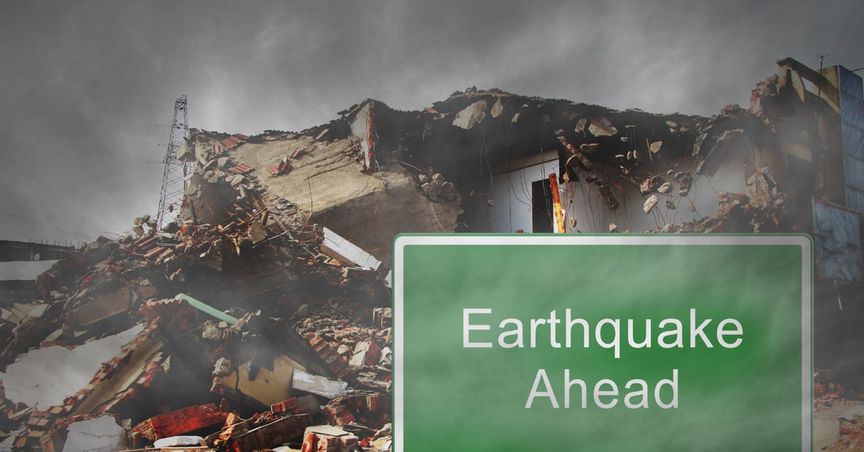





On Wednesday, a powerful earthquake rocked southeast Australia – a region consisting of some of the major Australian cities like Sydney, Melbourne and Adelaide.
The US Geological Survey – which tracks seismic activities across the globe – put the magnitude of the quake at 5.8 on Richter Scale, which was later revised up to 5.9, and said it struck at a depth of 10 kilometres.
The powerful quake hit about 130 kilometers northeast of country’s second-most populous city – Melbourne – near the town of Mansfield in the state of Victoria.
The head of Seismology Research Centre – an Australia-based organisation that operates the largest private earthquake observatory network in the world – said that it was the largest onshore quake ever in the recorded history of Victoria.
Unlike regions like Himalayas and Japan, earthquakes are a rare occurrence in Australia since the country-continent is situated in the middle of a tectonic plate.
This also happens to be the largest earthquake to rattle the country since a magnitude 6.6 earthquake struck 210 kilometers off the northwest coastal town of Broome in 2019.
Though there were no injuries and human loss, the initial estimates peg the damages in billions of dollars as debris littered the roads in the popular shopping area around Melbourne's Chapel Street, with bricks apparently coming loose from buildings.
So, what is an earthquake?
An earthquake is triggered by a sudden slip on a fault, which results in shaking of the ground and radiates seismic energy. A quake can also be caused by volcanic and magmatic activity, or other sudden stress changes in the earth. To put it simply, an earthquake is the shaking of the surface of the Earth due to a sudden release of energy in the Earth's lithosphere.
What are tectonic plates?
The Earth’s crust, or the topmost layer, is divided into large sheets of rocks called tectonic plates. These plates keep move slowly and change their position from time to time. There are seven major and many minor plates that jointly form the uppermost surface of the earth.
Why are tectonic plates important in context of earthquakes?
The edges of the tectonic plates are called fault lines – the cracks in the Earth's crust where tectonic plates meet. And these are the places where earthquakes take place. Earthquakes occur where plates are subducting, spreading, slipping, or colliding. As the plates grind together, they get stuck, and pressure builds up. Finally, the pressure between the plates is so great that they break loose – mostly near the fault lines. And boom – you have an earthquake.
How are earthquakes measured?
A quake is primarily measured using a seismograph. The seismograph produces a digital graphic recording of the ground motion caused by the seismic waves -- a recording which is called as seismogram. A network of worldwide seismographs detects and measures the strength and duration of the earthquake waves.
What is Richter Scale?
Though there are multiple methods used to measure the impact of earthquakes, the first widely used method, the Richter scale – was developed by Charles F Richter in 1934. It uses a formula based on the amplitude of the largest wave recorded on a specific type of seismometer and the distance between the earthquake and the seismometer.
