
 AUS
AUS
 NZ
NZ
 UK
UK
 CA
CA
 USA
USA
 IND
IND


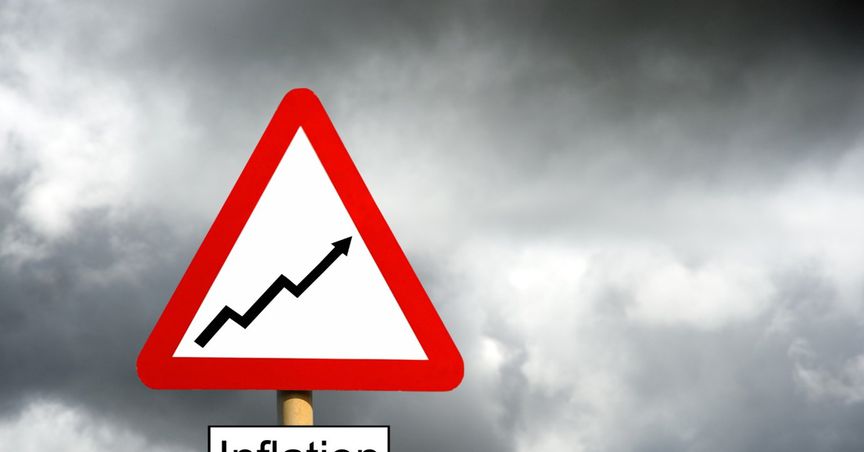

In economics, a higher gross domestic product (GDP) growth means that people in that country have more income. A higher income leads to more spending, which in turn, increase the prices of products and that leads to a spike in inflation.
In contrast, when a country’s economy slows down, the rate of increase in income dwindles. This would ideally truncate the consumer spending. With lesser demand for products, their prices will come down an inflation is likely to fall.
This is what happens in an ideal scenario.
Now, imagine a situation where the GDP growth of a country slows down constantly, but inflation keeps rising to uncomfortable levels. It is a possibility.
At the onset of the COVID-19 pandemic, Victor Li, professor of economics, Villanova School of Business had talked about how he was worried about the stagflation after the pandemic. Not many batted an eyelid back then.
However, last week, as inflation prints of the countries across the globe started coming in, many have started feeling that we are in a stagflation phase. The numbers that are coming in, or are expected, are records in themselves.
In China, factory gate prices in the month of May rose by 9% -- their fastest annual pace in over 12 years owing to the surging commodity prices, highlighting the global inflation pressure at a time when policymakers across the world are trying to revitalise the post-pandemic growth.
In the US, the world’s largest economy, consumer prices for May accelerated at their fastest pace in nearly 13 years as inflation pressures continued to mount in the economy. The rise in consumer price inflation is more worrying, because it metes out a direct blow to the common man. Something that partly explains the current scenario is the fact that the prices are bouncing back from the pandemic lows seen last year.
But that argument doesn’t hold much water. The global prices were at their lowest in April 2020, when crude oil prices crashed into negative territory for the first time in history. Given that logic, the inflation print should have come down in May 2021, compared with April 2021. But it has been otherwise – throwing the price recovery question out of the window.
Yes, on the contrary, rising commodity prices are leading to an increase in inflation.
But, on the other hand, after swift V-shape recovery for most economies, the growth has started to slow down across all these countries. We might end up being in stagflation if this trend continues over the next couple of months.
So, what is stagflation?
Stagflation is characterised by slow economic growth and relatively high unemployment — or economic stagnation —at the same time accompanied by rising prices. Stagflation, to put it simply, can also be defined as a period of increase in inflation combined with a decline in gross domestic product (GDP) growth.
What causes stagflation?
Stagflation occurs when central banks expand the money supply at a time when the government policies constrain the supply. The most common culprit is when the central bank prints currency – which is mostly when the apex bank is acting as an agent of the government. It can also occur when a central bank's monetary policy decisions create lot of credit. Both lead to an increase in the money supply and create inflation.
At the same time, some other policies slow growth – just like an increase in taxes. Increasing the tax rates leads to the decrease in the disposable income – resulting into a drop in the growth rate. There are chances of stagflation when the central bank raises interest rates. The increase in the interest rate prevents companies from accessing more and more of credit, in , stopping them from producing more. In a way, this is a result of expansionary and contractionary policies.
Is stagflation a bad thing?
Conceptually speaking, stagflation is in complete contradiction to slow economic growth – which would likely lead to an increase in unemployment but should not result in rising prices. Therefore, this trend is a dangerous one. An increase in the unemployment level results in a decrease of consumers’ purchasing power. In simpler terms, it means that the money held by people is losing value as time goes by. This ultimately leads to people having less money being worth lesser and lesser.
What is its cure?
There is no fool-proof cure of the stagflation. However, most economists believe that it can addressed by dealing with the supply side issues – that productivity has to be increased to the point where it would lead to better GDP growth without any further increase in the inflation. This would give space to the central banks to tighten monetary policy – in a bid to reign in the inflation component of stagflation. However, it is easier said than done, so it is better for economies to avoid it at any cost.
