
 AUS
AUS
 NZ
NZ
 UK
UK
 CA
CA
 USA
USA
 IND
IND







Summary
- Disputes between the US and China have been escalating, following tit-for-tat policy, with consular shutdowns in Houston and Chengdu.
- Trump administration and many top officials have been accusing Beijing of letting coronavirus spread into the world to ruin the US economy.
- Recently, the US President Trump made an announcement to ban TikTok in the US due to concerns over data collected by the app might be passed to the Chinese government.
- Of late, Microsoft is in talks to buy the US arm of Chinese platform TikTok and had discussions with President Trump about security and censorship.
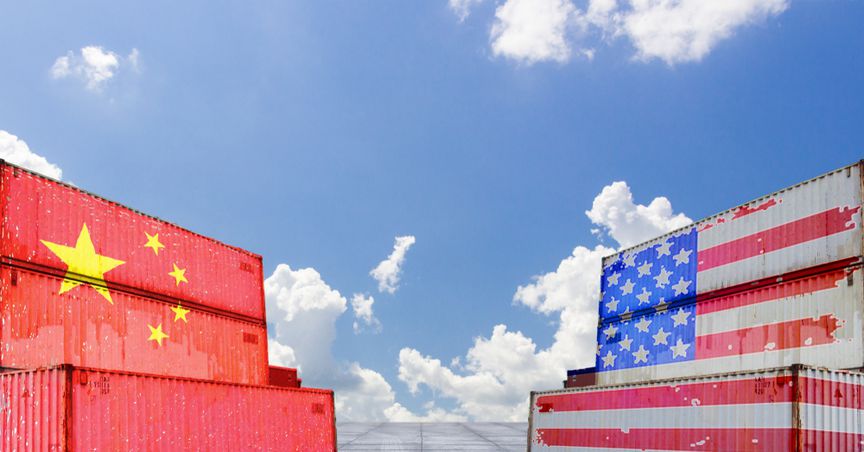
Tensions between the world's 2 largest economies, the US and China have been growing with both navigating uncharted territories.
Ties between the US and China spiralled this week when the Chengdu mission was ordered to close down in vengeance for the compelled closure of Beijing's consulate in Houston, Texas, with both sides claiming that the other had put national security in danger.
Beijing claimed that the shutting down of the Chengdu consulate was a "legitimate and appropriate reaction to the unfair actions taken by the US" and alleged that Chinese protection and interests were compromised by diplomatic mission personnel. Officials in Washington meanwhile claimed that the Chinese consulate in Houston had made unacceptable attempts to rob US corporate secrets and patented medical and scientific research.
Though shutting down of consulates is not uncommon between scuffling countries, downslide in US-China relations has been precipitous, after Trump changed his mind about Beijing bona fides though he upheld the view in the early weeks of the pandemic that China was a good partner, who was acting rapidly and cooperating with the US and he highlighted his personal ties with Xi Jinping.
Trump administration and many top officials have accused Beijing of letting coronavirus spread into the world to devastate the US economy and undermining the country in an attempt to threaten its dominance and make aggressive military moves in the Indo-Pacific region.
ALSO READ: Chinese Arrest Escalates the US-China Tensions, TikTok Ban Also on the Cards
After China and the US tit-for-tat diplomatic battle, their ability to spy on critical areas of their countries has been lowered. The loss of Chengdu mission in southwestern China will obscure the US’ view of Tibet where Buddhist residents assert that Beijing is corroding their culture and conventional autonomous trait. At the same time, failure of mission in Houston lowers China's vision of the South America and eradicates the nerve centre of China’s espionage system.
American and Chinese citizens requesting visas or wanting to manage the business in the US will now have to take a trip to the embassy in Beijing or to consulates along the East Coast, after the closing of the Houston consulate. Several top Trump cabinet advisers including Mike Pompeo, Secretary of State and Attorney General Bill Barr have made solid anti-China speeches of late.
Trump administration is also paying attention to Chinese scholars and students in US academia, indicating that they are involved in a massive spy network trying to rob US intellectual property.
Recently, two Chinese hackers were accused of an attempt to steal information about coronavirus vaccine research. Washington has also been dealing with U.S.-based Chinese newspapers, suggesting them to register as diplomatic outlets because they are regarded as China propagandists, and has warned against blocking Tik-Tok and other Chinese applications.
Trump called for ban of Tik Tok in US
As trade relations between US-China worsened, tensions have also gained fresh momentum in the high-tech sectors. Trump administration launched a full-court press against Chinese telecommunications giant Huawei, arguing that the firm could spy on behalf of Beijing.
Further, Don 1 August, Donald Trump announced the ban of social media app Tik Tok, owned by a Chinese company ByteDance in the US.
Tik Tok is an app used to upload 15-second videos that also include lip coordination with tracks, humour routines and odd techniques of editing. The videos are then made public to followers and strangers.
TikTok's fun videos and user-friendliness have made it famous, and it claims to have millions of users in the US and hundreds of millions worldwide. In 2017, TikTok had an equivalent application for consumers in China known as Douyin. The US security officials raised the alarm on the Chinese app that has close to 80 million active monthly users in America might be used to gather personal details of the Americans/
The US Secretary of State, Mike Pompeo also highlighted administration’s cautions about the platform stating that software companies like TikTok and WeChat that are operating in the US are supplying data straight to the Chinese Communist Party.
Tik Tok CEO, Kevin Mayer, has stated that Tik Tok is not political and has no agenda; its purpose was to stay as a lively, energetic platform for everyone to enjoy. He also added that the platform had become the target, but it is not the enemy.
Lately, Microsoft has been in conversation to purchase the app and operating Tik Tok services in the US, Canada, Australia, and New Zealand, and expects the talks to end by 15 September.
Trump and Microsoft’s CEO Satya Nadella have been in a conversation regarding the same, with the organisation stating that it was dedicated to obtain Tik Tok, conditional to a comprehensive security review and offering the US with sufficient economic benefits, comprising the US Treasury. Microsoft also announced that it might offer other American investors, with an opportunity to participate on a minority basis in the purchase of Tik Tok.
