
 AUS
AUS
 NZ
NZ
 UK
UK
 CA
CA
 USA
USA
 IND
IND


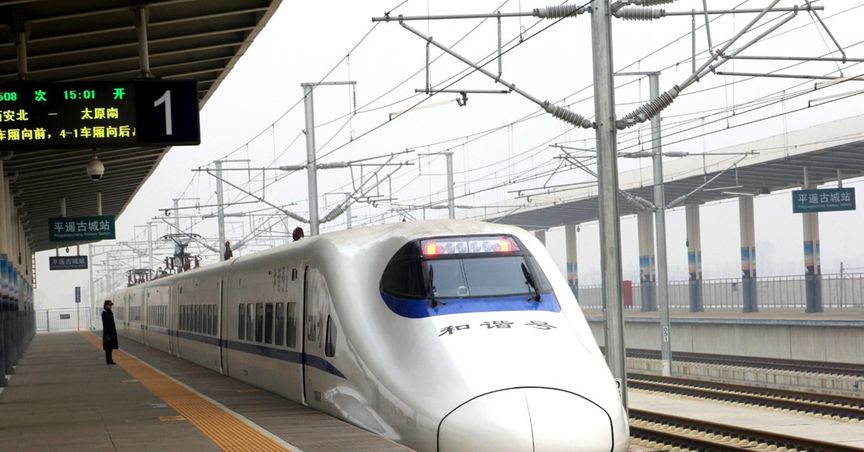




First, it was Coronavirus, then came the Evergrande shock. It seems China is brewing a new trouble story every day. China’s first high-speed rail (HSR) service, which commenced in the year 2009, seems to have entered a debt trap. China’s HSR connects the major cities with a vast spread-out network. But, in recent years, the network has been experiencing a decline in transportation density or the annual average transport volume per kilometer. China Rail Corporation or the CRC owns the HSR network and is undergoing financial woes.
Debt trap since 2018
It seems that the CRC is raising new debt to pay off old debt, which is making the debt burden increase significantly. The interest payments are reported to be higher than the operating profits, creating a huge impact on its bottom line.
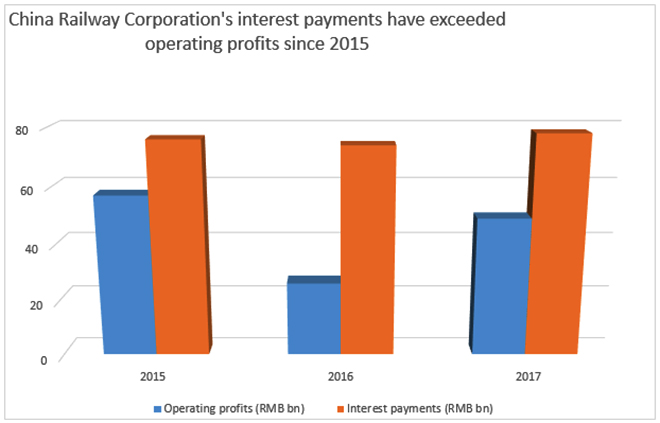
Source: China Railways
In September 2020, CRC’s quantum of debt rose to US $850 billion, and its debt-to-asset ratio was 65.8 percent. Seeing the mounting debt, the transport authority decided to put a pause on new construction of high-speed rail in the route already being covered by HSR land where the running capacity is below 80%.
Also Read: Is China’s Evergrande crisis a threat to Australian miners?
Why was HSR launched in China?
The problem with the Chinese HSR project is that in the end it was less about it as transport but as a huge propaganda project for the CCP. Which is why they have built so many lines with no plan on a passenger demand outlook to make it profitable. The tickets for the HSR are far more expensive than regular slower trains, and so the market for the HSR becomes limited to a demographic with a certain amount of income, which is another limiting factor on the number of passengers there will be. All in all, for HSR to be economical, there must be a high demand for it, with enough passengers on a daily basis so that the ticket price can be lowered without a loss of profit. As of now, the concentration is on a few key routes that connect the greater urban centers.
Bottom line
The China HSR story is what the world eyed, but its current financial woes are a lesson to learn from due to its poor planning. Undoubtedly, this debt burden is a huge one, and further progress on these high-speed rail projects seems stalled for the moment. But, will it take shape big enough like the Evergrande crisis is one to watch out for?
Related Article: Has Evergrande dodged default? DMSA says no
