
 AUS
AUS
 NZ
NZ
 UK
UK
 CA
CA
 USA
USA
 IND
IND






In 2014, Amazon founder Jeff Bezos visited the South Indian city of Bengaluru – popularly known as Silicon Valley of India – owing its reputation for acumen towards tech innovations. It was the time when India’s domestic e-tailer Flipkart – which was later acquired by Walmart – had thrown down the gauntlet to Amazon. Flipkart had raised US$1 billion at the end of July that year.
Mr Bezos, during that visit, had met many people. One among them was a senior journalist who called him as the “most fun-filled CEO he had ever met”. The senior journalist also said that the duo got talking as if they were “long-time friends”. Probably, that reflects two major facets of his personality – being cool with people around him and being adept at interpersonal communication – which may have been key to making him the towering, big tech figure that he is now.
At that time, Mr Bezos wasn’t even among the 10 richest people in the world. Mind you, at that time, having a personal net-worth of US$100 billion seemed a distant dream. Within two years of this visit, Mr Bezos cracked into the top 10 billionaire list – with a net worth of less than US$50 billion. Four years after the visit, as Amazon Inc (NASDAQ:AMZN) prices surged, his net worth had crossed US$100 billion, and by the year end, he had become the richest person in the world. Over the next three years, Mr Bezos remained glued to his top place – despite an occasional displacement by Elon Musk of Tesla Inc (NASDAQ:TSLA). As on date, as he steps down as Amazon CEO after almost 27 years since its inception, Mr Bezos continues to be the richest in the world – with a whopping net worth of US$211 billion.
To give you a perspective, Mr Bezos has seen his wealth grow at 40.83% on a compounded annual basis since 2016 year-end – when he entered the league of top 10. The growth in his wealth has completely been in line with the growth in the share price of Amazon – that has shown a compounded annual growth rate (CAGR) of 42.36% in these four and a half years. But in this short span, there was an upheaval in his life. In January 2019, Mr Bezos and his ex-wife – novelist MacKenzie Tuttle – announced their intention to end their 26-year long marriage. On April 4, 2019, the divorce was finalised, with Mr Bezos keeping 75% of the couple's Amazon stock and Ms MacKenzie getting the remaining 25% (worth US$35.6 billion) in Amazon stock. This is probably why the CAGR of Mr Bezo’s net worth is 150 basis points lower than the CAGR of the Amazon stock. Despite this split in the stock holding, Mr Bezos has kept all of the couple's voting rights.
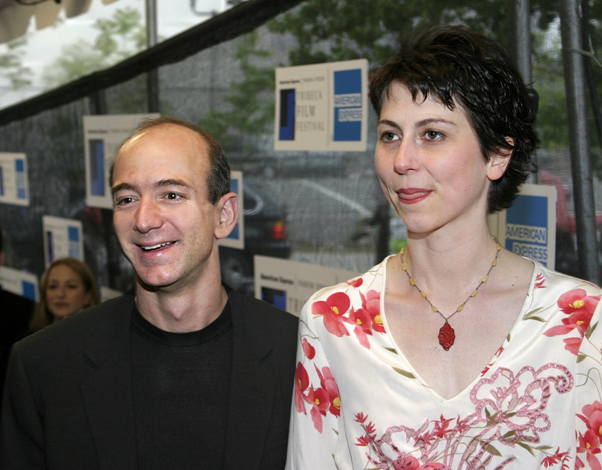
Jeff Bezos and his then wife and wife MacKenzie Tuttle arriving at the 2nd Tribeca Film Festival in lower Manhattan on May 11, 2003. The couple parted ways in 2019 after 26 years of marriage. © Lagron49 | Megapixl.com
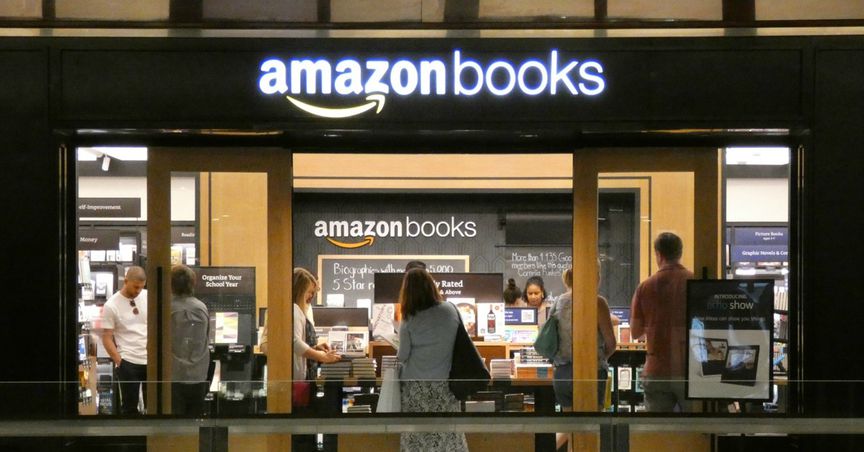
However, things were not always so rosy for him on the professional front. After starting an online bookstore named Amazon in 1993 (the company is now e-tailing behemoth), Mr Bezos first became a millionaire in 1997 when he raised US$54 million through Amazon's initial public offering (IPO). Within just two years of this listing, he made it to the Forbes World's Billionaires list in 1999 – with a net worth of US$10.1 billion. However, things went south from there for the next three years – as he lost almost 90% of wealth – a large part of which was the result of 2001 stock market crash. His net worth decreased to US$6.1 billion in 2001, a drop of 40.5% from 1999. In 2001, a year when stock markets crashed after the 9/11 terror attacks, Mr Bezos saw his net worth tank by 66.6% to US$2.0 billion. In 2002 again, he lost yet another quarter of his wealth as his net worth plummeted to just US$1.5 billion. For next 14 years, his net-worth grew gradually despite the hit of 2008’s Great Recession. Since 2016, Mr Bezos has been on a roll.
As he passes on the baton of Amazon to his trusted lieutenant Andy Jassy and takes the role of founder and Executive Chairman, Mr Jassy has a huge legacy to live up to.
