
 AUS
AUS
 NZ
NZ
 UK
UK
 CA
CA
 USA
USA
 IND
IND






Summary
- Hand sanitisers have been ruling our lives amid the COVID-19 pandemic and have become an essential good, available in the form of sprays, wipes, foams, and gels.
- However, excessive use of alcohol-based hand sanitisers can lead to several health hazards.
- The method of washing hands with soap and water is far superior and more effective than hand sanitisers, which can cause many skin problems, increase the risk of infections and can be harmful in several ways.
- Some researchers have stated that frequent use of hand sanitisers can cause resistance to both good and bad bacteria, which could harm the immune system in fighting infections.
We have heard a lot of times that excess of anything is bad and the same holds true for hand sanitisers. Hand sanitiser pumps, stations and wipes are present everywhere from grocery stores, shopping malls to churches, for curbing the spread of coronavirus. They have become the new normal and have irrefutably been the most critical item in our lives to secure ourselves from the COVID-19 pandemic.
Though sanitisers are effective for killing germs and bacteria, its excessive use can lead to killing good bacteria, breathing problems and hand allergies among other health concerns.
Source: CDC
Good Read; Skin Elements’ Natural Plant-Based SE FormulaTM 99.99% effective against Feline Coronavirus
There are several issues associated with frequent applications of sanitisers. Let's have a look at why using too much of it may not be a good idea.
- Soap and water are the best combination
Handwash is the safest way to avoid falling sick. Washing hands, the traditional way is far superior to using hand sanitiser. The switch can be beneficial in preventing allergic reactions depending on one’s skin type.
Hence, one must only use hand sanitisers when there are no other options; otherwise, antiseptic soap can do the needful along with wet wipes when there is no running water and soap available. Using soap for cleaning hands can help in eliminating pesticides, get rid of all types of germs, and other chemical residues that linger on hands, giving an overall better cleansing.
The tips provided by national public health institute in the US’ The Centers for Disease Control and Prevention (CDC) for washing hands the correct way are as follows:
- Drench hands with clean, running water (warm or cold), shut the tap off and put on soap
- Scrub hands including the backs of the hands between fingers and under nails by rubbing them together with the soap
- Rub hands for at least 20 seconds and achieve the precise time by humming the "Happy Birthday" song from the starting to end two times
- Rinse hands with clean water and then pat them dry using a clean towel or air drier
- Alcohol-based hand sanitisers can lower microbes on hands but cannot eliminate them
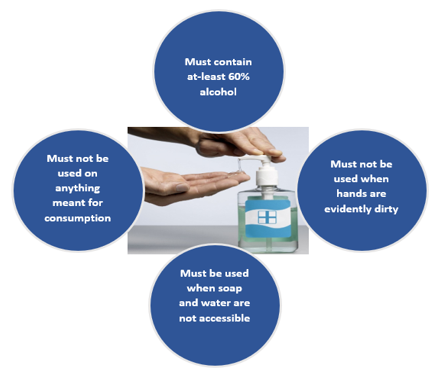
As per CDC recommendations, people should use an alcohol-based hand sanitiser that contains at least 60% alcohol. The Center also asserted that though sanitisers can reduce the number of microbes on hands in a few instances, they do not remove all kinds of germs and cannot be enough efficient when hands are noticeably dirty or oily.
While alcohol-based hand sanitisers may very efficiently inactivate several forms of microbes when used correctly, people do not use a sufficiently large amount of the sanitisers or clean them off before they have dried their hands. Some statistics also reflect that hand sanitisers might work well against certain types of germs on a little soiled hand, but in case of highly greasy or dirty hands after playing sports, working in garden, etc hand sanitisers may not perform well.
Also read; First Hand Sanitiser Delivered by FOD
- Dry skin and risk of infection
Alcohol-based hand sanitiser can remove the natural oils of the skin if it is used too frequently, which can result in drying and cracking. Dehydrated skin can result in various problems like itching in the skin, grey skin colour, fine lines, redness, and deep cracks.
Parched, broken cuticles and skin can provide a point of entry for germs to invade the body and trigger infection. In addition, extreme dryness can trigger the disease if one is prone to eczema, causing redness, cracking, and inflammation. These problems are expected to happen when the normal protective mechanism of the skin is strictly compromised.
- Daily use of hand sanitiser can be harmful
Since many people are using hand sanitisers increasingly on a regular basis, The US Food and Drug Administration (FDA) announced that the companies making hand sanitisers need to provide proof that such chemicals are safe for that degree of use, particularly for pregnant women and children.
There are 3 active substances currently under review - benzalkonium chloride, ethyl alcohol and isopropyl alcohol. In fact, there are fears that the usage of antibacterial hand sanitisers and soaps, such as those that contain chemicals to destroy bacteria such as triclosan may lead to antibiotic-resistant bacteria.
- Can act as a fire hazard
Most hand sanitisers consist of a high volume of alcohol, which is enough to be considered a fire hazard. Alcohol-based sanitisers are classified as Class 1 Flammable liquid substances, which implies that they consist of a flashpoint of less than 100 degrees Fahrenheit.
The Occupational Health and Safety Administration, agency of the US Department of Labour, provides strict requirements for handling and utilising flammable liquids.
Some of the safety measures are as follows:
- Straight away, wipe off the spilled hand sanitiser with water
- Stock alcohol-based hand sanitisers away from any sources of fire and combustion including sparks, open flames, and electricity outlets
- Don't encourage children to use or access a hand sanitiser unless carefully monitored by an adult
- Stock alcohol-based hand sanitisers in safe locations that don't suffer excessively high temperatures
Hence, you should know when to clean your hands and which method to use, which will give you the best chance of averting sickness.
