
 AUS
AUS
 NZ
NZ
 UK
UK
 CA
CA
 USA
USA
 IND
IND








Summary
- UK PM Boris Johnson and European Commission President Ursula von der Leyen have said they are willing to go the extra mile
- The negotiation group is constantly working for a better trade deal
- However, Johnson has told his cabinet officials to be prepared for a no-deal exit
Unable to come on a fruitful agreement, UK Prime Minister Boris Johnson and European Commission President Ursula von der Leyen have said they would keep discussing the free trade deal beyond the self-imposed deadline on Sunday in a bid to find a viable solution.
Britain had quit the EU, a 27-country bloc, in January, it was in the EU for a smooth Brexit transition period, which ends on 31 December.
Johnson and Leyen reportedly said in a joint statement they had a meaningful discussion over the phone on Sunday and discussed key pressing points. Both the leaders are willing to go the extra mile and have directed the negotiators to continue to have discussions and find out if an agreement can be reached, the statement added.
The talks have been going on for almost a year where many deadlines have been missed. In the meantime, Johnson has reportedly informed his cabinet officials to get ready for a no-deal exit. Sources said that Johnson’s request for having open talks with Paris and Berlin had been rebuffed.
Also read: Pound falls with rising fears of a no-deal Brexit
The European Commission appears to be extremely determined to keep the negotiations going. A no-deal exit would mean Britain would have to follow the World Trade Organisation terms.
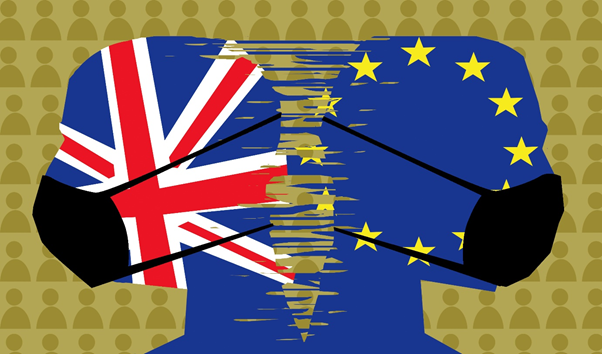
(Image source © Kalkine Group 2020)
Pressing points
Level playing field: Both sides want to have a level playing field for the companies operating in their regions. In simpler terms, a level playing field means that business rules are uniform so that any company operating on either of the sides can’t take any undue advantage.
Although all the trade accords have such rules, in this case, emphasise was laid on uniform environmental guidelines, government support to businesses, and labour rights on both sides.
This is in contrary to what the UK had decided to have separate rules in terms of business operations, labour rights, trade tariffs, etc.
Fishing rights: The UK wants to have access to the EU market for selling its fish. While the EU wants unrestricted entry to British waters. The UK negotiators have been rejecting this demand and are pressing that Britain is now an independent coastal territory. The EU boats can fish up to six nautical miles of Britain’s coastline, as per the current rules.
Some EU nations are more reliant on the UK waters for the living of their fishermen than others. For example, the French fishermen are insisting their government to pursue the UK to grant complete entry. French farm minister Didier Guillaume has been urging the EU not to disallow French boats to enter the UK waters.
Dispute resolution: The authority of future deals and disagreement resolution management is not merely about the wider framework of any deal, but also about their administration including the role and participation of the European Court of Justice (ECJ).
While the EU envisages any dispute resolution to be taking place only through the ECJ, however, the UK has refused to follow this.
