
 AUS
AUS
 NZ
NZ
 UK
UK
 CA
CA
 USA
USA
 IND
IND






Highlights
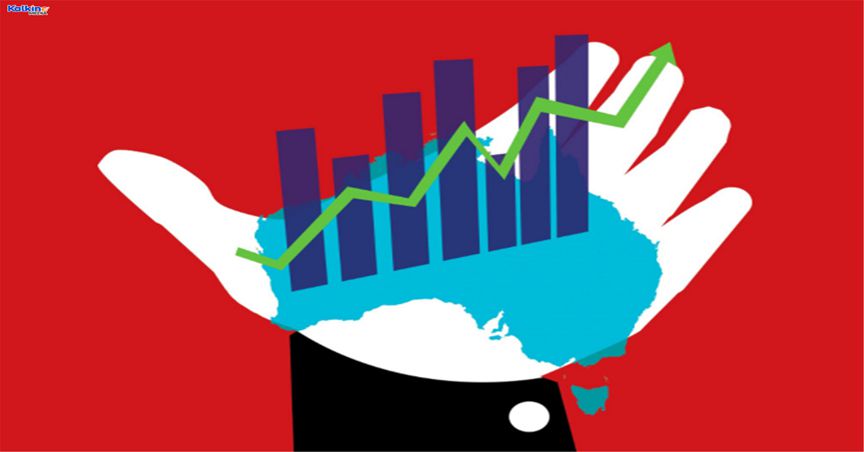
- Australia’s economic activity expanded by 3.4% during the December 2021 quarter.
- The surge in GDP was fuelled by a rise in private demand and increased household spending.
- The data shows that the economy recovered quite well from the unexpected shocks in 2021.
As per the Australian Bureau of Statistics (ABS), the Australian economy expanded by 3.4% during the December 2021 quarter relative to the previous quarter. Interestingly, the Australian economy was 3.4% bigger at the end of 2021 than it was before the start of the pandemic (i.e., December 2019). The significant jump in GDP was driven by rebounding consumer demand.
Deciphering the impact of Russia-Ukraine crisis on Australian economy
After emerging from the Delta variant-induced lockdown, the Australian economy has seen fast-paced growth across various sectors, especially in the labour market. The GDP results for the December quarter highlight the favourable factors that took shape in the country after restrictions were eased completely.
Evidently, the growth of GDP was the strongest in states that were the most affected by the restrictions placed during the Delta variant outbreak. Particularly, demand rose by 6.7% in New South Wales, 3.7% in Victoria, and 1.9% in the Australian Capital Territory. Some of this rise in demand across states can be attributed to the holiday season shopping, which was especially fuelled by pent-up demand from the lockdowns this year.
Surpassing pre-Delta levels
The December quarter growth indicates the country’s emergence from stringent restrictions and marks a gradual return to normal conditions. The ABS data suggests that the GDP level stood at AU$521.9 billion at the end of the December quarter, which was higher than the June quarter’s GDP of AU$514.3 billion, i.e., before the Delta variant outbreak.
Also Read: How well does the Keynesian framework sit in the Australian economy?
As a whole, this shows that the economy recovered quite well from the unexpected shocks in 2021, compared to 2020, when significant damages were visible.
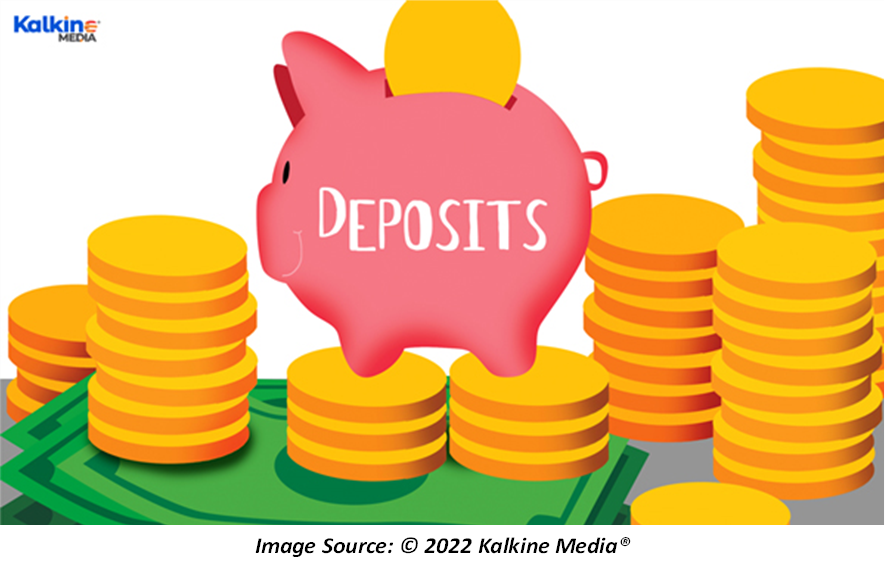
Interestingly, household savings also remained robust during the quarter. Households saved a higher-than-usual share of their disposable income, amounting to 13.6% in the December quarter, which is higher than the pre-pandemic saving ratio. The Government income support toward households stood at AU$6.9 billion in the quarter, above pre-pandemic levels. Alongside that, Government subsidies were AU$8.8 billion higher than pre-pandemic levels.
The significant improvement seen across the labour market allowed Australians to stand on their feet and spend during the quarter. The unemployment rate plunged to 4.2% in December 2021, with Western Australia, South Australia and Tasmania observing the lowest rates of unemployment.
Rising demand behind GDP growth
Australians indulged in a higher-than-average level of savings and utilised their income in spending enthusiastically during the December quarter. With the easing of restrictions, household spending increased by 6.3%. The largest rise of 14.2% was seen in non-essential spending, while essential spending rose by a moderate 1.9%.

Household spending on goods and services rose, specifically in recreation and culture, cafes and restaurants and clothing and footwear segments. However, as household gross disposable income fell 0.5% during the period, the household saving to income ratio declined from 19.8% in the September quarter to 13.6% in the December quarter.
Alternatively, private investment took a small dip during the quarter of 1.4%. This was a direct result of labour shortages and lack of construction materials, which ultimately contributed to a decline of 2.2% in the dwelling investment.
Do Not Miss: Which global events can influence the Australian economy?
