
 AUS
AUS
 NZ
NZ
 UK
UK
 CA
CA
 USA
USA
 IND
IND








Summary
- Online selling scams have been on the rise in the UK since the first lockdown was implemented as there was a major rise in online purchases during that period.
- Royal Bank of Scotland, which has received numerous reports of such scams from its customers over the past few months, is expecting an increase of at least 40 per cent on Black Friday.
With the increase in online commerce in the last few months of pandemic, the frauds and scams are on the rise in the country. Several banks have been receiving complaints from their customers that they have bought and pre-paid for a product online but have never received the goods.
Royal Bank of Scotland, which has also been dealing with such complaints for some months now, has said that there will be an increase of 40 per cent in such fraudulent transactions on Black Friday.
This year, when people have been forced to spend most of their time indoors because of the fear of catching the coronavirus, online commerce received a major boost. Now as the year is about to end and the festive season has started with Black Friday, a major spike in online sales is expected. Obviously, fraudsters would also be on the prowl to target. Banks and law enforcement agencies have advised customers to be vigilant and conduct basic checks before buying things online.
How to protect yourself from online fraud
There are certain tips that RBS has given to its customers to protect themselves from online fraud:
- Always buy from trusted sellers, someone you have heard of or you know to have been in the online retailing space for some time. Not all selling ads on Google search are genuine.
- Always check if the seller is providing a genuine phone number. Check for online reviews of the seller on how they have treated buyers before. This will also unravel if a seller has been involved in any legal dispute with a customer or not. Cases where the online payment was done and goods never got delivered can be checked by taking the above precautions.
- Never pay directly to the seller’s bank account if the purchase is being made through Facebook Marketplace, eBay, or other reputed online portals and do follow fraud advice given by these websites.
- Paying by credit card or debit card is the safest way to shop online as the bank can easily track the seller and if goods don’t arrive, the customer is protected, and the bank can help him get his money back.
Online shopping behaviour
The proportion of online retail reached 10 per cent for the first time in November 2011 and it doubled to twenty per cent in November 2017. However, thanks to the pandemic, the proportion of online retail sales to total retail sales saw a meteoric rise of nearly from 19 per cent to 33 per cent in the three months period between February and May. The massive shift in consumer preference in such a short period did not give the regulators and law enforcement agencies much time to respond to emerging threats like online fraud. Thus, a quick update on regulations for online commerce is much accentuated for the further growth of this sector.
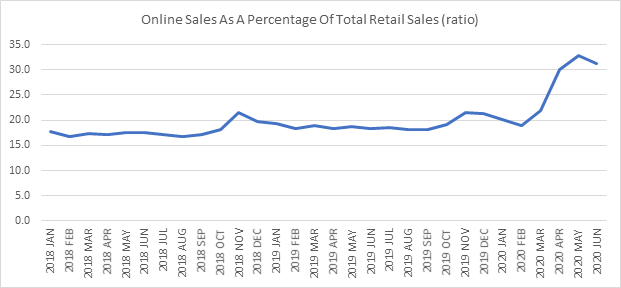
(Data Source – Office of National Statistics)
