
 AUS
AUS
 NZ
NZ
 UK
UK
 CA
CA
 USA
USA
 IND
IND







Highlights
- National home values have continued to surge in Australia since the onset of the pandemic.
- Property prices may observe a decline this year in case the central bank embraces a rate hike.
- Increased supply of housing and weaker demand has been fuelling price rises so far.
Although the Australian property market has been rising consistently in the COVID-19 era, experts are predicting this year to be a cooling phase for the housing market. The recent reports from CoreLogic demonstrated that national home prices reached a new cyclical high in January 2022. Dwelling values recorded their highest annual rate of growth since June 1989 last month, surging 22.4% over the year.
However, this steady rise in prices may be nearing an end, given a recent cooldown in property prices. The property consultant’s report further highlighted that the quarterly change in property prices continued to soften in January, reflecting the longer-term trend of slowing growth across most regions of the country.
It is worth noting that the Australian property boom has been backed by massive monetary stimulus provided during the pandemic, including record-low interest rates. However, with the central bank becoming more hawkish, gradual monetary policy tightening can reverse this boom over the coming months. Additionally, the red-hot property market has heightened inflationary concerns in the country, prompting the central bank to cease the bond-buying program.
A cooldown on the way?
Even in 2021, a stark rise in the supply of housing was visible when auctioning rose steeply across all states. The policymakers embraced a series of tightening measures that helped cool down housing demand last year. However, speculations are rife that the price cooldown in the property market might be here to stay.
With foreign investment regulations remaining tight, experts predict that housing prices could decline in the coming months. Notably, homebuyers have seen a reduction in their borrowing capacity since the Australian Prudential Regulation Authority (APRA) tightened its regulations for mortgage lending.
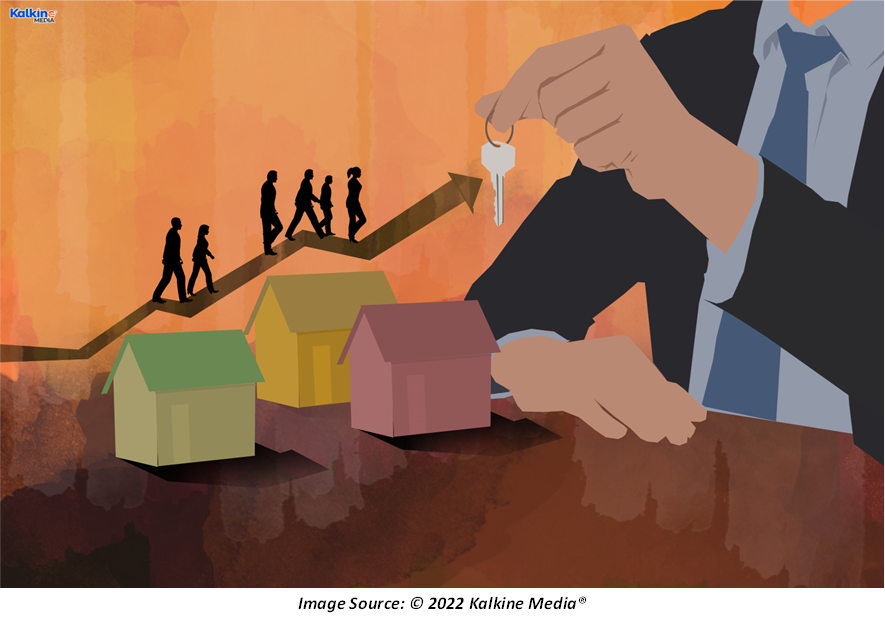
Under a new plan proposed by the National Affordable Housing Alliance (NAHA), about 15,000 new housing units per year could be provided for Aussies who need housing but struggling to access it. To fund the supply of new housing, NAHA intends to use non-government capital sources. This rapid rise in supply against a relatively stagnated demand could bring down the rate of price increase in the property market.
Soaring prices: A persisting reality
The observed slowdown in prices is yet to reach the average buyer in the market, as consumers continue to observe soaring house prices. Housing prices increased by 1.1% in January, with smaller regions observing larger increases in prices relative to capital cities.

In fact, housing markets have started 2022 with a similar trend to what Australia saw through late last year. In this environment of highly volatile prices, the only respite offered to market participants is the fact that rising values are nowhere near as fast as was seen in early 2021.
Bottom Line
Housing prices have reached overwhelming levels, from where the journey to cooling prices could be a long and strenuous one. One wrong move from policymakers could result in a crashing market, potentially resulting in an economic slowdown. Perhaps that is why the Reserve Bank wants to take its time before it finally announces a rate hike. Till a concise timeline for a rate hike is not announced, the market may continue to be caught in a whirlwind of sky-high prices. Meanwhile, any cooldown in prices can be of less magnitude and temporary in nature.
