
 AUS
AUS
 NZ
NZ
 UK
UK
 CA
CA
 USA
USA
 IND
IND








Summary
- US companies are adopting new technologies to curb greenhouse gas emissions, ensuring industrial safety, safeguarding public health and the environment.
- The waste-to-energy projects are safe and technologically sound - converting waste, including metals like aluminium and steel, into clean energy, says a report.
- US companies are adopting new technologies to curb greenhouse gas emissions, ensuring industrial safety, safeguarding public health and the environment.
US industries engaged in waste-to-energy projects are helping to reduce landfill trash, a primary source of methane emissions and considered ten times more potent than carbon dioxide.
However, carbon emission continues to be the primary cause of global warming.
The waste-to-energy projects are safe and technologically sound - converting waste, including metals like aluminium and steel, into clean energy, says a report of New York City College.
According to the Environmental Protection Agency, the world currently generates nearly 300 million tons of trash annually. Moreover, the electricity produced from waste-to-energy projects is a reliable power source fed to the grid or supplied directly to private homes, public buildings, and industries.
Key Benefits of Waste-to-Energy Conversion
US companies are adopting new technologies to curb greenhouse gas emissions, ensuring industrial safety, safeguarding public health and the environment. In his report Prof. Marco J. Castaldi of the City College also notes that the current waste-to-energy projects in the US have significantly reduced the risk of methane exposure and producing ten times more electricity from each ton of waste.
He stressed that modern technology is offering new opportunities to convert organic waste into energy to power cars, trucks, and other utility vehicles, and at the same time, helping to save nature. His report called for a ban on long-distance hauling of waste to prevent air pollution.
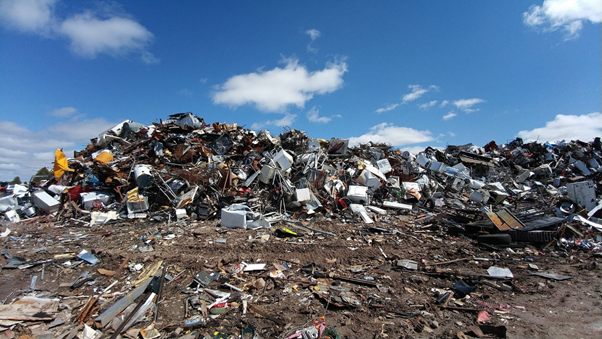
Source: Pixabay.
Also Read: What Is the UK Doing About the Climate Challenge?
What Studies Find?
The Energy Recovery Council, a national trade organization, headquartered in Washington, recently said that companies involved in the “waste-to-energy” sector could create scores of well-paid jobs in the US over the next decade. However, some of the work may require highly skilled professionals.
In another study by Uisung Lee of the Argonne National Laboratory showed that food waste and wood and metal trimming debris produce millions of tons of methane emissions at landfills.
Thus, studies show that creating energy from waste may be an ingenious way to tackle the twin problems of employment and climate change. In 2015, the EPA had said that landfills contribute almost 116 million metric tons of CO2 to the air. Thus, curbing landfill pollution should be a primary focus in climate fight. Besides, converting waste into energy also has economic benefits.
Also Read: Ocean Conservation: What Are Nations Doing to Protect Their Underwater Habitats?
