
 AUS
AUS
 NZ
NZ
 UK
UK
 CA
CA
 USA
USA
 IND
IND


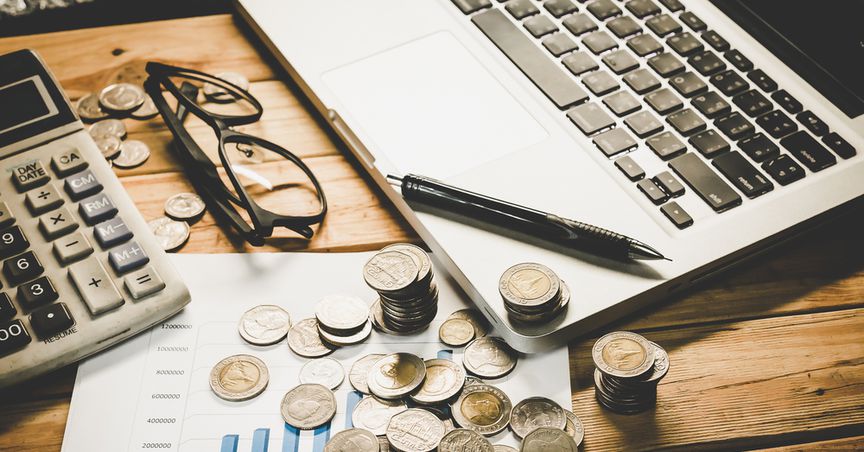


An economic stimulus refers to the action wherein a government provides a package to the consumers by utilising different policies. A stimulus includes both monetary and fiscal policy measures. The purpose of a stimulus is to provide a boost to the economy or to encourage spending at a time when the demand is falling short.
The concept of an economic stimulus helping a country to move out of recession is a part of Keynesian economics. It was Keynes who advocated that the government intervention is necessary to move a country out of an economic downturn. The idea behind an economic stimulus is -- because of the multiplier effect, a lesser amount of increase in government and household spending would lead to a higher amount of improvement in output.
Source: Pexels
WHAT DOES A STIMULUS PACKAGE INCLUDE?
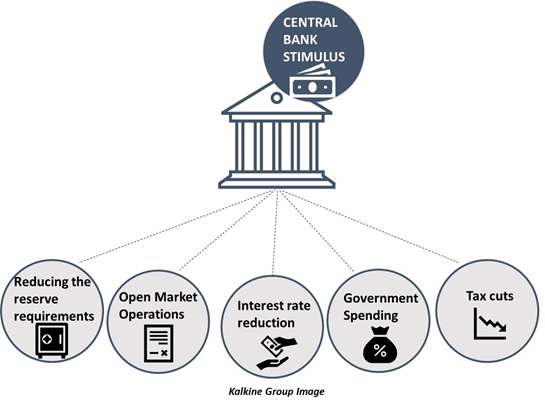
A stimulus package includes a combination of monetary and fiscal policies. The following policies may be adopted by a central bank to provide a stimulus:
- Reducing the reserve requirements: All banks must maintain a certain proportion of their deposits as reserves with themselves and the central bank of the respective country. These reserves act as security in case the banks face a shortage of funds. The central bank can change the reserve ratio that the commercial banks have to maintain. By reducing the reserve ratio, the central bank encourages the commercial banks to lend money. More lending means greater investment and more spending.
- Open Market Operations: A Central bank can buy or sell government bonds to influence the supply of liquidity in economy. When the central bank wants to increase money supply in the economy, it can buy the government bonds and inject money into the economy. During a recession, the central bank would purchase the government bonds so that people have money to spend.
- Interest rate: Interest rates affect the level of investment in an economy. A stimulus during an economic recession would see lowering of interest rates. This means that borrowing would become cheaper. As borrowing becomes cheaper, businesses and households would take loans to put money into investments such as houses, cars, machinery, etc. Therefore, as the demand for these investments increases, production and output would also increase, and would lead to greater employment.
- Government Spending: In a stimulus, governments would usually pour in money into investments to boost demand. This would provide a boost to manufacturing, which would increase employment.
- Tax cuts: The most prominent method adopted by governments is to provide tax cuts. These cuts would encourage households and firms to spend more. This would further increase employment and output levels in the economy.
THE CHARACTERISTICS THAT STAND OUT
A stimulus package may be most effective when consumers do not anticipate it. This is so because the rational expectations of the consumers might reduce the effectiveness of a policy. For instance, consumers would anticipate that a tax cut in the current period would be followed by increased taxes in next period. Thus, consumers might feel the need to save from the tax cuts for the future period. Therefore, a tax cut would not provide a stimulus to the economy.
A stimulus package should be targeted towards the affected areas. Consumers and businesses should be targeted first, followed by people who are the most affected during an economic slowdown. Policy changes in a package are also temporary and should get back to the previous stage in some time. If policy changes go on for long, there can be adverse effects on various macroeconomic indicators, which could last long.
