
 AUS
AUS
 NZ
NZ
 UK
UK
 CA
CA
 USA
USA
 IND
IND


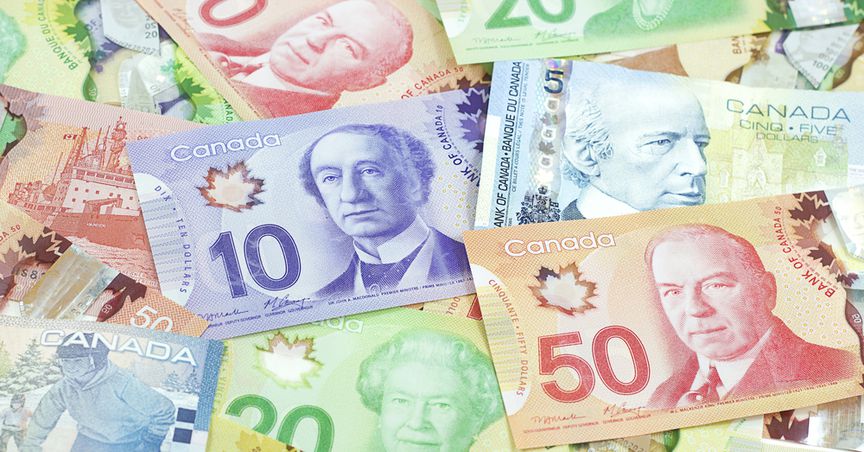





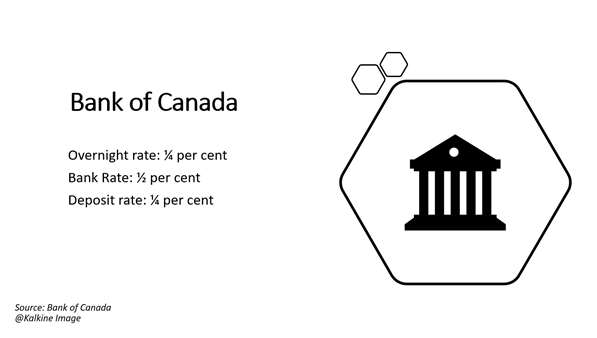
The Bank of Canada (BoC) once again upheld its current policy rate and ongoing quantitative easing (QE) program. In an official briefing on Wednesday, the central bank said the key interest rate will continue to be at 0.25 per cent until the 2 per cent inflation objective is achieved.
Outlining the final rate decision of 2020, central bank said that rates would remain at their lowest point until economic slack is absorbed, which is expected in 2023 under its current projections.
Despite the second wave of coronavirus infections surging across Canada, the Bank of Canada said that the positive news of vaccination rollout and rising oil prices due to strong demand for energy resources is boosting the country’s economy. However, “the pace and breadth” of vaccine rollout remains uncertain, the central bank added.
It also highlighted the appreciation of the Canadian loonie following a broad-based decline in the US exchange rate.
Choppy Road Ahead
Canada third quarter data from various segments is in line with the central bank’s estimates of a sharp economic rebound following the steep decline in the second quarter. The economic momentum will remain strong in the next quarter and jobs will keep coming back in the market, says the bank.
Despite that, BoC predicts a “choppy” economy growth trajectory in the first quarter of 2021 due to rising COVID-19 cases and widescale unavailability of the vaccine.
The consumer price index (CPI) inflation rate grew by 0.7 per cent in October, driven by rise in food prices, such as lettuce and chicken, according to Statistics Canada. This is the sharpest jump since June.
Meanwhile, in the third quarter of 2020, the real gross domestic product (GDP) went up by 8.9 per cent quarter-over-quarter. The numbers were reflective of the economy reopening in August and September after months-long lockdown.
Despite the headways, the overall economic activity continued to remain 5 per cent below February’s pre-pandemic levels, the national data agency added.
Household spending bounced back by 13 per cent while outlays for durable goods skyrocketed by 38 per cent, the steepest climb on record.
COVID Vaccines in Canada
Health Canada on Wednesday approved Pfizer-BioNTech COVID-19 vaccine. The doses are expected to be available as soon as next week.
Following this development, the economic recovery could be stronger than Bank of Canada’s expectations, say analysts. The central bank had earlier suggested that mass vaccinations wouldn’t be widely available until mid-2022.
Prime Minister Justin Trudeau earlier announced that about 249,000 doses of the vaccine would be available Canada by the end of December. The second batch of three million doses will arrive at beginning of 2021.
