
 AUS
AUS
 NZ
NZ
 UK
UK
 CA
CA
 USA
USA
 IND
IND






Highlights
- The Economist Intelligence Unit (EIU) has come out with its Risk Outlook 2022 report.
- The report has a list of top 10 threats that may jeopardise global security next year.
While the world is recovering from the catastrophic impact of the coronavirus pandemic and is expected to gain momentum in the coming months or years, the Economist Intelligence Unit (EIU) has come out with its Risk Outlook 2022 report, which has listed certain significant events that have a high probability of striking the world next year.
The three most significant concerns for 2022 are safety, security, and sustainability. The pandemic and its variants will be in the top five risks yet again. But the impact of climate change, as per the experts, can have the broadest impact, which may have long-term repercussions.
Ten scenarios that can rock the world in 2022
The threats may range from a stock market crash in the US to the worsening of China’s ties with the European Union. According to EIU, the top 10 threats are categorised as economic, political, military, and environmental.
The 10 threats that may jeopardise global security next year include the following-
- New Covid-19 variants
Though the vaccine rollout has been successful in general, but the vaccine-resistant Covid-19 variants are still a moderate threat to the positive economic forecast for 2022. The EIU report warns that the cycle of booster shots and new vaccines will have to continue perpetually.

Source: Copyright © 2021 Kalkine Media
- Severe climate events
The EIU report warns that climate change may lead to increased frequency of droughts leading to food shortages, devastating fires, and other environmental events. Multiple crop failures may lead to rising prises which would in turn amplify the global inflationary trends.
- Worsening of US-China ties
The two biggest global superpowers, China and the US, are competing to establish their dominance over the world. The US has been imposing various restrictions on China in areas of trade, technology, finance and investment, and has been pressurising other countries to do the same via sanctions. The report warns that there’s a high probability that this could lead to a division within third countries as US-supporting bloc and China-supporting bloc.
- US stock market crash
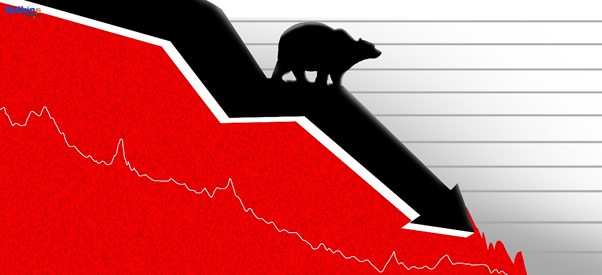
Soaring energy prices, disruption of supply chains, and a very loose monetary policy have all led to rising inflation in the US. The monetary policy may thus be tightened by the Federal Reserve, which could in turn lead to a hike in interest rates by mid-2022, and eventually lead to a stock market crash.
Source: Copyright © 2021 Kalkine Media
RELATED READ: What is monetary policy and why is it so important?
- Property crash in China
The Chinese economy is at a huge threat of financial contagion as debt-ridden property giant Evergrande has been having financial troubles. Several other Chinese real estate firms are also overleveraged like Evergrande, which may lead to the worsening of market sentiment and eventually to enormous defaults in the Chinese real estate sector.
- Tough financial conditions
Due to rebounding commodity prices, the emerging nations have a greater threat of being exposed to rising inflationary pressures. According to the report, there’s a high probability that countries such as Argentina and Turkey, which are highly indebted in foreign currencies, are at a much higher risk. Monetary policy rates have already been raised in 2021 in countries like Russia, Mexico, and Brazil.
RELATED READ: 5 banking stocks that may get affected by economic meltdown in China
- Widespread social unrest
There’s a very high probability that the income and quality of life of people will be impacted, leading to a spike in social unrest next year. Politically unstable countries are particularly at a higher risk, and more unrest can potentially lead to collapse of governments and economic meltdowns.
- China-Taiwan conflict
Though there’s a low probability of a military conflict between China and Taiwan, but its impact may be very high. In 2020, China has repeatedly shown aggression towards Taiwan and a conflict may lead to the intervention of Taiwan’s backer, US, further complicating the matter.
- An inter-state cyberwar
The report has warned that cyber-attacks would be on a rise. Critical infrastructure would likely be attacked which would lead to destabilisation of economies across the globe. Geopolitical competition can lead to cyber warfare.

Source: Copyright © 2021 Kalkine Media
- Worsening of EU-China ties
The EU-China relations have deteriorated after EU imposed sanctions on China in March due to its human rights violations in Xinjiang and China imposed sanctions in retaliation against 10 EU individuals and four organisations. This may moderately impact the wider global economy and call for EU-US cooperation over China.
RELATED READ: How climate change impacts financial markets
