
 AUS
AUS
 NZ
NZ
 UK
UK
 CA
CA
 USA
USA
 IND
IND








Summary
- Bitcoin crossed the US$ 20000-milestone for the first time in history. The virtual currency gained a massive growth that was led by the mainstream recognition of cryptocurrencies.
- The cryptocurrency giant has achieved an eye-popping growth this year.
- Paypal, one of the largest digital payment platform providers, will start providing a cryptocurrency financing platform from next year.
- Global central banks are also penning out a digital currency strategy amid the rise of private cryptocurrencies such as Facebook’s Libra.
Bitcoins have never been more valuable! The virtual currency crossed the US$-20000 mark in it short two-decade life, supported by massive growth and mainstream acceptance of cryptocurrencies. The world largest virtual currency soared almost 3.8 per cent to US$ 20154 on December 16.
Bitcoin swelled despite a severe meltdown in March that saw it plunge by 25 per cent amid the Covid-19 outbreak.
Some Wall Street companies displayed a great interest in the currency, seeking to capitalize in the ongoing bitcoin surge. Global investment and advisory financial services firm Guggenheim Partners recently announced that it might invest almost US$ 5.3 billion in Bitcoin.
Apart from large institutional purchases, it seems to be reassuring that the current price rally may the dry supply of the physical currency amid pandemic conditions.
As Bitcoin crossed US$ 20,000-milestone, this is its second achievement within weeks. The digital coin at the end of last month touched new three-year-high.
The giant online payment platform provider PayPal Holdings, Inc. (NASDAQ: PYPL) also announced the launch of a new service enabling its users to buy, hold and sell virtual coins via their inhouse apps. The move was aimed to capitalize on the significant surge in crypto coin utility by making it available as a payment financing option for 26 million vendors across the globe.
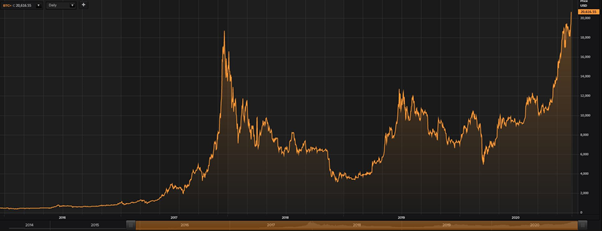
Bitcoin's Five-Year Stock Performance Chart; (Source: EODHD/Others, Thomson Reuters)
Central Banks Virtual Currency Push
The pandemic is quickening a shift away from the use of physical currency in developed and developing countries. This has led to a rise in alternate payment method such as, cryptocurrencies, Etherum, Ripple and many more.
Central banks are also analyzing procedures to build a digital version of money that is reliable, easy to use and broadly available to people for transferring and receiving payments. Virtual currencies have the capacity to make it simpler, reasonable, and swifter to move money around.
If digital currencies were to gain recognition, then privately-owned cryptocurrencies could prey on the conventional forms of money released by central banks and create a risk to monetary policies.
