
 AUS
AUS
 NZ
NZ
 UK
UK
 CA
CA
 USA
USA
 IND
IND


.jpg)





Bitcoin has started the year 2021 with quite a show after prices of the digital currency climbed the price ladder swiftly to surpass the level of USD 30,000 and establish a record high of USD 34,253.0 on Bitfinex (as on 3 January 2021).
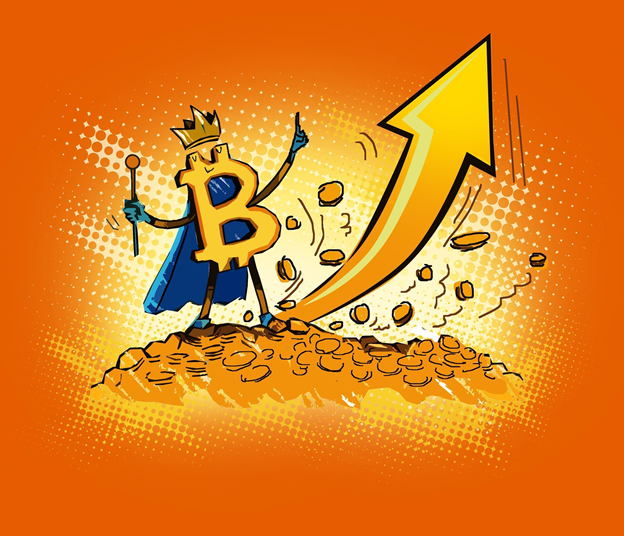
Image Source: © Kalkine Group 2021
The depth and magnitude of the economic drop-off due to the COVID-19 outbreak in 2021 was unprecedented leading to many central banks resorting to a lot of quantitative easing, seeding a monetary inflation.
Also Read: Bitcoin in 2020 - A Year of Low Interest Rate, Quantitative Easing, And Economic Drop-Off
This monetary inflation has elevated the global debt, leading to a change in the behaviour of many assets. In turn this has prompted the market to seek refuge with some inflation hedges, including gold, Treasury Inflation-Protected Securities (TIPS) – which is ideally indexed against CPI to protect against inflation, and Bitcoin.
After a massive fall in 2017, Bitcoin had held ground, while keeping the volatility low; however, the unprecedented monetary inflation has once again propelled the asset.
Bitcoin is the only known large tradable asset with a fixed supply or a known supply. Therefore, many market participants see it as a currency of future with large purchasing power, and the current price behaviour seems to validate the same.
Moving on to the liquidity part, Bitcoin could now be considered as one of the most liquid assets, thanks to the ever-growing list of exchanges and large public participations, which is also giving the asset a push against many other assets. The market cap of Bitcoin is in excess of USD 600 billion.
Moreover, the recently emerged Decentralised Finance (DeFi) concepts such as yield, and liquidity farming has also fanned its demand while providing market participants an opportunity to generate additional alpha in the asset, boosting return profile for investors.
Also Read: DeFi Led Sentiments Keep Bitcoin Afloat
Coming to the portability, this is rather a more hypothetical situation, which is now emerging in the market, and many industry experts have identified it as a KPI for Bitcoin against other assets. For instance, in situations such as an economic upheaval across any geography, what would happen if the government decides to tap in the wealth and becomes hostile to holders of wealth.
Also Read: Yield and Liquidity Farming - Tools to Generate Alpha in the Crypto Space
Moving physical assets such as land, property, gold, could become troublesome in such cases; however, portability of Bitcoin could never be doubted under such circumstances.
Therefore, all these identified parameters in such an unprecedented environment or the year of global mayhem, economic-meltdown, and monetary inflation has prompted many investors to look for some alternative form of assets, leading to a blistering rally in Bitcoin.
However, while the currency has been a star performer, one should not ignore its increased volatility, and risk of whipsaws, which should be considered in one’s trading/investing plans.
