
 AUS
AUS
 NZ
NZ
 UK
UK
 CA
CA
 USA
USA
 IND
IND


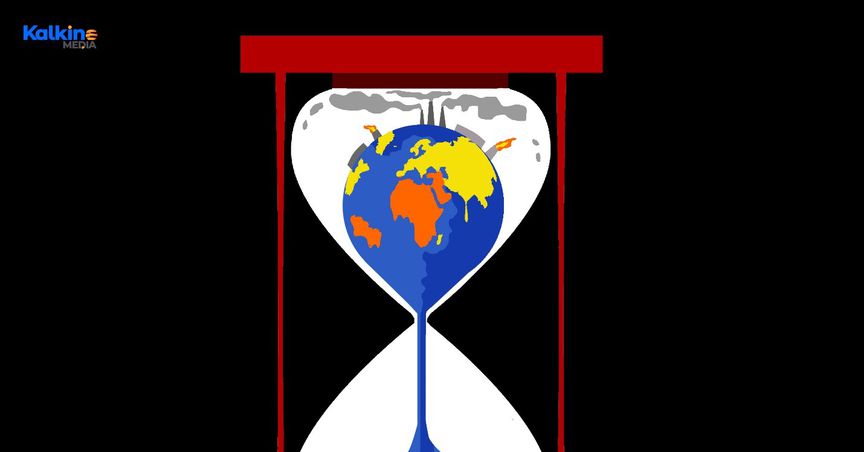





Climate change is threatening the world. Countries like Canada, Cuba, and even Antarctica have logged record-high temperatures in the last two years. The planet is irrefutably becoming hotter at a fast pace.
That we are not in the best of times was once again confirmed in a recent study published in the Nature Climate Change journal.
What are the forecasts for global climate?
What is more worrying, the study suggests, is that record-breaking heat waves between 2021 and 2050 could be more intense and frequent. Compared with the past three decades, heat waves in the next thirty years could be up to seven times more frequent.
And if the trend of emissions continues to deteriorate our environment at the same pace, heat waves could become up to 21 times more frequent beyond mid-21st century.
Scientists in the report warned that the prevailing heat waves are not in proportion to climate conditions prevailing in the world. Had they been in proportion, the planet would have suffered even more. One can recall how Canada recorded its highest temperature of 49.6 Celsius in June this year. The severe heat wave was solely responsible for the death of hundreds of people in the affected areas of Canada. This year’s highest temperature was 4.6 degrees Celsius, more than the previous highest recorded in 1937.
Scientists warn it should not surprise us when we witness previous records being smashed by big margins.
Also read: Can planting more trees save Europe from climate change?
Time to act is now
The study suggests a silver lining exists, but only when we cut greenhouse gas emissions. A significant dip in emissions could save the planet from high temperatures smashing previous records by a huge margin. The study’s key focus was not new high temperatures worldwide but the margins by which previous records were broken. This aspect suggests we need to do much more to achieve ambitious GHG cuts.
One can also recall how shops in the British Columbia province of Canada went out of cooling equipment like fans and air conditioners. A severe heat wave also hit the US Pacific Northwest, and people had to take refuge in air-conditioned public spaces. A few cities decided to open cooling centres for people to escape the heat.
Copyright © 2021 Kalkine Media
Climate change has gripped the entire world
The findings of the study suggest that the world needs to be more prepared to tackle new challenges. Societies will have to adapt to changing weather conditions, and better resilience is required.
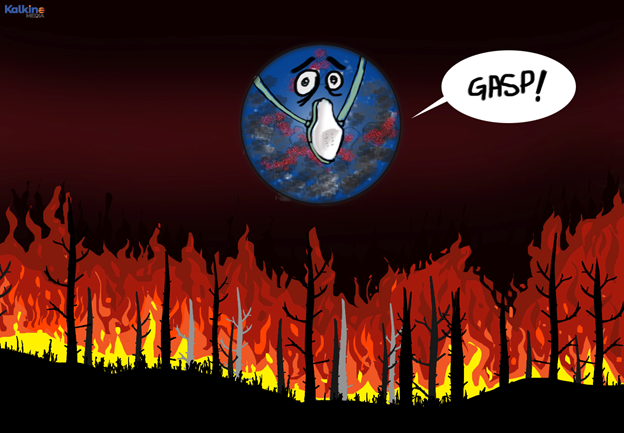
In virtually every part of the world, extreme weather is wreaking havoc. China and Europe recently experienced torrential rains and deadly flooding. Ireland and Finland have been hit by tropical heat. Some parts of Brazil and western regions of the United States experienced record drought.
World leaders must do more to mitigate risk. The Paris Agreement seeks to limit global warming to below 1.5 degrees Celsius. Scientists at the Intergovernmental Panel on Climate Change (IPCC) are now preparing a new report with forecasts about how global warming may play out from here on.
The world must wake up to the call of saving the planet and its inhabitants. More so when scientists have unequivocally said that Canada’s June heat wave was ‘virtually impossible’ if not for climate change brought by human-led factors.
