
 AUS
AUS
 NZ
NZ
 UK
UK
 CA
CA
 USA
USA
 IND
IND






Summary
- The Amazon rainforest has undergone an unpalatable change – from being the largest absorber of carbon to a source of carbon and other greenhouse gases.
- Over the past decade, the Amazon has released more carbon dioxide into the atmosphere that it has absorbed.
- Growing human population and surge in demand for resources is deteriorating the condition of the rainforest.
- Reverse theory at work: Growing trees absorb carbon dioxide while dead trees release it back in the atmosphere.
The world’s largest rainforest at the Amazon basin has long been known for its richness in natural resources. However, the past few decades have unfolded a new aspect for us to delve into. The Amazon rainforest that was once the largest absorber of carbon is now turning out to be a source of carbon and other greenhouse gases.
Over the past few years, there has been a swift surge in the rate of emissions of greenhouse gases from the rainforest’s damaged areas. Unfortunately, despite frequent atmospheric warnings, the rainforest continues to suffer relentless destruction.
Copyright © 2021 Kalkine Media
Let’s have a better understanding of the changing scenario.
Why is the Amazon rainforest important for the Earth?
Before we dig deep into the reasons for the worsening state of affairs at the Amazon, it’s important to know the region a little. Here’s an insight into the vast stretch.
Spanning across nine countries – Ecuador, Bolivia, Colombia, Brazil, Venezuela, Suriname, Peru, Guyana, and French Guiana – the Amazon rainforest is home to millions of wildlife species. From birds to butterflies, jaguars to pink river dolphins, monkeys to eagles, the Amazon rainforest has it all.
It is the dense flora of more than 40,000 plant species that lends beauty to the rainforest. Over 370 varieties of reptiles and 2,400 freshwater fish species can be found in the region. The diverse range of flora and fauna at the rainforest makes for a never-ending list.
A few decades ago, the rainforest had the capacity to store about 100 billion tons of carbon, keeping the atmosphere clean. However, its grandeur is diminishing now.
Good Read: Can planting more trees save Europe from climate change?
Reverse theory at work
The rainforest now accounts for over 1 billion metric tons of emissions every year, as per the findings of a nine-year research project led by Brazil’s National Institute for Space Research.
The study has highlighted 1.06 billion metric tons of carbon emissions from the Amazon every year between 2010 and 2018. Burning, the primary source of carbon emissions from the Amazon, accounted for 1.5 billion metric tons.
Copyright © 2021 Kalkine Media
Additionally, the report says that the Amazon would remove ~0.5 billion metric tons of carbon from the atmosphere, if there is no deforestation or fire.
Must Watch: What Is Australia Doing To Reduce Carbon Emissions?
Damage has been done, but what has caused it?
“Earth provides enough to satisfy every man's needs, but not every man's greed.” This quote by Mahatma Gandhi seems to be pretty relevant in the current scenario.
Increasing human population and its growing demand for resources has exerted undue pressure on the environment and the deteriorating condition of the Amazon is one of the repercussions.
Below are some of the human activities that have been causing catastrophic impact on the Amazon rainforest:
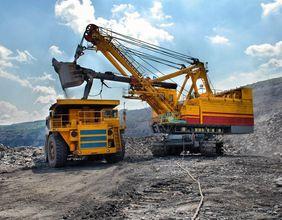
- Large-scale deforestation to clear land for urbanisation, expansion of agriculture and mining.
- Degradation of rivers due to rising level of water pollution has been affecting the forest cover adversely.
- Unsustainable extraction of natural resources, involving the process of drilling, mining and excavation from the rainforest has further disturbed the ecological balance at the Amazon basin.
- Global warming and climate change are triggering greater number of forest fire incidents across the rainforest.

Image source: © Bhoombhuri | Megapixl.com
Good Read: Here’s why net zero emission is a pressing priority
Can the manmade mess still be fixed?
The need of the hour is to stick to sustainable development to curb the problem.
Deforestation has been the root cause for the destruction of the Amazon. There is a need to put an end to the damaging practice. Urbanisation is the other major reason for the damage caused to the environment and must be reined in.
Also, there is a need to understand that these practices have been part of a chain that may not have started if we had not altered forest protection policies to fulfil our materialistic greed. Various governments and concerned organisations across the globe need to pay heed to the alarming situation at the Amazon and initiate corrective measures.
There’s no magic bullet to find a way out of the quandary in the blink of an eye, but well-timed action can certainly bring slow and steady positive changes.
Also read: Budget 2021 To Aid NZ’s Goal Of Achieving Zero Carbon Emissions by 2050
