
 AUS
AUS
 NZ
NZ
 UK
UK
 CA
CA
 USA
USA
 IND
IND








The coronavirus pandemic has had a significant impact on the economy all throughout the world. Unemployment rose, incomes fell, and industries like transportation, service, and manufacturing all suffered. The S&P 500 index, which is used as an industry benchmark, fell by over 30% in just over a month. In response to the harm the pandemic had on the Canadian economy, the Bank of Canada (BoC) has decreased bond yields to a historical low by its bonds purchase program.
How are government bond yields linked to mortgage rates?
Chartered Canadian banks will often use the bond yields to determine their baseline mortgage rates. Since banks can use their money to either give you a mortgage or buy a government bond, the bond yield is their opportunity cost of funding home purchases. If the bank took on zero risks by giving you a mortgage, your mortgage rate would be equal to the bond rate. This means that you can approximately track the fluctuations in a potential mortgage rate using bond yields. Typically, the standard yield used for comparisons is the Canada 5-Year Bond Yield. However, this does not mean you should expect a mortgage rate equal to the bond yield. Since the government guarantees bonds and you carry default and prepayment risk, banks will charge you a risk premium that changes depending on your credit default risk. Generally, mortgage rates are about 120 basis points or 1.2% higher than government bond yields.
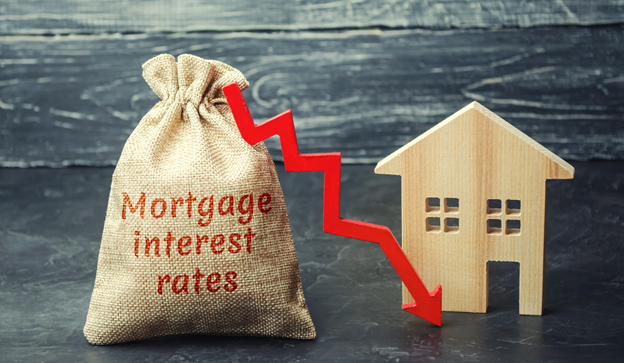
Source: © Andreyyalansky19 | Megapixl.com
How has the pandemic affected mortgage rates?
During an economic downturn, BoC uses monetary tools – like lowering bond yields -- to stimulate the economy. By doing this, BoC influences commercial banks like the “Big 5” to lower their interest rates. Banks will usually follow government bond yields because they use government bonds to invest their cash in. When BoC lowers bond yields and banks lower interest rates, saving money becomes less effective and borrowing money becomes cheaper, including the mortgage rates.
How does this affect mortgage debt?
Amid low interest rates, low mortgage rates, and high inflation rates, your money is hardly gaining any real value if at all. As the government spends money to support the economy, returns on savings accounts start diminishing. This is precisely what the government wants, which is why you’ll see people investing in anything else including gold, stocks, and real estate. The government is encouraging spending to make the economy as active as possible. People are finding ways to convert their savings and income into appreciating assets. Historically, real estate – usually considered as a safe-haven – has been one of the best options. Even during a global pandemic, the real estate market is not witnessing price volatility – inducing people to leverage vast amounts of mortgage debt. The average household debt ratio has been very high since mortgage rates declined. On average, Canadian household debt was 170.7% of household income in December 2020, little shy from the all-time high of 179% it touched in 2017.
What does this mean for the economy?
At such low mortgage rates, a large amount of mortgage debt should not be intimidating because the current low mortgage rates mean your monthly mortgage interest payment is low as well. However, mortgage payments usually don’t remain fixed throughout the entire mortgage term. For most home buyers, their mortgage rate will rise during the years to come. Their income may be enough to support their low mortgage payments now, but when the economy recovers and interest rates rise, many people will not be able to afford their mortgage payments.

Source: © Elnur | Megapixl.com
What does this mean for you?
If you already have a mortgage, you don’t have to worry yet. Mortgage rates are still low and if you have the current mortgage rate locked in for a few years, then that’s even better. You should be calculating your monthly mortgage payments in case the mortgage rate rises, to see if your income could support them. If it does not, you should start saving so that when mortgage rates rise again, you will have a safety net.
If you don’t have a mortgage, then this doesn’t mean you shouldn’t get one. Investment in real estate is a great idea due to low interest rates and high inflation rates. Still, you should always consider your financial situation. Getting a mortgage is a large obligation that you must make monthly payments towards. To be safe, make sure that even including your mortgage payments, your debt-to-income (DTI) ratio is at most 30%. According to the 28/36 rule that says you should spend no more than 36% of your income on debt servicing, you’ll be comfortably paying off your mortgage even when interest rates rise.
