
 AUS
AUS
 NZ
NZ
 UK
UK
 CA
CA
 USA
USA
 IND
IND


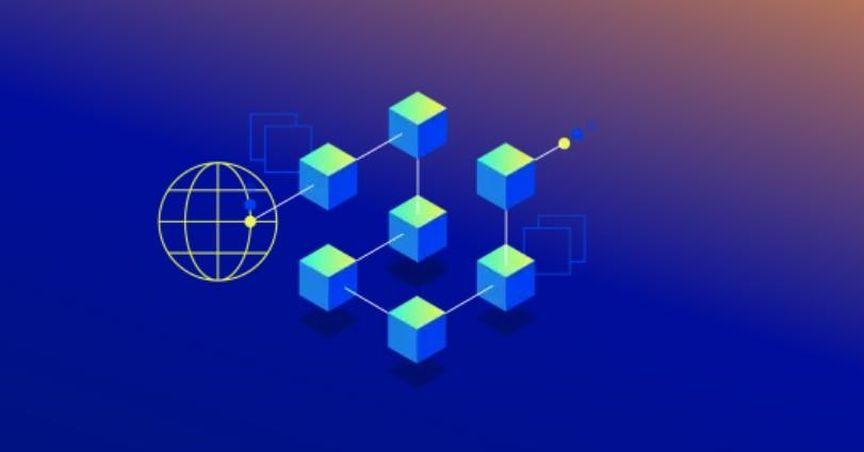




The startup scene in Australia in 2026 is beaming with promises, It is faster, sharper, and more ambitious than ever. Founders are now chasing stronger unit economics and robust tech advantage to stay in par with the global race. However, the question that pops up very frequently is—what exactly is driving the shift into blockchain?
Before we go there, it is important to understand what is blockchain. For starters, it is a decentralized platform without a central authority, used for storing, verifying, and moving data. It gives complete independence from intermediaries.
As blockchain in Australia is gaining momentum, startups are exploring new models that fits the current Australia digital economy,
Why Blockchain Adoption Is Accelerating in 2026?
The change is quick. So rapidly that you can't ignore it. But there is an obvious reason for it: the use of blockchain Australia has gone from talking about things to doing them. Startups don't try new things anymore. They're constructing.
Why? Lower transaction cost, trustless interaction. And the rise of blockchain-based platforms that can manage a lot of work without breaking. People are paying attention to the company because the business concepts suddenly make sense. At the same time, the growth of the web3 ecosystem seems like a natural next step for Australia's digital innovation playbook.
A new layer of infrastructure for a new economy.
AI + Blockchain Convergence: Australia’s Emerging Tech Focus
By combining the power of AI and the trustworthiness of AI, you get intelligence with integrity, a feature every founder wants their hands on. This is the heart of Australian tech innovation 2026 and beyond. And honestly, it’s one of the most interesting tech intersections happening right now.
Sydney’s labs and Melbourne’s applied research teams are already prototyping decentralized AI networks. And it's exactly the kind of emerging tech landscape Australia thrives in.
This convergence matches current technology adoption patterns. Startups want speed but not at the cost of trust. And blockchain gives them the guardrails AI desperately needs.
Fintech & Payments: Blockchain’s Stronghold in AU Startups
It’s impossible to talk about Australia blockchain startups without highlighting fintech. Australian blockchain startups are addressing some of the most pressing issues in Fintech, including but not limited to, slow verification, cross-border payment bottlenecks, and scams. However, with blockchain, the companies are slowly addressing these issues, through:
- Smart contract-based settlements
- Real-time payments
- Intermediaries-less systems
- Transparent audit trails
Web3 Gaming & Metaverse Studios in Australia
There is a silent revolution going on in gaming in Australia. A lot of Web3. You can sense it, even though it's not obvious.
Studios are migrating toward web3 Australia ecosystems since the old models don't work for the new player economy. Now, ownership is important. Interoperability is important. It's important to have creative control.
Blockchain opens up:
- Items and identities that people own in the game and across worlds
- Economies that are driven by the community
What about studios in Australia? They're trying new things. Making and testing. Sometimes they break stuff. But it does make some of the most exciting future tech opportunities in the area.
This isn't just talk. It was an evolution that had to wait for the correct tools.
SaaS Startups Using Blockchain for Trust & Transparency
SaaS founders are getting into blockchain-based platforms for a completely different reason: trust.
You need more than just encryption when your product deals with sensitive data and high-value transactions. You need proof. And that's where platforms built on blockchain really shine.
Use cases are growing quickly:
- Unchangeable audit trails
- Smart SLAs that work on their own
- Anti-tampering logs for industries with a lot of rules
This talks about the necessity for platforms to be able to grow and the requirement for data security. It makes things less unpredictable for investors. It makes customers trust you more. It gives founders a competitive edge, which is unique and valuable in SaaS.
Australia’s Blockchain-Friendly Regulatory Landscape
AUSTRAC and ASIC have set up rules that help new businesses come up with new ideas without having to guess what's legal and what falls outside the boundary. It has a flexible structure allowing users to scale. And this is the reason why blockchain in Australia feels more stable compared to other markets.
There are rules for compliance. Yes, the rules are changing, but they are still predictable enough for founders to plan.
Infrastructure: The Foundation for Blockchain Scalability in 2026
Blockchain is strong, but it requires a lot of resources.
Startups need:
- High-performance compute
- Low latency
- Reliable, distributed storage
- Secure environments that support decentralization
Some founders like to hire crypto-friendly cloud providers, like OVHcloud, Digital Ocean to do the hard work. You don't want your infrastructure to be the bottleneck as your platform grows. This is when the requirement for data security and the potential to grow a platform become more than just buzzwords. They are things that help them stay alive.
You need infrastructure that can handle the weight if you want to use blockchain in Australia.
Conclusion: Why Startups Must Think About Scalable Blockchain Infrastructure Now
It's apparent that the momentum is there. The rewards are real. What are the benefits? It's hard to ignore.
Blockchain adoption Australia is happening swiftly because the business world needs greater security, openness, and flexibility for expansion than older technologies can provide. The next wave of digital innovation will be shaped by the people who construct blockchain-based systems today.
Plan ahead. Build smart. And get your infrastructure ready early, because it affects everything from how well you run your business to how competitive you are on a global scale.
FAQs
- What are the top use cases for blockchain in Australian startups?
Fintech payments, decentralized identities, supply chain traceability, Web3 gaming platforms, and SaaS audit frameworks are at the top of the list. These areas get the most out of being open and having verification that doesn't require trust.
- How is blockchain different from traditional infrastructure in SaaS?
Central control is what traditional SaaS databases depend on. Blockchain spreads trust between nodes, which makes it harder to change data. It offers automated smart contracts, tamper-proof logging, and transparency, which are services that SaaS clients are asking for more and more.
- Is Australia ahead in blockchain regulation compared to other countries?
Yes, in a lot of ways. Australia's AUSTRAC and ASIC frameworks make it apparent how to handle digital assets, follow AML/CTF rules, and run a business. It has rules, but they are made in a way that promotes new ideas without causing chaos.
- Which industries in Australia are leading blockchain innovation?
Fintech is way ahead. But platforms for gaming, SaaS, logistics, identity management, and AI are quickly catching up. The ecosystem is becoming more diverse, which makes the whole web3 transition stronger.
The content has been authored in collaboration with our guest contributor, Iman Mitra.
Disclaimer: The content, including but not limited to any articles, news, quotes, information, data, text, reports, ratings, opinions, images, photos, graphics, graphs, charts, animations and video (Content) is a service of Kalkine Media Pty Ltd (Kalkine Media, we or us), ACN 629 651 672 and is available for personal and non-commercial use only. The principal purpose of the Content is to educate and inform. The Content does not contain or imply any recommendation or opinion intended to influence your financial decisions and must not be relied upon by you as such. Some of the Content on this website may be authored and sponsored by our Guest or non-sponsored which is written by Team Kalkine, as applicable, but is NOT a solicitation or recommendation to buy, sell or hold the stocks of the company(s) or engage in any investment activity under discussion. Kalkine Media is neither licensed nor qualified to provide investment advice through this platform. Users should make their own enquiries about any investments and Kalkine Media strongly suggests the users to seek advice from a financial adviser, stockbroker or other professional (including taxation and legal advice), as necessary. Kalkine Media hereby disclaims any and all the liabilities to any user for any direct, indirect, implied, punitive, special, incidental or other consequential damages arising from any use of the Content on this website, which is provided without warranties. The views expressed in the Content by the guests, if any, are their own and do not necessarily represent the views or opinions of Kalkine Media. Some of the images/music that may be used on this website are copyright to their respective owner(s). Kalkine Media does not claim ownership of any of the pictures displayed/music used on this website unless stated otherwise. The images/music that may be used on this website are taken from various sources on the internet, including paid subscriptions or are believed to be in public domain. We have used reasonable efforts to accredit the source wherever it was indicated as or found to be necessary.
