
 AUS
AUS
 NZ
NZ
 UK
UK
 CA
CA
 USA
USA
 IND
IND


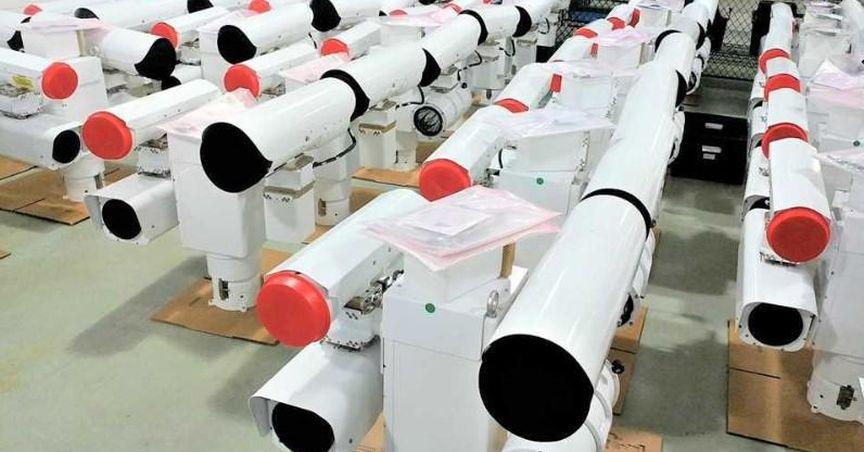





On a foggy morning, headlights blur into halos and the world fades into gray. Yet, somewhere, a camera is watching — and it sees every detail clearly.
This is SWIR, short-wave infrared technology — a new kind of vision that pierces fog, smoke, and darkness using light our eyes can’t detect. Once reserved for space telescopes and defense systems, SWIR cameras are now reaching everyday security and industrial use. Companies like Clear Align is the leading border survellience company transforming invisible wavelengths into practical tools that help people see, inspect, and protect with unmatched clarity.
The Science Behind SWIR
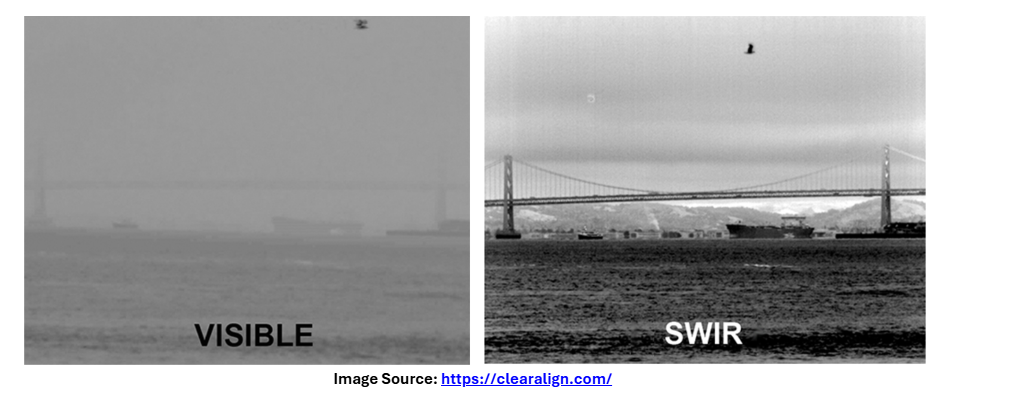
The visible spectrum — red, green, blue — is just a sliver of the electromagnetic spectrum. Beyond red lies the short wave infrared (SWIR) range, roughly 0.9–1.7 microns in wavelength range. Where visible light scatters in fog, SWIR light passes through, revealing crisp detail.
A SWIR sensor built with indium gallium arsenide (InGaAs) detects extremely faint reflected light that traditional silicon chips miss. These InGaAs sensors form the heart of every SWIR infrared camera, enabling operators to capture images of materials and objects hidden by weather, dust, or darkness.
It’s like having night vision tuned to daylight — clear, contrast-rich, and capable of cutting through fog rather than being blinded by it.
SWIR cuts through fog as seen below.

Cameras That See the Unseen
Modern SWIR cameras are compact, durable, and precise. They can detect ships through sea mist, drones in smoke, or people in total darkness. These imagers operate across challenging environments with low noise, low power consumption, and high dynamic range, preserving high resolution images in both bright sun and deep shadow.
Certain SWIR camera series achieve high frame rates, essential for surveillance, aviation, and industrial quality control. Built-in processors handle embedded data, transmitting clean video over camera link or GigE interfaces to software or AI systems.
Unlike long wave infrared (LWIR) or mid wave infrared (MWIR) cameras that sense heat, infrared SWIR relies on how light reflects off materials. This means it can distinguish metals from plastics or fabrics and perform material sorting and moisture detection. The ability to reveal what thermal imaging cannot makes SWIR invaluable in medical imaging, inspection, and advanced manufacturing.
Why SWIR Is Emerging Everywhere
For decades, SWIR imaging was too expensive and delicate for routine use. Advances in optics, sensors, and AI processing changed that. Today’s SWIR cameras deliver high resolution output, rugged designs, and compact form factors suitable for field deployment.
These cameras offer more than clarity — they deliver precision. Users can achieve advanced performance, maintaining image quality through fog, rain, or dust. Their dynamic range allows seamless transition between daylight glare and pitch-black night.
As production scales, infrared camera prices continue to drop, making this innovative SWIR technology accessible to agencies, researchers, and industries worldwide.
Extending Human Vision
The world doesn’t stop where the visible spectrum ends. With short wavelength infrared imaging, we can now see far beyond human limits. By capturing light in the 900–1700 nanometer range, SWIR cameras reveal high resolution images when visible light fails.
At their core, InGaAs sensors detect subtle differences in reflected light rather than emitted heat. This allows operators to detect hidden objects, identify materials, and ensure quality control in industrial applications.
Whether in medical imaging, surveillance, or manufacturing, SWIR imaging provides reliable performance in challenging environments. Their features — low noise, high dynamic range, and low power consumption — make them ideal for embedded systems and portable devices.
From sorting plastics on a factory line to analyzing moisture in crops, SWIR’s capability to expose invisible details is redefining imaging science.
Clear Align: Turning Invisible Light into Insight
Leading this evolution is Clear Align, a U.S.-based optics company that engineers mission-critical SWIR camera systems for security, defense, and industrial monitoring.
Each short wave infrared module is built to endure extreme conditions — vibration, humidity, temperature swings — ensuring dependable operation in the harshest environments. Clear Align’s SWIR imagers power its FAST™ Autonomous Surveillance Towers, self-powered systems that deliver persistent, high resolution images day and night.
“Fog doesn’t cancel operations,” says Angelique X. Irvin, Clear Align’s Chair & CEO. “SWIR technology gives you vision when visibility disappears — the difference between guessing and knowing.”
Clear Align combines precision optics with AI analytics to automatically detect and classify activity. Rather than endless video feeds, operators receive intelligent alerts. This fusion of optical components, smart software, and rugged design makes Clear Align a leader in military-grade security and smart infrastructure defense.
Beyond Security: From Farms to Factories
Though born in defense, SWIR sensors now power breakthroughs across industries. In manufacturing, they inspect electronics and glass for defects, detect moisture in foods, and monitor processes invisible to visible light cameras. In recycling plants, they automate material sorting by distinguishing plastics and composites.
In medical imaging, SWIR’s sensitive detection of tissue and fluids enables non-invasive diagnostics. Farmers deploy SWIR imaging drones to measure crop hydration, while scientists map pollution using infrared spectrum signatures.
Because SWIR light interacts uniquely with different materials, it can identify oil spills, detect gas leaks, and assess soil health — extending human perception into realms once invisible.
The versatility of SWIR technology also allows a single camera to function day and night, simplifying complex systems into one reliable platform.

The Feel of the Future
Looking through a SWIR camera feels like peeling away the weather. Mist and glare vanish. Roads and buildings sharpen into contrast, water turns black, and details long hidden appear in perfect high resolution.
For security operators, that clarity can mean the difference between response and delay. In border zones or airports, seconds matter — and SWIR delivers them.
For everyone else, it’s a glimpse of what’s coming: cameras that truly see across wavelengths, across conditions, across limits.

Why SWIR Matters
The world doesn’t stop for fog, dust, or night — and now, neither does vision. From SWIR imaging satellites to handheld SWIR cameras, from industrial inspection to security networks, this technology is redefining how we move, build, and protect.
With innovators like Clear Align leading the charge, short wavelength infrared imaging is becoming a universal tool. Compact, efficient, and intelligent, these cameras combine low noise, high dynamic range, and low power consumption to operate reliably anywhere.
In the next decade, driving through fog or piloting drones through smoke will feel ordinary — but behind that clear vision, a SWIR camera will quietly be making the invisible visible.
The article has been provided and sponsored by Angelique.
