
 AUS
AUS
 NZ
NZ
 UK
UK
 CA
CA
 USA
USA
 IND
IND


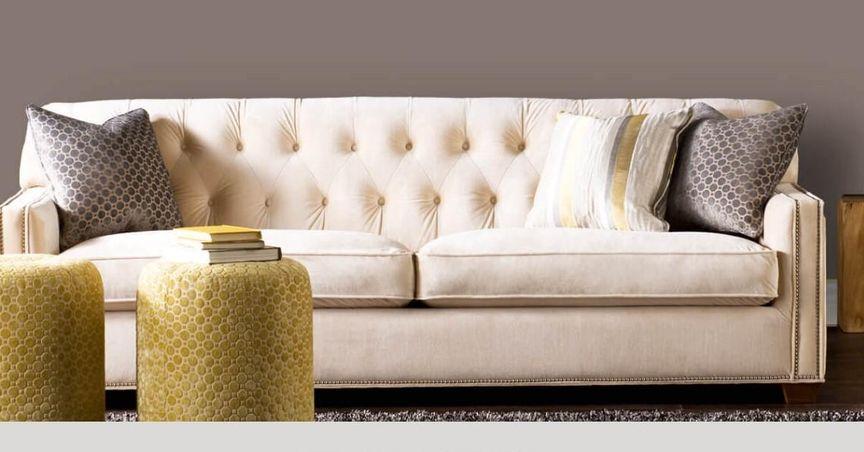





The global furniture market is worth over $50 billion, and for decades it has operated on the same basic model: manufacturers sell to retailers, retailers mark up prices, and consumers pay the difference - then wait months for delivery. A new generation of direct-to-consumer (DTC) brands is dismantling that structure, and DreamSofa is emerging as one of the most compelling examples of what the disruption looks like in practice.
The Problem With Traditional Furniture Retail
The conventional furniture supply chain is built for the benefit of intermediaries, not buyers. A sofa that costs a few hundred dollars to manufacture can retail for several times that figure by the time it passes through wholesale, distribution, and showroom markups. Delivery timelines of 8 to 12 weeks are standard, product choice is limited to whatever a retailer has decided to stock, and the customer experience is largely passive - pick from what's available, pay, and wait.
For a generation of consumers increasingly accustomed to personalization, speed, and transparency in every other retail category, it's a model that has aged poorly.
The DTC Playbook - Applied to Furniture
DreamSofa's approach removes every layer of that traditional chain. By manufacturing directly and selling to customers without a retail intermediary, the brand delivers a lead time of 3 to 5 weeks nationwide - a reduction of up to 60% against the industry norm - while pricing its products at up to 40% below comparable retail alternatives.
The saving isn't just financial. Without a showroom network to maintain, the brand can invest in the areas that directly affect product quality and customer experience: materials, manufacturing precision, and service.
Customization as a Competitive Moat
Where DreamSofa has built something harder to replicate is in its DreamCustom™ system - a five-part personalization framework that gives buyers control over style, dimensions, fabric, comfort specification, and detailing. The FlexForm™ component manufactures every piece to the customer's exact inch measurements, replacing the approximation logic of mass-produced furniture with precision that was previously available only through high-end interior design firms.
This level of customization serves a dual commercial purpose. It raises the perceived and actual value of the product, and it significantly reduces return rates - one of the most costly operational problems in furniture retail. A sofa built to a customer's exact specifications for their exact room is far less likely to come back.
Technology Reducing Friction at the Point of Purchase
One of the structural barriers to selling high-ticket furniture online has always been the buyer's inability to visualize the product in their space before committing. DreamSofa addresses this directly with DreamStudio, an AI-powered 3D and augmented reality room-planning platform that allows customers to test configurations in their actual rooms in real time before placing an order.
Paired with a dedicated Design Concierge team that guides buyers through the customisation process, the brand has effectively replicated the service layer of a physical showroom without the overheads - a model with meaningful implications for margin and scalability.
Quality as a Long-Term Retention Strategy
DreamSofa's materials specification sits well above the residential market standard. Every piece is built on a kiln-dried hardwood frame with 8-gauge sinuous spring suspension and 2.5-lb CertiPUR-US certified foam - a commercial-grade density that outlasts the 1.8-lb foam found in most residential furniture by a significant margin. A Lifetime Frame Warranty backs every unit.
The brand's DesignXChange program adds another layer of long-term retention, allowing customers to refresh cushions, covers, or inserts rather than replacing the entire sofa. In commercial terms, it converts a one-time purchase into an ongoing customer relationship - a model that drives lifetime value while simultaneously reducing the waste associated with full product replacement.
What It Signals for the Wider Industry
DreamSofa's trajectory reflects a broader structural shift playing out across consumer categories - from mattresses to eyewear to apparel - where DTC brands have systematically undercut legacy retail models by owning the supply chain, investing in digital experience, and competing on transparency rather than brand heritage.
The furniture industry, traditionally slower to change than most, is now firmly in the crosshairs of that disruption. For investors and market observers watching the consumer goods sector, the brands building defensible positions in this space - through genuine product differentiation, proprietary technology, and direct customer relationships - are worth paying attention to.
DreamSofa represents a clear thesis: that premium, customized furniture and direct-to-consumer economics are not just compatible, but mutually reinforcing.
For more information, visit www.dreamsofa.com.
The content has been authored in collaboration with our guest contributor, Abdullah Kamran.
