
 AUS
AUS
 NZ
NZ
 UK
UK
 CA
CA
 USA
USA
 IND
IND








Artificial intelligence has become one of the most influential technologies in modern finance. From algorithmic trading to automated risk analysis, AI is increasingly used to interpret massive volumes of financial data. For investors following the US stock market, tools powered by artificial intelligence can simplify research, highlight trends, and help identify opportunities faster than traditional analysis methods.
One of the most accessible innovations in this space is the rise of chat-based AI platforms. These systems allow users to interact with advanced AI models through natural conversation, making complex data analysis more intuitive. Platforms like Use AI demonstrate how AI can assist traders, analysts, and everyday investors in navigating financial markets.
Why Investors Need Smarter Research Tools
Financial markets move quickly. News affecting major indices such as the Dow Jones Industrial Average, developments within NYSE-listed companies, or macroeconomic shifts can impact share prices within minutes.
Traditional research methods often involve:
- Reading multiple financial reports
- Monitoring breaking news
- Comparing company fundamentals
- Interpreting charts and historical data
While these processes remain important, they can be time-consuming. Investors today increasingly rely on AI tools to streamline the workflow and quickly extract meaningful insights from large datasets.
Key Challenges in Market Research
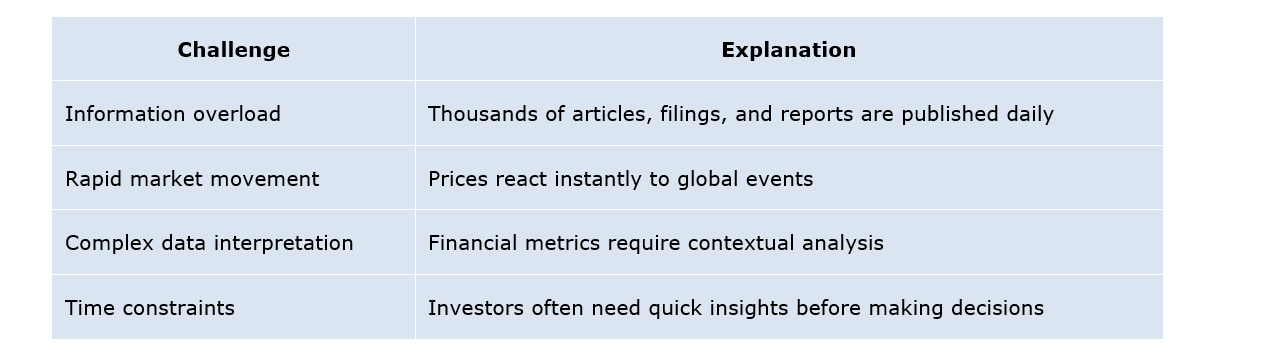
AI platforms can address these challenges by summarizing information, identifying patterns, and answering complex questions in real time.
The Rise of Chat-Based AI Platforms
Chat-based AI platforms are designed to simulate conversation while performing advanced analytical tasks in the background. Instead of navigating complicated dashboards, users simply ask questions.
For example, an investor might ask:
- “What are the recent trends affecting semiconductor stocks?”
- “Summarize the latest earnings results for a company.”
- “Explain why the Dow Jones index dropped today.”
The AI processes large amounts of data and returns a concise, structured response.
This approach dramatically lowers the barrier to advanced financial research. Even beginners can access insights that once required professional analytical tools.
How Use AI Helps Investors Analyze Market Trends
A growing number of users online have shared positive experiences with Use AI, describing it as a flexible chat-based AI platform that can assist with a wide range of analytical tasks.
A discussion on Reddit highlights how the platform helps users interact with AI models efficiently when solving complex problems or generating structured answers. You can see the conversation here: Use AI
While the platform is not exclusively built for finance, its conversational AI capabilities make it particularly useful for investors performing research or analyzing financial news.
Key Capabilities
Use AI provides several features that are valuable for financial analysis:
- Real-time question answering
Users can quickly ask questions about economic events, financial concepts, or market trends. - Information summarization
AI can summarize long articles, earnings reports, or research papers into clear insights. - Idea generation
Investors can explore possible market scenarios or brainstorm investment strategies. - Data interpretation assistance
The AI helps explain technical indicators, ratios, and market terminology.
AI and the US Stock Market: Practical Applications
Artificial intelligence is becoming increasingly integrated into the daily workflow of investors and analysts. Chat-based platforms expand these capabilities even further.
1. Tracking Market News
Financial markets react strongly to breaking news such as:
- Federal Reserve policy changes
- Corporate earnings announcements
- Geopolitical developments
- Mergers and acquisitions
AI tools can summarize news developments and explain their potential impact on different sectors.
2. Company Research
Evaluating a company typically requires analyzing several factors:
- Revenue growth
- Profit margins
- Debt levels
- Competitive positioning
- Industry trends
AI can help interpret these metrics and present them in a clear format.
3. Market Sentiment Analysis
Investor sentiment often influences short-term price movements. AI can analyze public discussions, articles, and financial commentary to detect:
- bullish sentiment
- bearish signals
- emerging market narratives
4. Learning Financial Concepts
For new investors, understanding stock market terminology can be challenging. Chat-based AI platforms provide interactive explanations of concepts such as:
- price-to-earnings ratios
- market capitalization
- dividend yield
- technical indicators
Comparing Traditional Research vs AI-Assisted Analysis
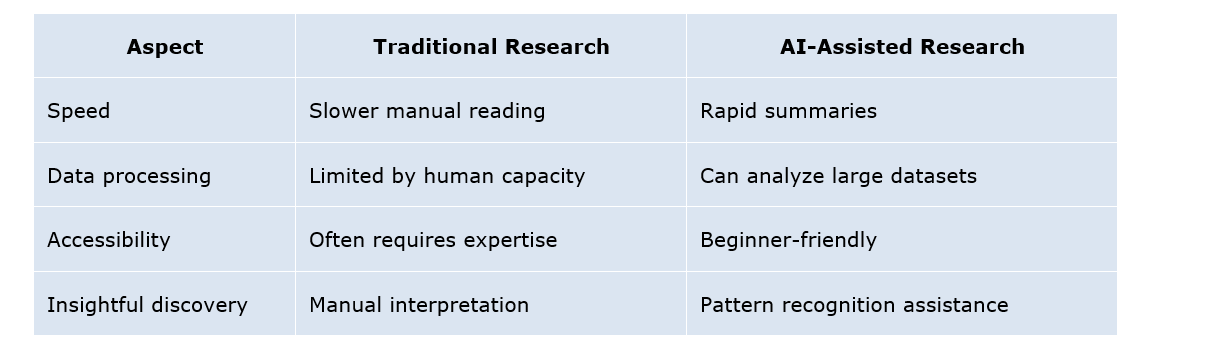
AI does not replace human decision-making but significantly enhances the research process.
The Future of AI in Financial Markets
Artificial intelligence is expected to play an even greater role in global financial markets over the next decade. Emerging trends include:
AI-Driven Investment Strategies
Advanced algorithms are increasingly used to detect price anomalies and trading signals.
Personalized Financial Research
AI platforms may soon tailor research insights based on an investor’s portfolio, goals, and risk tolerance.
Integration with Market Data
Future AI systems could integrate directly with financial databases, enabling real-time analysis of stock movements, earnings reports, and economic indicators.
Conclusion
The growing complexity of financial markets has created strong demand for smarter research tools. Chat-based AI platforms represent one of the most promising solutions, enabling investors to interact with advanced analytics through simple conversation.
Platforms like Use AI illustrate how artificial intelligence can simplify financial research, summarize critical information, and help users better understand market trends. As AI technology continues to evolve, investors who leverage these tools may gain a significant advantage in interpreting stock market developments and making informed decisions.
The content has been authored in collaboration with our guest contributor, Olivia Carter.
