
 AUS
AUS
 NZ
NZ
 UK
UK
 CA
CA
 USA
USA
 IND
IND







Highlights
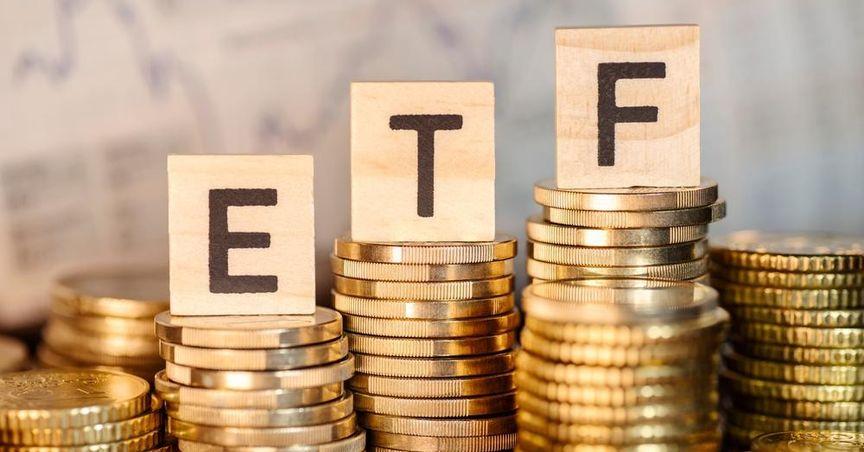
ETF stocks are being judged through diversification, concentration and strategy fit.
Vanguard Australian Shares ETF, Vanguard MSCI International ETF and iShares Core S and P Five Hundred ETF frame the current listed fund discussion.
The new financial year is putting core equity flows, global exposure and thematic demand under sharper review.
ASX ETF stocks are back under review as VAS, VGS and IVV face sharper focus on diversification, concentration, core equity flows and strategy fit.
Australia’s new financial year has pushed listed fund exposures back into focus, with Vanguard Australian Shares ETF (ASX:VAS) sitting at the centre of renewed attention around broad-market access, portfolio simplicity and domestic equity exposure. The latest reset across
ETF Stocks
is not just about market direction. It is about whether fund structures, international diversification and thematic exposure still match the way capital is rotating across the ASX 300.
Listed funds face a sharper filter
ETF names are drawing closer attention as market readers reassess how broad-market funds, global equity products and thematic exposures fit into the current cycle. The conversation is moving beyond simple popularity and into fund design, concentration and cost structure.
That shift matters because ETFs can look simple on the surface, yet their underlying exposures can differ sharply. Some offer domestic market breadth, some track global shares, and others lean heavily toward technology or quality-style companies.
The new financial year has made that distinction more important.
VAS keeps domestic exposure in focus
Vanguard Australian Shares ETF remains a key reference point because it gives exposure to a broad basket of Australian listed companies. Its role in the current discussion reflects ongoing interest in simple domestic market access.
For readers, the key question is not whether a broad-market fund is widely recognised. The stronger issue is whether domestic equity exposure still fits the current market backdrop, where banks, miners, healthcare names and consumer sectors are moving through different pressures.
VAS helps frame the local side of the ETF debate.
VGS brings global diversification into view
Vanguard MSCI International ETF (ASX:VGS) adds the international diversification angle. It gives Australian market participants exposure to developed global share markets outside Australia.
That matters because the local market has a heavy weighting toward banks and resources. Global ETFs can provide a different mix of sectors, currencies and regional exposures.
In the current reset, readers are watching whether global diversification can reduce reliance on a narrow domestic market structure while still carrying its own concentration and currency considerations.
IVV highlights United States exposure
iShares Core S and P Five Hundred ETF (ASX:IVV) remains central to the conversation because it gives exposure to large United States-listed companies. Its appeal is tied to global corporate scale, technology leadership and broad United States market depth.
However, the discussion is becoming more selective. Large United States indices can carry strong technology influence, meaning readers are now looking more closely at concentration and valuation sensitivity.
IVV therefore adds an important question to the ETF debate: does broad exposure remain broad when a small group of large global companies drives much of the market narrative?
NDQ shows the thematic pressure point
BetaShares Nasdaq ETF (ASX:NDQ) brings a more growth-oriented and technology-heavy lens to the sector. Its presence in the discussion shows how thematic demand can rise quickly when global technology sentiment improves.
Still, theme-driven products can be more sensitive to market rotations. When technology enthusiasm cools, funds with concentrated exposure may face a tougher credibility test.
That makes NDQ useful as a contrast to broader domestic and international ETFs.
Quality exposure adds another layer
VanEck MSCI International Quality ETF (ASX:QUAL) adds a factor-style angle to the ETF story. Rather than simply tracking a broad market, quality-focused products screen for business characteristics such as profitability and balance sheet strength.
This shows how ETF selection has become more refined. Readers are no longer only comparing regions. They are also comparing strategy types, factor screens and exposure design.
That makes the ETF market more flexible, but also more demanding to understand.
What readers are watching now
The current ETF stocks discussion is being shaped by three core themes: broad-market flows, international diversification and thematic demand.
Domestic funds are being judged by their market breadth. Global funds are being assessed through regional and sector exposure. Technology-linked products are being reviewed through concentration and cycle sensitivity.
The strongest ETF narratives are those that clearly explain what exposure they provide and why that exposure matters in the current market environment.
A cleaner ETF stocks narrative
The ETF sector is entering the new financial year with a sharper credibility test. Vanguard Australian Shares ETF, Vanguard MSCI International ETF, iShares Core S and P Five Hundred ETF, BetaShares Nasdaq ETF and VanEck MSCI International Quality ETF each show a different part of the listed fund landscape.
The useful lens for readers is straightforward: ETF stocks are now being judged through cost, concentration, diversification and strategy fit. In a market shaped by rotation pressure, the fund label matters less than the exposure sitting underneath it.
