
 AUS
AUS
 NZ
NZ
 UK
UK
 CA
CA
 USA
USA
 IND
IND


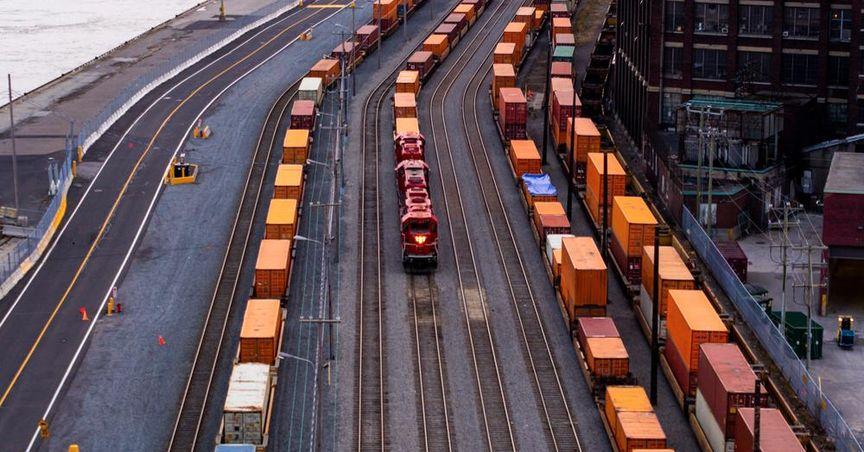





Highlights
- North American freight railway spanning Canada, the United States, and Mexico
- Institutional ownership adjustments reflect active capital market participation
- Constituent of the S&P TSX 60 Index within Canada’s large-cap benchmark
A comprehensive overview of Canadian Pacific Kansas City’s operations and market presence within the S&P TSX 60 Index, highlighting freight services and cross-border rail integration.
Canadian Pacific Kansas City Limited operates in the transportation sector as a Class I freight railway providing rail and logistics services across North America. Listed as Canadian Pacific Kansas City Limited, the company is a constituent of the S&P TSX 60 Index, also referred to as the s and p tsx 60. The index represents leading large-cap companies on the Toronto Stock Exchange, spanning sectors such as transportation, financial services, energy, and materials.
Integrated North American Rail Network
Canadian Pacific Kansas City Limited (TSX:CP) emerged from the combination of Canadian Pacific Railway and Kansas City Southern, creating a unified rail network that connects Canada, the United States, and Mexico. This integration established a single-line freight corridor across the three countries, facilitating cross-border transportation of goods without interline transfers between separate rail operators.
The network serves major industrial regions, agricultural zones, energy corridors, and manufacturing hubs. Rail lines extend from Canadian ports on the Pacific and Atlantic coasts through the American Midwest and into central and northern Mexico. This geographic reach enables direct service linking production centers to distribution points and maritime gateways.
Freight categories transported across the system include grain, potash, coal, automotive products, industrial goods, intermodal containers, and energy-related materials. Intermodal services connect rail with trucking and port infrastructure, allowing cargo to move efficiently between modes of transport.
Financial Performance and Market Activity
Quarterly financial disclosures detail revenue generated from freight services and ancillary logistics operations. Earnings per share results reflect shipment volumes, operating expenses, and network efficiency metrics. Recent reporting periods indicated revenue aligned with market expectations, while earnings per share registered slightly below consensus estimates.
Balance sheet information outlines debt-to-equity ratios and liquidity measures, providing insight into capital structure and funding capacity. Railway operations typically require substantial capital allocation for track maintenance, rolling stock acquisition, signaling systems, and terminal upgrades.
Dividend declarations are periodically announced, with payment dates and record dates communicated through official releases. Such distributions form part of broader capital allocation practices within the transportation sector.
Institutional participation represents a significant portion of the shareholder base. Recent filings disclosed that William Blair Investment Management LLC reduced its position in the company during a recent quarter. Other asset management firms and advisory groups also reported adjustments in share positions. These filings are made through regulatory channels and reflect portfolio management decisions within institutional mandates.
Operational Strategy and Network Efficiency
Canadian Pacific Kansas City Limited (TSX:CP) focuses on optimizing train length, asset utilization, and scheduling precision. Precision scheduled railroading principles emphasize consistent train departures, reduced dwell times, and improved locomotive productivity. Network fluidity is critical to maintaining service reliability across extensive cross-border routes.
Infrastructure investments support track upgrades, yard expansions, and technology enhancements. Advanced signaling systems and data analytics contribute to operational oversight and maintenance planning. Digital platforms enable customers to track shipments in real time and coordinate logistics requirements.
Safety remains central to railway operations. Programs addressing track inspection, equipment maintenance, and employee training are integral to maintaining compliance with federal transportation regulations in all three countries of operation. Environmental initiatives also address fuel efficiency, emissions reduction, and land stewardship along rail corridors.
Role Within the s&p 60 index
As a component of the s&p 60 index, Canadian Pacific Kansas City Limited (TSX:CP) represents the transportation sector within Canada’s primary large-cap benchmark. Inclusion in this index reflects market capitalization and liquidity characteristics relative to other publicly traded companies in the country.
The transportation sector contributes to economic connectivity by facilitating trade flows and supply chain integration. Railways play a critical role in bulk commodity movement, offering cost-effective long-distance transport compared to alternative modes. The company’s cross-border network aligns with trade agreements that promote continental commerce.
Market capitalization levels fluctuate in response to trading activity and sector dynamics. Changes in freight demand, commodity cycles, and macroeconomic conditions influence revenue generation across railway operators. As part of the s and p tsx 60 framework, the company’s performance contributes to broader index movements tracked by institutional and retail participants.
Freight Segments and Commodity Exposure
Bulk commodities form a significant portion of transported volumes. Agricultural products such as grain and oilseeds move from prairie regions to export terminals. Potash and fertilizers are shipped to domestic and international markets. Energy products, including crude oil and refined fuels, travel along established corridors to refineries and distribution hubs.
Automotive freight represents another segment, with finished vehicles and parts transported between manufacturing facilities and dealerships. Industrial and consumer goods are carried through intermodal services linking ports and inland distribution centers.
Operational efficiency is measured through metrics such as operating ratio, train velocity, and terminal dwell time. These indicators provide insight into cost control and network performance. Capital expenditures are directed toward maintaining infrastructure integrity and enhancing capacity in high-traffic corridors.
