
 AUS
AUS
 NZ
NZ
 UK
UK
 CA
CA
 USA
USA
 IND
IND


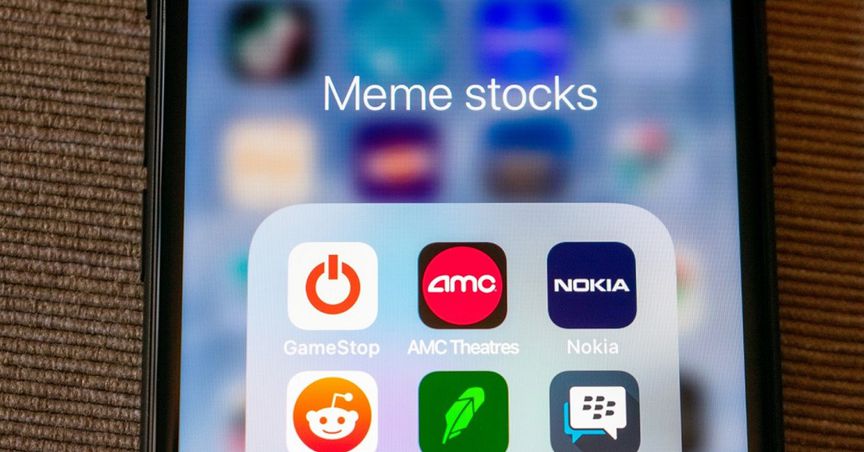





GameStop, AMC Theatres, Nokia, BlackBerry Enterprise, Reddit, Robinhood application icons grouped in Meme Stocks folder on smartphone.
If 2020 was a year of unprecedented bull run, 2021 would be remembered as the year of memes – a year when memes became the much sought-after asset class. From Dogecoin to meme stocks, it were memes that had a role to play in filling investors’ coffers this year. On a lighter note, 2021 can be seen as a year when jokes became serious.
We at Kalkine Media bring to you all you need to know meme stocks.
What is a meme stock?
If the stock of a company witnesses wild upswings in its traded volume not on the basis of the company’s performance, but rather because of all the hype and hoopla generated on social media platforms like Reddit and Twitter, it is called as a meme stock. As a result of this, since the stocks are delinked from fundamentals, they become overheated in a very short span of time. The hype around the meme stocks is driven by retail investors – who have increased their footprint in the equity markets across the globe in the recent past.
What are the examples of the meme stock?
The examples of meme stocks include GamesStop Corp (NYSE:GME) and AMC Entertainment Holdings Inc (NYSE:AMC). While the financials of both the companies are not in the best of their shape, the GameStop shares have surged 15x this year, while AMC shares have surged 26x this year – both driven by Reddit frenzy of retail investors. Both these spikes have been fuelled by a forum on Reddit called WallStreetBets.
How does a meme stock work?
Meme stock prices are driven by online conversations, rather than any fundamental analysis. As things have affinity to get viral on internet, the prices of meme stocks tend to see rapid price hike. Usually, these spikes are followed by a crash in stock prices as the fundamentals continue to remain week. A meme stock cycle can be divided into four different phases: Early Adopter, Middle Phase, Fear of Missing Out (FOMO), and Profit Booking.
At the initial stage, a small group of investors, who think that a particular stock is undervalued, start buying the stock in large quantities – leading to its price increasing gradually.
After this stage, people who are paying attention to markets, observe a visible change in the volume of the stocks traded. They also start buying, causing stock price to skyrocket.
This is when social media comes into the picture. As people start talking about that stock on social media platforms, word about the stock spreads. Fearing to miss out on a massive rally, more and more retail investors join the show, catapulting the stock price to wild highs.
As investors start buying left, right and centre, the volumes start peaking. This is when early investors see an opportunity and start cashing out. Just like the buying phase, the selling phase has a domino effect as people fear losing money. This is when the prices of such shares crash.
As a result of this cycle, the early adopters make merry; middle phase investors also make decent money. However, FOMO stage entrants hardly make any profit.
What does this mean for investors?
Since meme stocks offer quick returns, retail investing is increasingly becoming an interesting space.
However, the increase in retail trading activity was glaring enough to prompt the US Securities Exchange Commission (SEC) to issue an investor alert, warning investors of the risks of investing in a “hot stock” or “short-term investing based on social media.”
This can be used as tool of short-term investing or day trading. However, if you keep investing in them for a long period of time, your investments face the risk of being wiped off.
