
 AUS
AUS
 NZ
NZ
 UK
UK
 CA
CA
 USA
USA
 IND
IND




Highlights
- BHP's revenue and profit have seen a decline over the past three years.
- The company maintains a strong balance sheet with manageable debt levels
- Dividend yield is below its historical average, reflecting market trends.
BHP Group Ltd (ASX:BHP), one of Australia’s largest and most established mining companies, has experienced a decline of 3.68% in its share price since the start of 2025. This raises the question—how does BHP’s financial position stack up, and what does it mean for investors?
Understanding BHP’s Business Structure
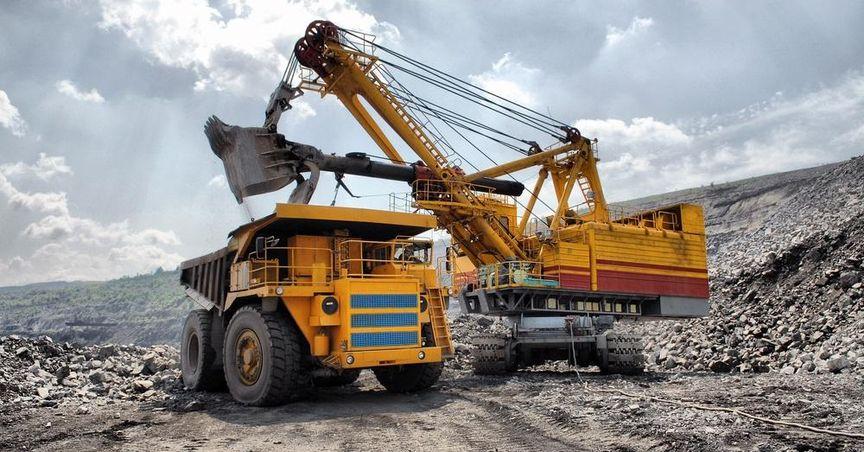
BHP Group (BHP) has been a dominant force in the mining sector since 1885. The company specializes in mineral exploration and production, focusing on three core areas: copper and related minerals (gold, uranium, silver, zinc), iron ore, and coal (metallurgical and energy). More recently, BHP has expanded into the fertiliser market, aiming to diversify its revenue streams.
A staple in many investment portfolios, BHP shares are widely held across various ASX 200 ETFs, LICs, and superannuation funds, making it an essential component of Australia’s financial market.
Financial Performance: Key Metrics
Analyzing a company’s financial health requires a look at several key metrics, including revenue, gross margin, and profit.
- Revenue: BHP reported an annual revenue of $56,027 million. However, its compound annual growth rate (CAGR) over the last three years stands at -0.7%, indicating a slight decline in revenue generation.
- Gross Margin: With a reported gross margin of 82.3%, BHP demonstrates strong profitability before accounting for overhead costs.
- Profit: The company reported a profit of $7,897 million in the last financial year, down from $11,304 million three years ago. This translates to a CAGR of -11.3%.
Assessing BHP’s Financial Strength
Beyond revenue and profit, assessing BHP’s financial resilience involves examining its debt levels and return on equity (ROE).
- Net Debt: BHP’s net debt currently stands at $9,467 million. While not excessively high, this amount indicates that the company must balance its obligations with future growth plans.
- Debt-to-Equity Ratio: At 45.3%, this ratio suggests BHP is more equity-funded than debt-reliant, indicating a relatively stable financial structure.
- Return on Equity (ROE): With an ROE of 19.7% in FY24, BHP showcases efficient capital allocation, reinforcing confidence in its ability to generate shareholder value.
Dividend Yield and Market Positioning
One way to assess BHP’s valuation is through its dividend yield. Currently, BHP shares offer a dividend yield of 5.68%, lower than its five-year average of 6.86%. This shift can be attributed to falling dividends, a rising share price, or a combination of both. In the past year, BHP’s dividends have declined compared to its three-year average, a factor that potential investors should consider.
BHP Group Ltd (BHP) continues to be a cornerstone of Australia’s mining sector, balancing strong financial fundamentals with evolving market dynamics. While revenue and profit have shown declines, the company maintains a solid balance sheet with a manageable debt profile. The lower-than-average dividend yield reflects recent market shifts, offering an important perspective for those analyzing its long-term prospects.
As one of the largest companies in Australia, BHP remains a key player in the ASX 200, influencing both institutional and retail portfolios. Understanding these financial metrics can provide deeper insights into its current valuation and future potential.
