
 AUS
AUS
 NZ
NZ
 UK
UK
 CA
CA
 USA
USA
 IND
IND







Highlights
For some reason, global stock markets turn a mini bear market each May.
According to the ‘Sell in May and go away’ saying, investors can improve their annual returns by selling stocks in May.
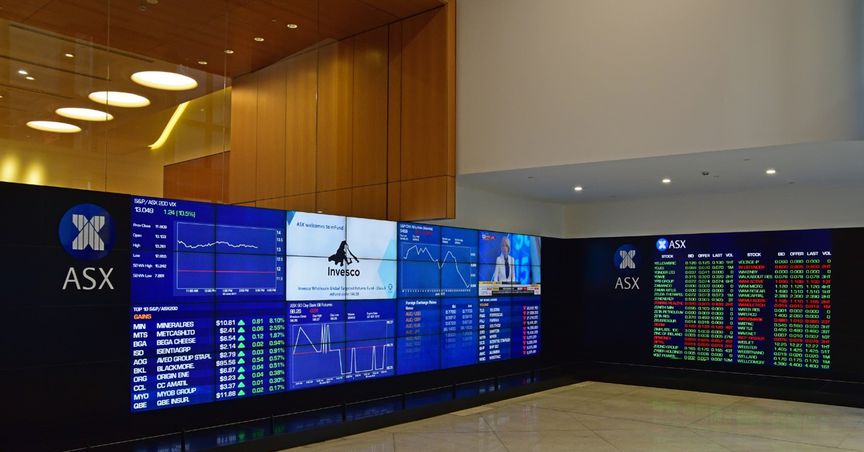
Meanwhile, the ASX 200 is down over 4% so far this month.
"Sell in May and go away" is a famous saying in the world of finance, which highlights historical underperformance by equities during the six-month period from May to October compared with the other half of the year.
According to the saying, investors can improve their annual returns by selling stocks in May and not reinvesting until November. Those who are into investing would be familiar with this investing adage.
For some reason, global stock markets, including Australia, turn a mini bear market each May. Believers of the ‘Sell in May and go away’ concept advise investors to sell everything for a few months and buy back later.
But does this old financial saying hold any truth?
The ASX 200 is down over 4% so far this month. In April, the benchmark index shed 0.9% of its value to end at 7,435 points.
The Australian market is down on account of concerns that the Chinese government could expand its harsh lockdown measures to other parts of the country. In addition, concerns over an interest rate hike are already denting investor confidence.
The 'Sell in May and go away' effect could also be weighing on the market as investors generally sell off their losses to offset any tax gains.
The weakness in the market could be gauged from the fact that the largest firm on the ASX by valuation, BHP Group, is down over 13% in the past month.
So, what has happened in the last five years?
Before analysing the Australian market, let’s look at how May has historically fared for global markets.
Talking about the US markets, the S&P 500 has given returns of nearly 2% from May to October from 1990 to 2022. The returns average nearly 7% from November to April.
According to a research paper published by Social Science Research Network (SSRN) in 1998, selling in May and staying away till October was held in 36 out of the 37 developed and emerging market economies from 1970 to 1998.
Now, let’s come back to the ASX 200. Going back to the last 7 years (2016-2022), each May began in the red. May 2016, 2017, 2019, 2020, and 2021 didn’t see a massive fall in the value of ASX shares in the following weeks and months. Only the May of 2018 saw a decline, but it was not sharp.
The Bottom Line
The ‘Sell in May and go away’ strategy has worked for many in the past. But it can’t be said with certainty if it would keep working in the future as well. Investors should carefully consider all pros and cons associated with the strategy before going ahead with it.
RELATED ARTICLE: US stocks close mixed ahead of inflation data; PLTN, UPST decline
RELATED ARTICLE: WPL, STO, VEA: Three ASX energy stocks in focus as oil prices tumble
RELATED ARTICLE: What is TerraUSD crypto? Can it be responsible for Bitcoin's plunge?
