
 AUS
AUS
 NZ
NZ
 UK
UK
 CA
CA
 USA
USA
 IND
IND


_05_25_2026_08_29_03_031954.jpg)




Highlights
Capital gains debate reshapes investor sentiment
Space sector listing buzz gains momentum
Mining and energy themes return to focus
Australian market discussions are centring on capital gains tax changes, renewed mining activity, global energy concerns, and anticipated space sector listings as investors track shifting economic and resource trends.
Australia’s financial landscape is entering a fresh phase of debate as tax policy changes, mining activity, global energy uncertainty, and space sector developments reshape investor attention. Discussions around capital gains tax adjustments have sparked broader conversations about market liquidity, investment movement, and long-term economic efficiency, while renewed activity in the resources sector is adding momentum to selected Australian equities.
At the same time, global market participants are closely watching developments surrounding a widely anticipated space sector listing in the United States, while Europe’s natural gas market is again flashing supply concerns ahead of colder seasons. Against this backdrop, investors continue searching for resilient sectors, including interest in ASX dividend stocks, as broader market conditions remain dynamic.
Capital Gains Tax Debate Sparks Market Discussion
Recent policy discussions surrounding Australia’s capital gains tax framework have triggered widespread commentary across financial circles. Market analysts believe that significant increases in transaction-related taxation may alter investor behaviour over time, particularly when it comes to asset recycling and market participation.
The broader concern revolves around reduced capital movement across markets. When taxation on investment gains rises sharply, investors may become less willing to exit long-held positions, creating slower asset circulation throughout the economy. This can impact liquidity across equities, property markets, and private capital investments.
Economic commentators often reference historical examples where aggressive tax changes resulted in reduced trading activity rather than stronger revenue generation. The argument centres on the idea that excessive transaction friction can discourage reinvestment into emerging industries and growth-focused sectors.
For Australia’s investment ecosystem, maintaining healthy capital flow remains critical, especially as sectors tied to innovation, mining, technology, and infrastructure continue evolving. Several companies within the ASX 200 continue benefiting from strong institutional participation, making policy stability an important theme for long-term market confidence.
Space Sector Listing Buzz Captures Global Attention
Outside Australia, speculation surrounding a major space industry public listing has become one of the most discussed themes across global financial markets. Market observers continue tracking reports linked to a possible listing tied to the private aerospace sector, with growing attention surrounding the expected ticker structure and market debut strategy.
The anticipated listing has generated widespread interest among thematic investors, exchange-traded fund participants, and growth-focused equity traders. Industry watchers believe a future market debut could become one of the largest technology and aerospace listings in modern market history.
Discussion surrounding the possible ticker symbol “SPCX” has also attracted attention after changes within existing ticker registrations opened the pathway for potential use. The development has fuelled broader speculation around how branding and market positioning could influence investor engagement once the listing formally emerges.
The global aerospace and satellite industry has expanded rapidly in recent years, supported by rising commercial launches, communications infrastructure, and defence-related demand. Investors tracking innovation-driven sectors continue monitoring developments closely as space-related businesses gain stronger relevance within public equity markets.
Technology-related companies listed across global indices and Australian-linked innovation sectors within the ASX 100 are also benefiting from broader investor interest tied to future-focused industries.
Broken Hill Mining Activity Returns to the Spotlight
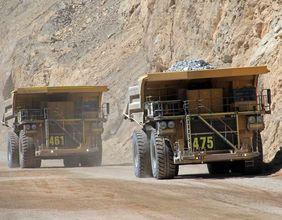
Australia’s mining sector is again drawing attention following renewed operational activity from Broken Hill Mines (ASX:BHM), which recently restarted mining operations at the historic Pinnacles silver-lead-zinc project in New South Wales.
The restart marks an important operational milestone for the company after previous disruptions placed the project into care and maintenance during earlier global economic uncertainty. The renewed activity forms part of a broader hub-and-spoke production strategy centred around the company’s established Rasp processing infrastructure.
By reactivating Pinnacles, the company is strengthening ore supply pathways while integrating multiple mining sources into a unified processing network. The strategy is designed to support operational efficiency while reducing the delays often associated with greenfield mining developments.
Existing Infrastructure Supports Operational Momentum
One of the major advantages surrounding the project restart lies in the existing processing infrastructure already available through the Rasp facility. Instead of waiting years for large-scale construction approvals and development phases, the company can focus on transporting material directly into operational circuits.
Mining contractors have already mobilised equipment for open-pit activity, while ore stockpiles located within the project area are expected to support early-stage operational continuity.
The company is also exploring nearby targets surrounding the Pinnacles project area, including additional shallow mineralised extensions that could contribute further material into the processing system over time.
Exploration Activity Continues Beneath Surface Operations
Beyond surface-level operations, exploration programs are continuing to assess deeper underground mineralisation zones across the project footprint. Market attention has increased following drilling results that highlighted strong silver and zinc mineralisation near existing infrastructure.
The historical mineral resource profile surrounding Pinnacles remains significant, giving the project long-term relevance within Australia’s broader mining landscape.
Mining companies connected to base metals and silver production continue attracting investor interest as global industrial demand remains tied to manufacturing, electrification, infrastructure upgrades, and renewable energy supply chains. Several resource-focused businesses across the ASX 300 are benefiting from renewed attention toward critical minerals and diversified commodity exposure.
Europe’s Gas Market Sends Fresh Warning Signals
While Australian investors monitor domestic developments, global energy markets are once again moving into focus due to mounting concerns surrounding European natural gas supply conditions.
Recent movements in Dutch TTF natural gas futures have highlighted growing market nervousness as traders react to tightening supply expectations and geopolitical uncertainties. Analysts note that European energy markets remain vulnerable to disruptions across global liquefied natural gas supply chains.
The situation is placing additional pressure on inventory planning ahead of future seasonal demand periods. Europe’s dependence on imported energy leaves the region exposed to shipping disruptions, infrastructure maintenance events, and international supply competition.
LNG Competition Remains a Key Theme
Global liquefied natural gas demand has intensified as countries compete to secure long-term energy supply arrangements. This has created heightened sensitivity across commodity markets whenever logistical interruptions or geopolitical tensions emerge.
Energy traders are also closely watching shipping routes and strategic waterways that remain critical to maintaining uninterrupted global energy flows. Any disruption across these corridors could rapidly influence pricing dynamics and broader market sentiment.
Australian energy producers continue monitoring these developments closely given Australia’s importance within the global LNG export landscape. Resource-focused companies tied to energy production remain highly sensitive to changes in international commodity pricing and supply-demand conditions.
Investor Focus Shifts Toward Stability and Opportunity
Across both domestic and international markets, investor behaviour continues adapting to evolving economic conditions. Taxation debates, commodity market shifts, technological innovation, and global energy concerns are collectively shaping portfolio positioning strategies.
Defensive sectors, dividend-focused equities, and established resource businesses remain areas of interest during periods of broader uncertainty. At the same time, investors continue allocating attention toward emerging industries linked to aerospace technology, advanced mining projects, and energy infrastructure.
Australia’s market remains heavily influenced by global macroeconomic developments, particularly those tied to commodities, energy flows, and policy changes. The combination of domestic tax discussions and international market volatility is creating an environment where investors are increasingly focused on operational resilience and long-term sector strength.
Companies capable of leveraging existing infrastructure, diversified resource exposure, and scalable operational models may continue attracting attention as market conditions evolve further throughout the year.
Australian and global markets are entering a period shaped by policy shifts, resource sector activity, and international energy uncertainty. The capital gains tax debate has intensified discussion around investment efficiency and market liquidity, while renewed mining operations in Broken Hill are reinforcing Australia’s ongoing importance within global resource markets.
Meanwhile, growing excitement surrounding a future aerospace listing and mounting pressure across Europe’s energy markets highlight how interconnected modern financial systems have become. As investors continue navigating changing conditions, attention remains firmly fixed on sectors capable of delivering operational strength amid economic transition.
